Author: whatifconcepts

Empowering those that inspire so they can excel at the work that matters.

Dream Team

Yesterday’s financial market crash and recovery makes for dramatic headlines.  The system appeared to free fall for a few minutes and technology took control.  Tied into the market volatility is the impact of Greece’s debt.  Charlie Rose’s interview of Martin Wolf of the Financial Times brought to light observations about forming an ideal partnership.  He suggested that the original group of countries that founded the European Union (EU) made sense.  The core countries were connected to each other by similar cultures, geography, manufacturing, and markets.  When the EU expanded and additional countries were introduced to the union, there was a significant shift in the selection criteria.  Mr. Wolf’s point is that bringing Greece into the EU did not make sense as the Greeks shared little cultural, manufacturing, or market symbiosis with the original members.  Now that the Greek economy needs rescuing, Germany is challenged to find a compelling reason save Greece during its economic emergency.  The core members’ primary motivation is to save the EU simply to manage their own fate.

This real-time example is a reminder to set clear criteria.  Partner with organizations that are going to serve the team’s interest in both positive and challenging environment.  The current uproar around the Susan G. Komen Foundation’s marketing venture with Kentucky Fried Chicken reminds us that partnerships are not always simple.  Consider asking if the partnering organization ‘contribute more’ or ‘take more’ from a collaboration?  Are there conditions where the partnership is ideal?  How do you honor the criteria by which a partnership was entered?  How will you measure the effectiveness of the union?

Giving the Gift of Philanthropy to Your Kids

We Give Books and the Pearson Foundation released a powerful study focused on how to introduce teens to philanthropy.  What my parents considered charitable giving has morphed into a whole sector of social causes and opportunities.  The model my children will encounter intrigues me on a daily basis.  I distinctly remember my parent’s dinner conversations regarding their volunteer activities and service on nonprofit boards.  My own role in the social sector comes from a seed planted many years ago by parents willing to discuss their giving philosophy.

A top ten list of basic parenting practices emerged
that differentiates “giving teens” from “non-giving”
teens. “Giving teens” report their parents did the
following on a frequent basis.

1. Explained how I can help other people by
my actions.
2. Encouraged me to speak up in family discussions.
3. Spoke to me about the volunteering and
charity they do.
4. Supported me on things I cared about.
5. Told me why they were proud when I did
good things.
6. Encouraged me to be my own person.

 Read the rest of the top ten list and the entire report.

How are you reaching youth or your own children?  How does your organization make philanthropy a experience that rewards the whole family?  Is your enterprise engaging the next generation of donors?

Veteran or Old

In many professional sports you hear the term ‘rebuilding year’ when a team is no longer in contention for the playoffs.  It is a chance to add youth and new players in hopes of creating the chemistry to make a run at a championship.  On the other end of the spectrum is the philosophy of a team filled with veterans.  Players who have been there and won the sport’s highest crown.  These are sought after additions to any team as they have demonstrated a mastery of the game, maintained a high level of composure and built a legacy of achieving the ultimate goal- winning.  It is a knife’s edge that separates the thin line between the high value tag of ‘veteran’ and dreaded description of ‘old.’

How many social sector organizations qualify as veterans?  Venerable organizations that deliver consistent results and are held in high regard throughout the community?  When people speak about attributes in the community these organizations are mentioned.  The chamber of commerce refers to the organization in its promotional materials.  On the other side of the tracks is the cause that once was.  Perhaps the Founder could not let the cause grow gracefully or a board lost focus, programs became stagnate, or a scandal knocked the champion off its pedestal.

How do you keep your organization vibrant?  How do you assemble a group of champions without become a relic?  Do you allow for innovation?  Is the mantra, ‘we have always done it that way’ become your clubhouse cheer?  How do you play like a champion and not and old-timer’s game? 

Relapses and Failures

Consequences for one’s actions.  It is a mantra of many youth organizations (and parents).  I recently learned of a gang-intervention program in Boston, Massachusetts.  The organization, Roca has an intriguing philosophy.

Roca has taken Prochaska’s stages of change and adapted them for a very high-risk youth development model…As change is not easy for any of us, relapse is often part of the process and can happen at any point in the stages of change. Relapses can be painful, embarrassing, demoralizing; can make change seem impossible; or provide a (weak) justification for not changing. However, they are also the times where a great deal of incredible learning can take place and work can be done.

Allowing for failure and relapses is a powerful value.  This is not a three strikes and you are out program.  If there was no support for those that failed the gangs succeed in recruiting the most vulnerable youth and the mission is unachievable.

Does your enterprise tolerate failure?  Could supporting those who relapse be part of your organization’s competitive advantage?  Many rags to riches narratives are filled with chapters of failure prior to finding motivation and great success.  Could your cause be uniquely positioned to support those who relapse?

The Big Short- Nonprofit Edition

I read Michael Lewis’ excellent book, The Big Short this weekend while flying to and from meetings in New England.  It left me wondering how the investment banks were unwilling to wrestle with the potential risk and deficiencies perpetuated by the financial system.  I finished the book and wondered what other industry was built on a paradigm of false assumptions.  I began to scribble down the following questions for the purpose of a reality check for the social sector.

  • Is the social sector transparently designed to serve the public’s interest?
  • Do we need to design an identity statement to define the sector?  Is it ideal to have regional hospitals and national debt collection services classified in the same category as a local literacy organization?
  • Have we designed a system that is self-dependent and closed?
  • Are we feeding an insatiable fundraising monster?  Can the endless stream of gala fundraising events and annual appeals continue to sustain the sector’s many causes? 
  • Is the leadership teams (board and staff) committed to the mission?  If another organization is achieving the mission more effectively would an organization merge?  If an organization’s vision was reached, would it close the organization doors immediately (if a cure for cancer was discovered tomorrow would all the nonprofit cancer organization’s that seek a cure cease to exist)?
  • Should paid positions be capped or discounted by some percentage when benchmarked against the for-profit sector?  Does a nonprofit CEO need to demonstrate some form of sacrifice by being less-well compensated?  Or should the social sector pay a competitive wage?  What would be the impact on your community?
  • Will donors and funders dictate the social sector’s future?  Will organization’s diversify revenue source?  Will donors demand organization’s merge or pool resources?
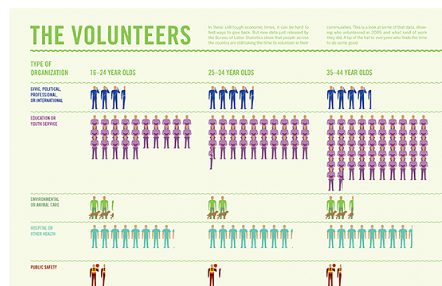
  • Will volunteers continue to contribute their time, talent, touch and treasure to the social sector?
  • Is a revolt coming?

What questions keep you up at night?  Are there assumptions that need to be revisited?  Are we assessing risk within the social sector?  Do we have tolerance for new messages and perspectives?  Should we be more optimistic or pessimistic?

One Question

What does your client deserve?
Who does your organization serve: an art patron, gang member, student, parishioner, patient, teacher, mechanic?  What do they deserve?  Is your organization meeting their need? How?  
Answer those questions, really dig into the details and you might find a whole new level of understanding, compassion, appreciation, and connection.

Commanders Intent

I was reminded of the importance of Commander’s Intent when speaking with a colleague yesterday.  He handed me an operating plan for a marketing campaign and wondered, ‘why aren’t we making any progress?’  I reviewed the document and questioned if he had motivated and professional staff working on the execution.  He raved about their skills.  I then pointed to a one line-items and said, ‘perhaps you can allow them more flexibility to complete the project.  In his enthusiasm to write the plan he had provided ever detail, down to the shopping list at the office supply store.

The book, Made to Stick, by Chip Heath and Dan Heath was one of the first to introduce me to the idea of Commander’s Intent.  A military philosophy that basically boils down to a commander ordering his team to ‘take that hill.’  Commander’s role is over besides monitoring the status of his order.  It is up to the field officers to determine the best strategy.  If they want to storm the hill, use artillery, parachute, or surround it, the tactical choices are made by those on the ground.  Strategy comes from the command but execution is left to those who will carry it out.  

It is always a slippery slope assessing where the line between planning and managing exists.  Sometimes it is helpful to ask, am I asking for the hill to be taken or telling the troops what route is best?  If you have hired and trained the best individuals, commander’s intent provides direction without suffocating creativity.

Making the Pitch

What if this was your job interview as a prospective board-staff-volunteer member for a cause you were passionate about?


Would you take the job?  Why?  Would it be for the chance to experience glory?  To change the world?  To inspire others?  To meet a need?  For the adventure?  To connect with interesting people who shared your passion?  To meet an emotional need?  Because you were asked?


We all said ‘yes’ at some moment to join the social sector in a range of capacities.  Are you engaged for the same reasons?  Would you say ‘yes’ again today?  Are you more passionate or more realistic about the cause to which you have dedicated your time, treasure, talent and touch?

How do you stay in-touch with the inspiration that allowed you to answer, ‘when do I get started?’  How do you recruit new members to your cause and tap into their passion?  What if your level of connection only grew stronger from the time you joined?

Your Recommendation

Would you recommend the organization you are most engaged with to a friend or family member?


The question at hand is not if you are satisfied with the cause.  The questions is not concerned with the ranking you would provide using a scale of smiley faces to frowning clowns.  You are not being asked to match the adjective that most describes the service you received to the quality of the program you attended.  This is not about your impression of the organization.  This is not about getting your wheels rotated and the fluids changed in your car.
The question is quite simply, would you risk your reputation to recommend a specific enterprise to a close friend or family member?  I would argue that if you answer yes and do so with conviction then you are a fan.  You are not a customer or interested in a transaction.  You have a relationship with the cause.  No satisfaction survey needed.  No 1 to 10 ranking.  You are willing to direct another person towards an experience and interaction that you believe will be compelling.   You have confidence in the organization.
How quick are you to make a recommendation?  Posting on a travel website under the username ‘Luke Warm’ is not a high risk situation.  To put your name on the line and respond to another person’s query is a hire wire act.  Do you add conditions to your recommendations?  Do you suggest your experience was exceptional partially because you know the CEO and you have been a donor for years?  How many organizations can you give two thumbs-up without hesitation?
We have just started using the R Factor assessment instrument to quantify this very metric in the social sector.  If you wish to know more I would be happy to recommend it.