Consulting

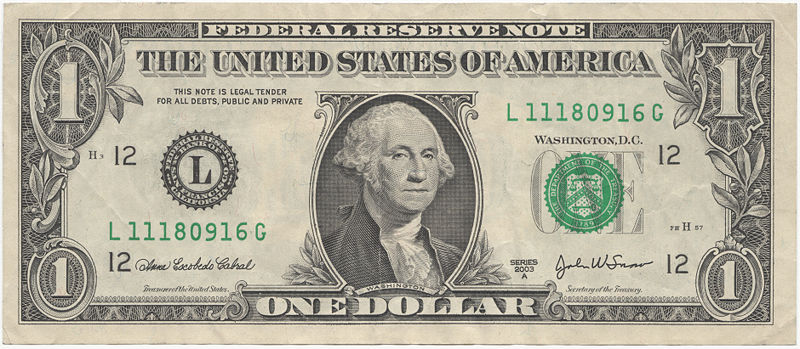
What is $1 worth?

The Chronicle of Philanthropy (12/11/08) recently published a study sponsored by the Philanthropic Collaborative which concluded that for every dollar contributed by a foundation to the philanthropic sector an economic benefit of $8 is realized. The research was produced by Sonecon who projected that the $42.9 billion dollars donated by foundations in 2007 returned $367.9 billion in ‘direct economic benefits’.


In these times of reduced endowment returns nonprofit organizations are increasingly focusing on annual donors. A colleague pointed out recently that a single dollar donated annually would require $20 or more in endowment principle. Stated differently, your contribution of $25 would require a $500 endowment gift to create $50 in returns annually. A $50 gift requires $1,000 in endowment principal, $100 requires $2,000 to be committed to endowment and finally a $1,000 gift needs $20,000 in endowment to generate a similar return. Does your organization have a more realistic chance of finding a donor at the $100 level annually or a donor willing to commit $2,000 donation to endowment. In these difficult times, many endowment gifts have been slashed by a third or even half due to volatile investment markets requiring eve larger gifts to match an annual fund contribution.

$1 might be worth a lot more than any of us thought.

Remember to keep giving- even if its a dollar!


Tribes

I am reading Seth Godin’s book Tribes. It discussed the difference between leadership and management. Management is defined as the manipulation of resources to get a known job done. Leadership is about creating change you can believe in. Leaders have followers. Managers have employees.

Makes me wonder how often I try to act as a manager versus a leader. When I consider interactions with family, friends, collegues, ‘to do’ lists, travel, I see a lot of managing when deadlines loom.

Perhaps I better understand why I gravitate towards individuals I deem inspirational. Many of them are providing a vision of change and not simply a blueprint.

USC Football Coach Pete Carroll said they other day that he always believes something great is just about to happen. That is a unique perspective.

Where do we focus on the majority of the time? What are you thinking now?


Practice Makes Perfect

In the continuation of the discussion inspired by the book Outliers the idea of practicing harder and better than anyone else was proposed as a key to success in Pete Carroll’s 60 Minute interview on Sunday (YouTube link: http://www.youtube.com/watch?v=ffgYLJ4Smm0). Coach proposes that the most prepared players are the ones who succeed on Saturday even though they are not always the best players. The NCAA proposes time restrictions on the duration of athletic practice for student-athletes so the very ability to reach the 10,000 expertise hour threshold proposed by Gladwell (see Lonesome Dove post) is hindered by regulation. Much of the extra training takes place on personal time- weight training, film review, sports therapy, etc. How do you maximize the effectiveness of limited practice time? What does your team need to do that is most fundamental to its collective talents? There is a story about putting the ‘big rocks’ in first (worth the read if you do not know it http://www.dailyblogtips.com/put-the-big-rocks-first/). Are you putting the big rocks in first and then working with the pebbles and sand or is your practice/day/meeting run by the sand and pebbles? I believe that more than one great meeting has reached a single important decision and had far more impact than a meeting that considered many inconsequential issues.


Lights Out

Have you ever noticed how quickly our attention focuses on what is not working when almost everything else is functioning appropriately? The squeaky door, disgruntled staff member, miffed donor, misspelled word, or flickering light. I noticed last night that one strand of lights on our Christmas tree was out. After taking a focused approach to dealing with the problem and checking multiple connections, I realized that the cat was sitting on a branch inside the tree. Now the cat was the prime suspect. The rest of the tree was aglow and decorated, nothing had changed but the lack of illumination from 50 small bulbs. My methodical process turned into frenzy and I rapidly began replaying the scene from the film Christmas Vacation when Clark Griswold (Chevy Chase) looses his composure and karate chops the antlers off the display of reindeer in his lawn and punches his fake Santa. Before I took any irrational actions I realized another possibility. Perhaps it was not a single bulb and upon replacing the fuse there was once again light.

I try to remind myself of the quality of the problem. Is it a high quality problem- the staff member wants more responsibility and therefore complains, the donor has a great idea about how their funds could have been used more effectively, multiple sightings of the misspelled word in your brochure reassures you that people are reading your material. The Christmas tree was still upright, decorated, symbolizing a tradition that was important to our family. A ten cent fuse was all that was required to fix the lights. What to focus on is within our control and perhaps we are too quick to see the big picture and the opportunity. Frankly, the fact that the broken strand of lights on the tree are now blinking provides great humor.


Lonesome Dove

I am always struck by the ending of the mini-series Lonesome Dove (adopted to TV from the novel written by Larry McMurtry) when the reporter from San Antonio asks Captain Call if he is a ‘man of vision’. The Captain reflects on all he has seen and witnessed during his life in the 1880’s West. He retorts “hell of a vision” and wanders off.

So often we want the quick and easy answer. Provide us with the lesson learned, the ‘one thing’, the new association and we will be on our way. The short one-line answer always seems so powerful and convenient since it does not force us (the listener) to anything more than pause and then continue with our current course of action.

I am reading the book Outliers by Malcom Gladwell and he discusses the need for an individual to accumulate 10,000 hours of practice before a person typically reach a level of competency to be considered an expert. To put this into a timeline, this usually equates to ten years in most individual’s lives. The eulogy seems to epitomize a summation of a lifetime of experiences without having lived the journey. Anything Captain Call had said would have been deeply unsatisfactory as as synopsis of all he had endured. Three quarters of the key characters from the start of the series are dead and buried, he has traveled the width of the United States (as we know it now) twice, driven a couple hundred head of cattle to Montana, survived epic weather, and generally lived a lifetime of experiences. His expertise seem beyond words.

Day-to-day I find myself in meetings where key decisions need to be made. An item comes-up for discussion and a course of action needs to be selected. I have always been inspired by the person who could ask the question that needed to be considered but had not been brought forward yet. I would leave the meeting thinking ‘why had I not considered that?’ I started to equate some of theses moments to personal experience and background. A good team should have a variety of perspectives and it would make sense that every participant should bring a unique question. What is shifting my thinking today is the thought of expertise. The more meetings I attend, the more decisions that are made, the more results tracked, and the more case studies I read the greater my repertoire. Eventually, I find myself waiting to hear the group’s discussion and then ask a question or two that has not been discussed but experience shows needs attention. Only through my march to 10,000 hours do I have the scaffolding being built around my own vision. If Captain Call had turned and told the report everything he knew at the end of his journey and then sent the report on the way up the trail the reporter would still be at hour number one. Perhaps we have all survived our share of endless deliberations or too many meetings but we are also moving closer to becoming experts.

As the motto of the Hat Creek Cattle Compan reads: Uva Uvam Vivendo Varia Fi (We are changed by the lives around us).

Being Stuck

I drafted a post yesterday about the slippery slope of nonprofit organizations taking a stand on issues in a public forum. I spent some time looking into the recent Proposition 8 controversy in California and the backlash on members of the Church of Latter Day Saints for their role in advocating for a particular outcome. Despite my best diplomacy I was unable to craft a reasonable post that addressed the role a nonprofit organization needs to consider when taking a ‘side’ on a controversial issue. The national media attention and energy surrounding Proposition 8 had me writing in circles and at the end I was sinking into a hole. All this made me think about how the language we use when we meet as an organization. How do we speak to each other in a committee meeting or board meeting compared with our one-on-one conversations? One observation I notice to be accurate is that the real decisions are made in the parking lot or lobby after the board meeting adjourns. I use the think this was an insult to the organization and the other board members but now I believe there is another perspective. Sometimes we communicate more effectively in a small group standing around in a public location. We quickly get to the point and make our case and usually we are talking with people we feel can influence the outcome. What if we were able to have a ‘parking lot’ conversation within the structure of a board meting? How do we hear from everybody and get their insights without an edge towards parliamentary procedures? Sometimes the best decisions are made while standing on a street corner.


Just Give Something!?

Today’s Wall Street Journal announced the anticipated drop-off in corporate giving. What struck me is the psychological blow (as well as financial impact) of being the person or corporation that must ‘quit’ giving to a cause especially when you have invested in the effort for years. The obvious friction of needing to save a balance sheet and yet fill the desire to support those in need is the issue of the day. Perhaps a fundraising strategy for the end the year fundraising campaign may be to ‘just give something.’ For all the time and energy we as nonprofit organizations have invested in getting people to be consistent donors perhaps the time is now to make sure the relationship continues even if the threshold for a contribution drops. A smaller gift that keeps an individual involved does far more than loosing touch all together. Hard decision sometimes require unique solutions. What if your social enterprise works first and foremost to maintain the number of donors and then works in a targeted manner with key donors to reach the fundraising dollar goal (or as close as possible)? See how many contributors and supporters will stay involved (even at a token gift level). It is much easier to raise their giving levels when times get better than to start from a very thin base.

As Red Green says on his PBS show- ‘I am pulling for you’


Mountains on the Horizon Lines

Driving across Eastern Idaho today I saw the Grand Teton’s appear almost as ghost mountain on the horizon. I was at least 100 miles away but the image struck me and reinforced the importance of setting significant priorities. I experineced an almost unconscious gravitational pull toward these peaks even when the road took me north of these magnificnet mountains. I was aware of their presence even when they were in the rearview mirrior. One can see how the early mountain men were drawn towards Jackson Hole and surround landscape by the simple appearance of large mountains sitting on the horizon and visible from many perspectives.

What if we set strategic goals and initiatives as grand as the mountains and everyone within eye-sight gravitated towards them? What if those who could not see them but heard about them came to see them with their own eyes? How would this change your future?


Big Decisions

I met with a client the other day that has been firmly committed to pursuing one strategy for over two years. In discussing their dedicated commitment to the initiative and the lack of results in obtaining the outcome we uncovered an option that was a complete paradim shift and may delivered their intended outcome almost immediately. By being an outsider to the organization and knowing little about the long history and complexities of the processes and procedures that had taken place to date, I was able to ask a couple questions and immediately offer some ‘what if’ suggestions. The client scurried away to evaluate taking immediate action and considering its feasability. Suddenly, one could see all the energy and sense of purpose come back into the eyes of the organization’s representatives. They were ready to get work and finally breach the mental and planning log-jam that had held their organization and mission hostage.

  • Be bold enough to reach outside your organization and to consult with individuals who you believe offer a unique and meaningful view point. An offer to buy an ‘outsider’ cup of coffee can allow for amazing results.
  • Consider an alternate mode of planning or decision making. I posted a copy of a presentation on strategic planning that provides and overview of different models. (See the Strategic Planning Overview Presentation on the side bar)
  • Meet with other nonprofit organizations and discuss opportunities to collaborate, consider overlaps and efficiencies.
  • Ask staff, board, donors, volunteers what your organization should do if it could do anything. Consider the opportunities and evaluate how it differs from what you currently do well.
  • Network with a couple organizations and hire a consultant to facilitate a group planning session. Each group may plan specifically for their organization but then has a larger group of peers to report back to and test some of their key ideas. Organizations can enjoy the economy of sharing the expense of a shared consultant but also spend time customizing their plan to specifically fit their organization.