Mobile applications such as Where’s A Bear exist to pinpoint the exact location of bears in Yellowstone National Park. The app stores the data between cell coverage areas which is a scarce item throughout the park. A visitor can now more successfully play wildlife bingo and race from animal to animal sighting in hopes of seeing the Big Five (grizzly, bison, wolf, big horn sheep, elk), Sensational Six (Big Five plus moose), or Fantastic Four (car full of tourist arguing over which of the Big Five they just spotted). Wildlife bingo will be an even hotter competition this summer with the possibility of observing all of the Big Five in one-day’s time.
Real-time access to information does not dilute the experience. There will always be those whose purpose is sightseeing with the windows and pedal down.
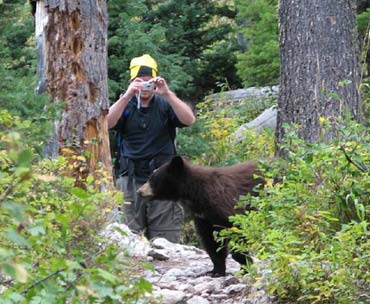
Spotting wildlife presents unique options. For some it is a mental snapshot and a drive-by, others might stop to snap a photo and video. A few will want to experience a deeper level of impact from their experience. They will seek out those who are the masterminds to providing more context. And a final few will play wildlife roulette by wandering a bit too close.
The transformative impact of real-time information is that is does not eliminate the need for experts. Instant knowledge separates out those who were seeking basic information from those who want to engage in a deeper discussion about a topic.


 What-if-concepts