Innovative Concepts

Internal Inquiry

Thanks reddit

A culture of inquiry is essential for growth.  If we remain within the same group, surrounded by similar surroundings, rehashing the same conversations we tend to replay the greatest hits.  However, if we are willing to stretch ourselves and connect with others the opportunity to innovate and expand is probable.  If we wonder why we cannot think of any new ideas, then perhaps we are plugged into our own power source.

Exhaustive Search

Circle Credit

Recent press releases announced job positions being filled after “exhaustive searches.”.  Was the time and resources committed to the search exhaustive?  Was the help wanted sign so vague that it took tremendous amounts of extra effort to find the right candidates?  If you announce you are looking for a house in a modesty sized town the request can be overwhelming.  I do not know where to start in aiding search.  However, if you can paint a specific picture (a single story bungalow in the historic district which is close to an elementary school and has a fenced yard for a dog), I can help.  Exhaustive searches come when there is not enough information to start triangulating a location or person.  Exhaustive produces Venn Diagrams with too many unconnected circles.

Probability & Proximity

There are no guarantees that you will win or succeed.  Even the 1992 US Olympic Basketball Dream Team inherited a statistical chance of failure.  You can do a lot of things that give you a higher probability that you will surpass your goal.  Matt Jordan makes the case for increasing the probability of winning medals at the Olympics based on his work as a sports scientist with the Canadian Olympic Team.  Malcolm Gladwell’s, David and Goliath offers a compelling case for shaping the odds in one’s favor.

What can you do to increase the odds of success?  How approximate are you to those who can mentor and inspire your development?  Which journey is worthy of your dedicated focus?

Human First

Boise Airport

I corresponded with Delta Airlines about the changes they have rolled-out to their SkyMiles program.  The new rules favor those who spend the most money and have the highest status level.  Amending the rules of their ‘loyalty’ program is the airline’s right.  The response I received from Delta told me that the enhanced SkyMiles model was consistent with other companies in the travel industry.  It represents the classic, ‘everyone else is doing it so we must change.’  First, not everyone else is adopting this model, Delta is choosing these rules strategically. They are trying to get everyone else to follow them to generate a new middle ground.  Second, Delta has a tremendous opportunity to address areas of frustration, such as the lowest availability of award seats, customer service that ranks near the bottom, and upgrade thresholds that punishes elite flyers who are joined by their spouse or family members on a trip.  Third, innovation takes risks.  Building loyalty requires integrity.  Delta is testing the theory that numbers matter more than people, that manipulation is greater than innovation, and that everyone else will follow it to the lowest common denominator. 

As Roderick Russell suggested, be human first then optimize.

Four Year Dreams

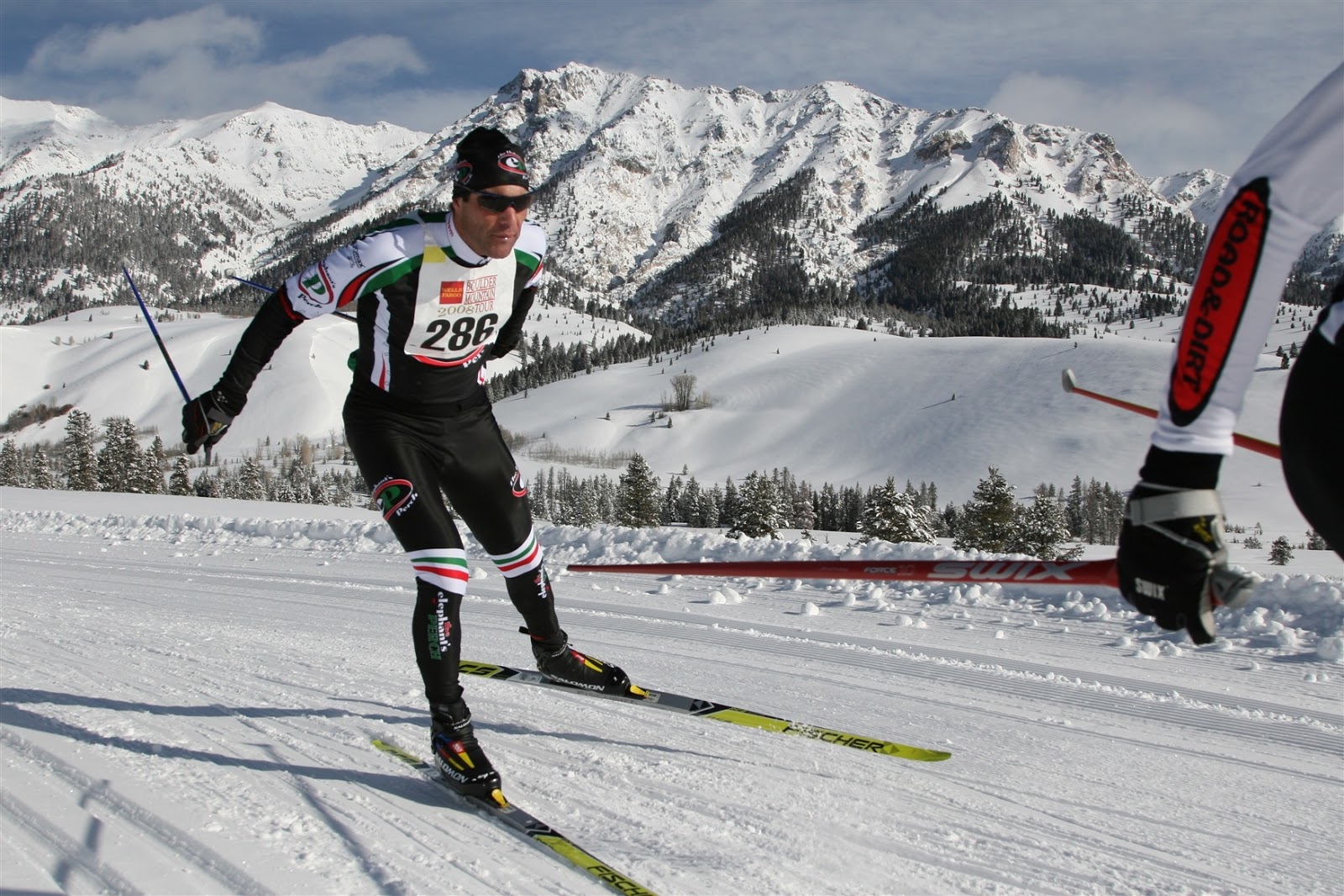
The scenery helping to make the racers look good

In my youth I often dreamed that I would earn the opportunity to compete in the Winter Olympics (an honest youthful fantasy).  I was a cross-country skier which was an obscure enough sport to make my chances more reasonable than dreaming about a career in professional sports.  The announcement that the Winter Olympics would receive a bonus games in 1994 to create a two-year off-set from the Summer Olympics seemed like a great opportunity for hopeful Winter Olympians.  There would be three Winter Olympic games in the the decade of the nineties to achieve the one-time reconfiguration.  Teammates of mine were selected to represent the US and skied in the Olympics and I never made an impression at the national level and the games represented a distant mountain range looming on the horizon but separated by far too much ground to reasonably consider journeying towards their base.  Four year cycles would pass repeatedly and at least one or two of the competitors representing the US cross-country team were individuals I had competed with in college or at other events.  With the conclusion of the games in Sochi I see the last of the gang making their final appearances in race bibs with the five interlocked circles.  I am awed by their commitment and dedication.  They have focused their efforts on an enterprise that receives two-weeks of national exposure every four years (if they are lucky).

It makes me wonder what is worth our time and effort if we were granted a brief moment on the world’s stage.  If you were nominated for a TED Talk every four-years, what would be your focus?  What message would you share?  What impact would you hope to have on the audience?  What would be your gold medal moment?  What will you be doing four-years from now?

Sharing Victory

Olympic Closing Ceremony Credit

Would you rather be catching someone or falling behind a person who you were once shoulder-to-shoulder?  Does it matter?  Are you even competing for the same finish line?  Will the results define you?  If your motivation comes from the performance of others, catching another person by coming-up from behind triggers a primal part of our DNA.  Being dropped by a group because we are no longer able to keep-up also fires off some deeply engrained survival traits.  If we raced in the Olympics, we could suddenly find it a lonely experience as elite athletes quickly surpassed our capabilities.  Other than the shock value of an Olympians proficiency it would be hard to learn much from competing with those who are out of sight.  If we choose to race with others of all abilities then we can use the performances of those around us to slowly improve and move closer to our Olympic dreams.  Improving with others produces benefit beyond ourselves and includes those who are sharing the experience and the result.  Your victory may be hollow if it does not help others produce personal bests.

Visibility

Do we need to be seen by everyone in order to have maximum impact?  If so, perhaps we should rent a billboard over an interstate and stand on the platform with an over-sized foam hand waving to all the passing vehicles.  Add a couple webcams, a live stream, and some pinwheels and we are sure to be noticed.  But would anyone care?  If we do not need everyone then locate ourselves where those who are seeking our expertise are bound to journey.  Legends often place the guru at the top of a mountain or in a cave.  The arduous journey to reach the sage is part of the experience.  It required separating oneself from the crowd in order to seek answers.  It is challenging to take the back road and be the artist who is creating magnificent works of art in a barn.  The journey to reach our remote location adds to the value of the art.  However, if we are on the side of an interstate the interaction is much more likely to be transactional and there are other options at the next exit.  Are we seeking everyone or just a few?  Our location should resonate with our services.

Here are a few examples of remarkable enterprises/events in remote places:

Kates Berry Farm- Tasmania
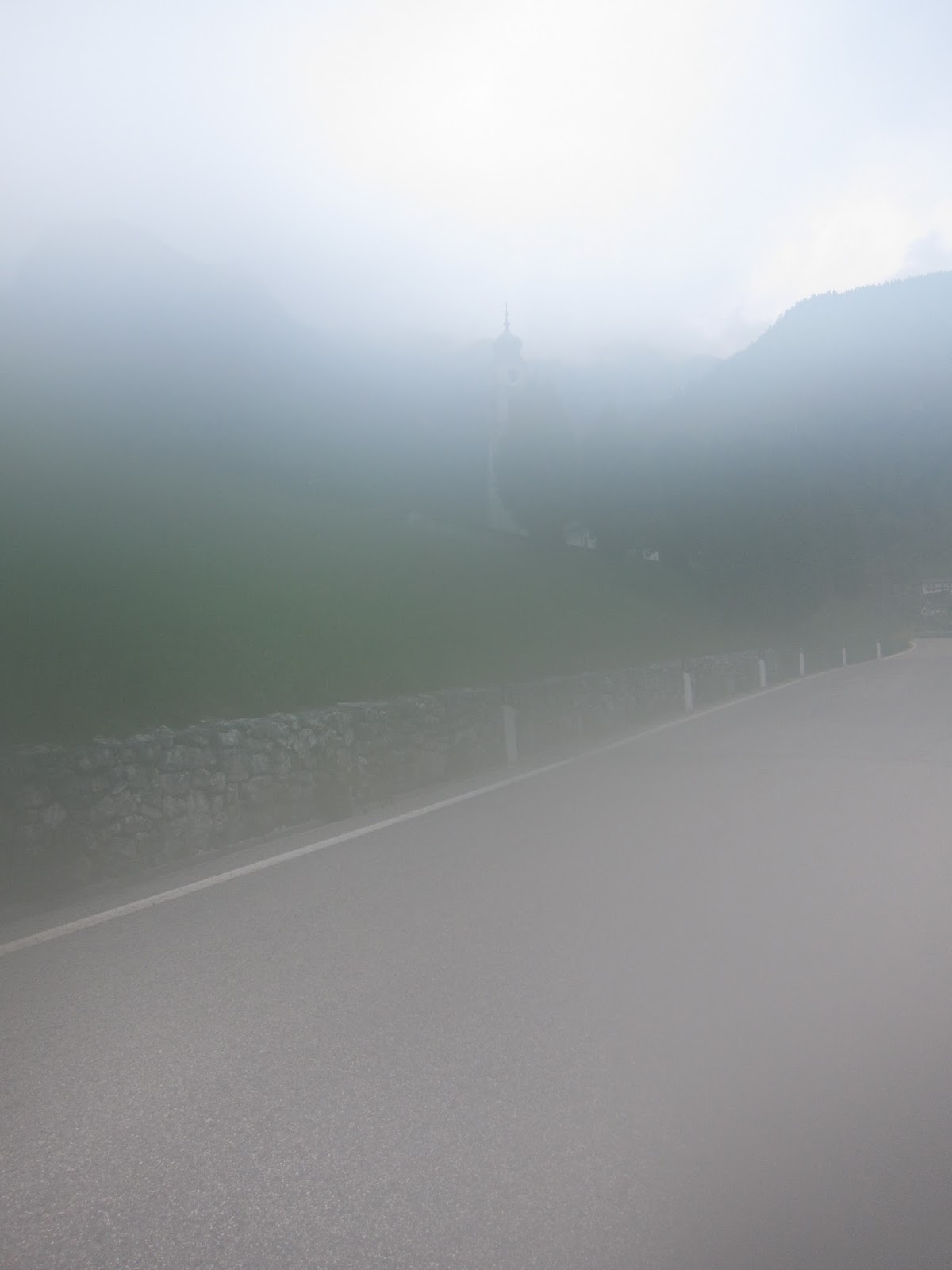
Il Monterosso Hotel & Restaurant- Italy
Mdina Glass- Malta
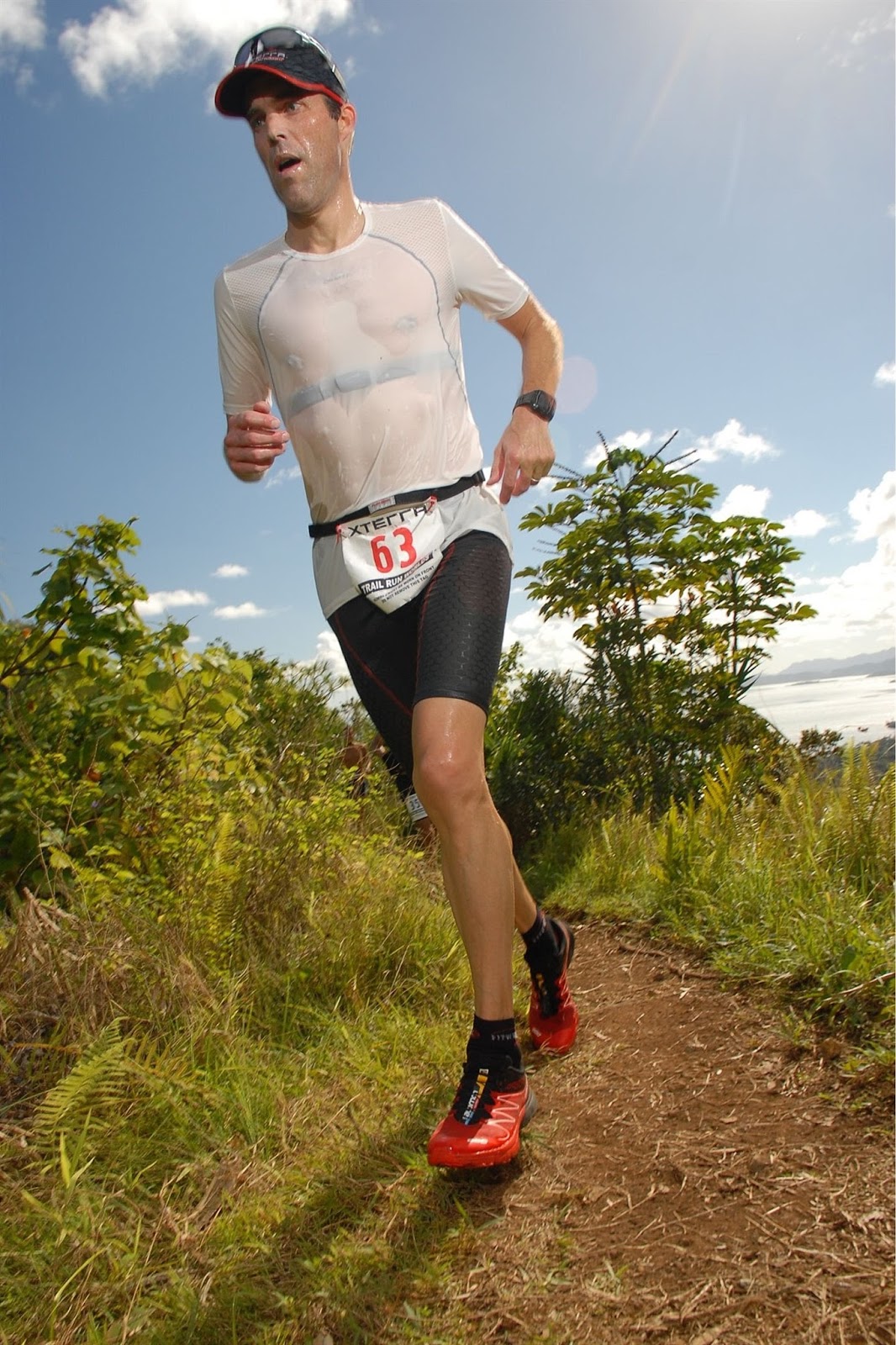
Xterra World Trail Running Championships- Hawaii
The Historical Bicycle Museum- Italy
 

Why We Compete

If we use finish places on a podium as a metric for competition then many of us have not business pinning on a number and placing a toe on the start line.  It is a rare event where I have a legitimate chance of securing a top three finish.  And even when I have finish at the pointy end of the race I can immediately identify a names of competitors who were absent and would have placed in front of me on their off day.  So why do we compete?

I believe competition is for shared experiences.  Racing provides a type of mythology that become narrative and eventually story.  A former coach reminded me that training sessions are safe.  You can use them to push yourself to the point of failure and then absorb the consequences.  Races are celebrations and personal commitments.  We agree to show-up and give our best.  The irony is that I have a hard time recalling victories.  What does hold itself front and center are experiences.  The snowstorms that completely obscured the trail that we did not know where to proceed.  The wind that blew so fiercely that my bike and I were pushed helplessly across the road and into the path of an oncoming police van on a mountain in France.  Dirt trails that stretched ceaselessly uphill onto the knife ridge of a Hawaiian mountain before plummeting down a muddy trail that requires a rope to descend.  The hug from a competitor who won their division best because we took turns leading each other through the final hour of racing.  Holding on desperately to a pack of skiers, pleading internally that they found no motivation to go faster as we screamed towards a finish line.   Riding with 14,000 cyclist in a Gran fondo that was so full of incidents and unique equipment that a cycling cartoonist would have a career worth of material.  And the smiles for having participated, no matter the outcome or place.

We compete for the adventure, uncertainty, connection, stories, and the chance to smile.  Hopes of winning may be extinguished quickly but we do not drop-out.  We continue forward, motivated by those who are putting forward their best.  Inspired to absorb the moment and tell stories afterwards.