Nonprofit

Sunday Evening & Nonprofit Committees


Sunday evening arrives and clearly a weekends worth of activity has passed and now the psychological transformation to next week starts taking place. Thoughts of all the appointments, meetings, and ‘to do’ come bubbling-up. A bit of overwhelm seeps into what had been tranquil calm and now I find myself a wave of anxious energy racing towards the Monday seawall.

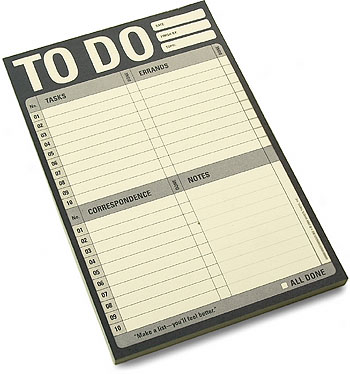
Solution- I take my pen and paper and jot down everything I can think of. This is half an exercise in capturing actual actions and half journeying. It all goes down on the list. On Monday morning I look at the lengthy list and start to prioritize. Using a code of my own design I separate the list into categories. Anything I can accomplish in less than three minutes gets one mark, business related, family, fitness & health, community, personal finance, etc. No everything gets categorized but the big items are collected into buckets. My week now seems to have clarity and I can make schedule time to work on each category.

The lack of planning is why many nonprofit organizations like a fully developed committee structure. It give the board an immediate place to assign a ‘to do’ or new action. However, not many Boards sit down and make their Sunday evening list first. They just take what comes at them as assigned or they start making busy work for themselves. The strategic plan (or compliance issues) should be guiding your committee’s work. If they are not then you might wonder if your organization is using the talents of the committee members most effectively and to the highest purpose.

The best committees I serve on typically are the of task force variety. They have a definitive purpose and deadline. Some nonprofit organizations adopt a ‘no standing’ (permanent) committees structure. Board Governance and Finance Committees are usually standing committees for every organization. Each year the Board assemble the best teams to meet the priorities of the organization.

A blank piece of paper can be an effective planning tool.

Trying New Things

Caught a few seconds of the movie National Lampoons European Vacation and then looked at some Facebook pictures of a friend’s travel overseas. Interesting to see how we act when we are in a foreign location. Some of us become more conservative when in uncharted territory. We stay with the known and use the guide books and local knowledge as reference points. Others go adventure wild, perhaps feeling less inhibited around individuals that they are less likely to know or see in the future.

Where do we as organizations go to try new things? Do we have a way of testing new ideas while maintaining some form of control? How do we take time to review the way we have been doing business? How do we consider alternative views or different ways of looking at our assumptions?

In the April issue of Spirit (Southwest in-flight magazine) there is a one page interview with Stephen Covey. One quote he reflects on is from the president of Toyota who says the Detroit automakers “overemphasize marketing, design, and technology, but don’t focus enough on building a culture that makes people accountable to each other as a team, and not just a single figure.” This seems like a paradigm shift in corporate culture. How would you go about implementing this change, especially when the US automakers continue to try to design and market their way out of their failing business models?

How do we make sure we are looking at our organizations from multiple viewpoints?

10 Changes


Reading the Sunday NY Times and came across an article addressing the recalibration that charities with ties to Israel are undergoing. Some of this comes in reaction to the fraud perpetuate by Madoff, some by the deep reliance on American donors who are are changing their giving habit based on the economic recession. Clearly this issue has played out on a public stage but I believe the nonprofit sector is going to see 10 changes in reaction to the current environment:

1. Mergers: Those who no longer can perpetuate their mission are looking for strategic partners (and sometimes organizations that have the best balance sheets). The most requested books and articles in my consulting library are about mergers.

2. Bankruptcy: Who ever thought there would be a rash of bankruptcy filings by nonprofit organizations. Clearly financial reorganization has become a necessary option in some cases. What does filing bankruptcy say to your clients, funders, volunteers, staff, and community? People are too concerned to buy American automobiles because they don’t want to loose their warranty. Would you donate and advocate as actively for a nonprofit organization undergoing bankruptcy?

3. Going Out of Business: Complete termination of services. It use to be whispered about- now it is real and it is taking place more frequently than we realize. What holes is this leaving in the nonprofit sector?

4. Finance Committees: This responsibility was occasionally left to a small group with financial acumen and some boards simply rubber stamped the Financial Committee’s recommendations. I hear stories obout the board asking more questions, requesting additional training and financial reports that they can read and understand.

5. Conservative Budgets: Anyone approving a budget with wild revenue projections this year? Anyone spent a board meeting recalibrating this year’s budget to be in-line with reduced revenue expectations? Enough said.

6. Gala Fundraisiers: Special Events became the poster child for nonprofit fundraising in the past ten years. Auctions were everywhere. The ridiculously boring to the over-the-top versions. They were not unique in most cases, cost a lot of money and a ton of time to produce. Many auction established a transactional method of giving for donors. I give and I get. I believe a new strategy will take the place of special events. Many auctions are off 30-40% this year. Interestingly, the one part of the auction that is meeting budget: Fund-a-Needs (raise your paddle to support a program or purchase an item for the organization). Donors want their money to go towards the organization’s mission.

7. Reliance on Volunteers: The untold secret for many large nonprofit organizations was that the the Baby Boomers were retiring and going to swell the volunteer ranks. Guess what, many of these ‘volunteers’ have had to add years to their careers or are not looking for volunteer opportunities. This was a strategic initiative for may organizations and now they scrambling to adjust. What assumptions has your organization made?

8. Barter and In-Kind Gifts: More groups are seeking unique was to share resources, trade services, or offer creative arrangements. These collaborative efforts often avoid organizations paying cash for services when a trade can be worked out. I recently saw three local theater companies hold joint auditions for their community. One day, many roles, one locations. Seems like a good use of time.

9. Going Against Trends: It is trendy (and for may of us a necessity) to be thrifty right now. Very few donors are not going to attend an auction and spend money just to show-off. Individuals working for companies where layoffs are taking place are not about to be seen spending lots of money in public. You cannot beat the trend or public consciousness. Best to understand it and respect the public pulse.

10: Donor Demands: I have already seen organizations turn down donations with too many strings attached. The mantra for many organizations has become ‘annual operating support.’ Even the largest endowments are seen as vulnerable in these times. A dollar given today is much closer to par. If your organization raises $100,000 in annual support it would need $2 million in an endowment which would have been $3.4 million before the average portfolio dip of 30% endowment value. Unrestricted annual operating dollars are king.

Just ten basic changes that I think will germinate from this period. What changes are you making?
What to do with all that space?


Vacant retail space in malls and shopping center is being converted into temporary attractions. Opportunities seem abound to land prime retail/high traffic space at little or no cost as a way to help fill-in the gaps that retailers are trying to make dissappear. What could the nonprofit sector be doing to maximize this opportunity? I have seen arts & crafts festivals promote community/nonprofit booths to fill-in stalls when artists cannot attend. Real estate firms loan moving trucks to community organizations when they are not is use by their clients. Gala fundraising events fill open tables with volunteers and strategic partners. Marketing opportunites are abound. The NCAA Final Four basketball torunament has an official ladder sponsor so the winning team can climb-up to cut down the nets. Clearly there are opportunities to make your presence known. Keep us posted if you have found a creative ways to address these opportunities.

Project 39


Launching a new initiative focused on serving movements and enterprises that are innovating new ways of addressing opportunities and challenges. Combining the resources of What if Concepts with the tribe of followers the intention is to be a collective force for good. To reach out and provide our unique talents in a collective effort to launch and grow movements and organizations that need to succeed. What does this look like:

Common Ground/The Momentum Group: This organization is providing assistance to refugees and displaced internationals in Boise, Idaho through a job training and placement initiative. This grassroots efforts is being launched from an existing nonprofit organization that has launched projects internationally. The training is being lead by other refugees with assistance from a volunteer leadership team and the organization has become the ‘talk of the community.’
Project 39 has donated and dedicated consulting resources and talents to this enterprise because the success of this program provides a template that has the potential for an exponential impact. Communities in other states are seeking to replicate the Boise version because it has already accomplished something significant- Common Ground has taken the refugee and an unemployed international population in the community and helped refine their existing professional skills so they can be employed in job opportunities that are desperately seeking employees. It is the ultimate paradigm shift of taking a group who is being handed fish on a daily basis to teaching them how to fish.

Much more to follow on Common Ground and other movements with profound impact. Tell us what you are working on.

A New Life


Watching Charlie Rose on PBS last night with his guests who were discussing the recent renaissance of the High Line in New York City. This abandon elevated railway had been slated for demolition. Built in the 1930’s at the same time as the West Side Drive it had become a artifact of another generation. Developers were keen to get access to the private land that was constrained by the railways platform. The Friends of the High Line was formed and raised enough public awareness and support that the High Line is now prepared to open its first renovated section as a public park. Taking a cue from the vegetation that had taken hold of the railroad bed, the winning design is a blended paver system that seems to meander through the grasses and landscape. And the developers and realtors are now using the High Line as a community amenity to sell their adjoining real estate listings. What had once been a forgotten decaying relic is now the talk of the town.

What exists in our own communities that may be a greater asset than we ever imagined? What liability is suddenly a valuable treasure? It reminds me of the baseball card collection that sits in the shoe box collecting dust and just before it is tossed away somebody realizes that there is a card within its collection that is highly valuable. Suddenly we put the card in a plastic sleeve and treat it like a fine bottle of wine with attention to its condition.

It’s All About Scale & Balance


So Spring Break is over and it is time to get back to the ‘real world’. It is time to focus on the important issues of the day. To fill my schedule with appointments instead of taking the moments as they comes. To be aware of time instead of waking when the first person lazily rolls out of bed in the hotel room. It is time to start the day with the news and stay connected throughout the day instead of taking a subtle glance at the complimentary paper sitting outside the hotel room door. It is time to work through the ‘to do’ list on my computer instead of the ‘to ride’ list at the amusement park. It is time to regain my perspective and take back the serious issues at hand. It is time to understand the nature of our economic condition. So I start my post Spring Break blog with this tremendous graphic that needs no words to bring my life back into focus. Take a peak at http://www.nytimes.com/interactive/2009/03/31/opinion/20090331_schott.html

Wow- perhaps I need another Spring Break.

Virtual Philanthropy

Just read on Twitter that the NY Time found that many first-time donor who complete a transaction online do not return. Questions that come to mind:

  • What moved them to donate in the first place? What was their motivation?
  • What did the organization do to keep them engaged?
  • What was the extent of the ‘relationship’?
  • What opportunities exists to make a first-time donor a repeat donor?
  • Was this a ‘test gift’ or was it in response to PR, media coverage, a campaign, special occurrence, etc.?

Many opportunities exist to retain first-time donors, especially when other organizations are not meeting their needs.

It All About People


Today I was thinking about my relationship with different organizations. Why are there nonprofit organizations that I remain involved with by volunteering and contributions and others that I just drift through? There are so many good causes and great programs. What attracts my time and resources? I think the deciding factor is my relationship with the people involved within the organization.

It can be a connection with a staff member who does extraordinary work. A meaningful line of communication with an Executive Director. A personal relationship with a board member or volunteer who takes their passion for the cause and engages mine as well. Or it is a customer of the organization who is a walking megaphone and is spreading the latest and greatest news.

I have come to realize that it is when one of these connections leaves the organization or stops communicating that I start drifting away. It is not always intentional. A void is created and my attention shifts elsewhere. That is why I see new Executive Directors or CEO’s spend their first one hundred days meeting people, forming relationships and calibrating their strengths with the organization’s culture.

During a capital campaign when a change in the staff or volunteer leadership is made I find myself being less certain about the multiple year pledge I had previously made. If the Executive Director was my link to the organization and they move to another job my connection to the nonprofit has lessened significantly. It does not mean that I am not going to continue to donate and be supportive of the mission but I find it much easier to attach a face to the mission instead of words.

People matter. They impact relationships. You are the reason that somebody else is a member of a nonprofit, buys a certain brand, attends religious services on a regular basis. It is an interconnected web and you play a critical role (often unknown).

Who influences your choices and loyalty?

How Important is Your Organization’s Vision?


I spent the past two days serving on a search committee interviewing candidates for a Executive Director position. It was an energizing experience since each interviewee was dynamic and brought a wealth of information and talent that would clearly help the organization succeed. Each potential leader has unique attributes that would clearly benefit the nonprofit organization.

Being blessed with a great pool of candidates, the real question for the search committee becomes which of these leaders will best guide the organization towards its vision. The foundation of the search committee’s final recommendation to the board will ultimately be grounded in the organization’s vision.

How well do you understand your organization’s vision? What are you ultimately trying to achieve through your programs and services? A great vision provides a tremendous advantage, especially when making critical decisions.