Social Sector

Free Space

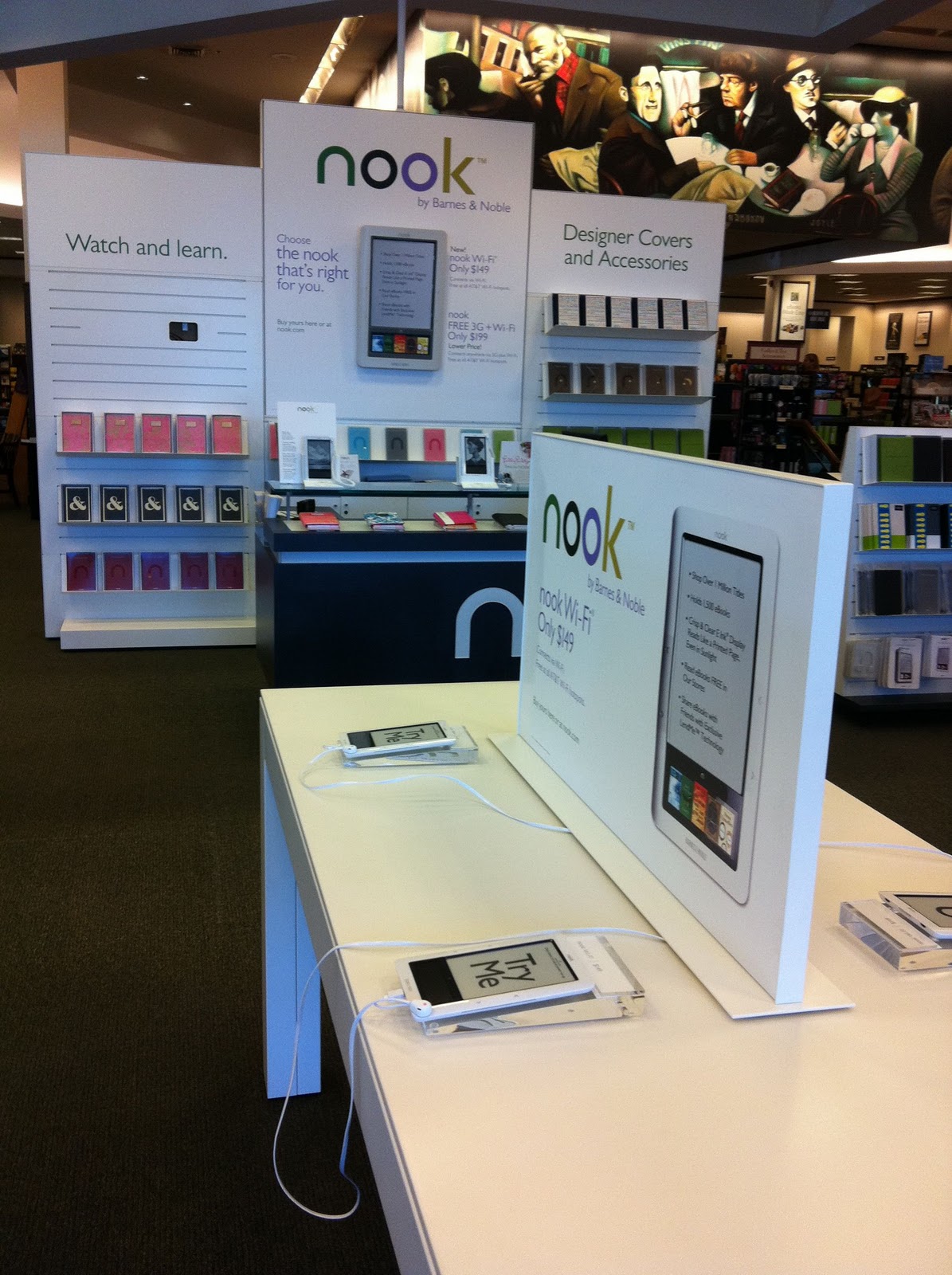
I walked into a Barnes & Noble and was amazed to see the transformation that has taken place.  Missing were the bookshelves with best sellers that had greeted me upon entering.  New shelves with greeting cards, writing supplies and toys filled one corner of the store.  Lego roams where classic literature once held court.  A couple of tables that appeared similar to an Apple Store displayed a hands-on area to test the Nook e-reader.  A Starbucks in the middle was clearly the busiest portion of the enterprise.  As I departed through the movie and music section, I was wondering how the Redbox across the street was impacting sales.  On one side, Barnes & Noble was embracing the e-reader with a commitment to the online delivery format.  On the other side the company was holding firm to the traditional sales approach to selling CD and DVD.

In the social sector, we have been quick to adopt social media and ‘donate now’ buttons on our homepages.  We have been more reticent to leave some methodologies.  For example, I often hear how labor intensive and exhausting an organization’s last strategic planning process turned out.  I will offer new models and encourage a more inspired and engaging approach.  Many times the initial reaction from the enterprise is to reluctantly suggest they should stick with the tried and true, no matter that it means torture by boredom.

Is it change we resist or is it our loyalty to the known?  What leaps of faith have you made that have reaped great rewards?  What is the least amount of change you could take that would have the greatest impact?

Whack ’em and Plaque ’em

Thanking a board member or volunteer for their service is tricky territory.  Doing nothing carries the least amount of expense but has the most down-side.  It is disheartening to watch an individual fade into the night without mention or commendation.  Many times these fans slip from the radar screen, the annual report, and email list, often feeling unappreciated.  Another approach endorsed by optimist football league is that everyone gets the same token and recognition.  There are no winner and there are no losers.  As master BoardSource Governance Consultant, Sandra Hughes used to say, “you wack ’em and plaque ’em.”  A handshake and something to go on the bookshelf was the minimum standard.  

The next level up is a customized or more personal approach.  You invite the retiring board member or volunteer to an event that has a more genuine touch, perhaps a reception where a peer provides meaningful reflection.  The end-result should be the departing volunteer leaves on a high note and continued engagement is likely.  Some nonprofits offer an official committee or advisory council position to departing board members or leaders such as a past board member’s council or past board president committee.  Then there are the causes that go over the top.  A party worthy of a fundraising gala is thrown.  For all you know a cruise liner could have been christened among the decorations and fan fare.  

Perhaps a naming opportunity appears among the honors.  This approach works for some enterprises and is needed by those who worry about the legacy of their service.

The process is unique to each cause.  A certificate and personal photo can bring one person to tears and be anticlimactic to another.  Everyone receiving the same token is treasured like a varsity letter by one group and scoffed at by a partnering cause.  Finding your organization’s way is the organic part of the social sector.

Just one note, remember to get the details right for the honored individuals.  I am the proud owner of a pottery plate thanking me for my four years of service as board chair.  Just below the organization’s logo is my last name, misspelled.  It was a humorous but awkward way to wrap-up an intensive period of service.

Choice

I received a season subscription packet to a theater company’s upcoming productions.  The materials were beautiful and the options were numerous.  My issues was that I could not decide how to proceed since at least thirty ticketing choices existed.  There was no predefined packages for me to use as a baseline.  Frankly, there were too many choices.  As I considered the options, I heard a television spot for the Boise State University basketball team.  They were running a promotion that no ticket goes unused.  If you buy a package and cannot make a game you simply roll the ticket forward to future game.  It makes the decision to purchase much easier since the commitment is flexible and the system leans in your favor.  I understand an athletic team has far more seating capacity than a theater company.  However, managing the number of options is critical.  If the theater company had provided three options: want to attend one play, the entire season, or customize your own package.  This would have been an easy starting point.  You can provide the suggested path and then let the few who need to create their own package do so.  There is probably a reason that so many fast-food chains allow you to order by a number (at least the last time I patronized one).  Ordering a preselected meal combines a lot of options into a single decision.


How are you helping your patrons interact with your cause?  Does your fundraising material offer a suggested donation?  Does your membership material provide a few clear options with reasonable benefits?  Does purchasing a ticket to an event happen seamlessly and conveniently?  Is it easy to follow your operating hours?  Simplicity is manageable.

The Artisan

Thomas Friedman’s Op-Ed column in this Sunday’s New York Times, raises an interesting perspective.  He recognized the idea of individuals considering themselves as an “artisan,” a term promoted by Lawrence Katz from Harvard University.  To get at the core of the concept, Mr. Friedman writes,

“But just doing your job in an average way- in this integrated and automated global economy- will lead to below average wages.  Sadly, average is over.  We’re in the age of ‘extra,’ and everone has to figure out what extra they can add to their work to justify being paid more than a computer, a Chinese worker or a day laborer…Their work will be more meaningful and their customers more satisfied.”

It makes me wonder if a portion of the social sector has relied on being average for too long.  With the new frontier of B Corporations about to start a land rush for enterprises that use the power of businesses to create public benefit, are we entering the sunset of the social sector.  Is the 501(c)(3) endangered to become the transistor radio of the television era?  Will the demand for greater profitability in the name of the greater good attract a whole generation enticed with start-ups and the responsiveness of a business environment?  Will having an impact without the need to take a pledge of poverty become the calling card of innovative ideas?  Are we drinking from the same well and using similar maps to predicted the best path for our campaigns?  Will the idea of invested stakeholders and the development of a profitable brands take the place of doing good without the need for glory?

I wonder if the touch-paper has been lit and we will see the smoke only after the flames have reached our mission?  The social sector is at its most vulnerable and most revered in the economic recession.  Contraction and partnerships have reduced some of the overlap but much like Wall Street financial institutions, I am not sure what lessons we have learned will inform our sector’s future.

If you are an artisan, perhaps now is the time to confirm your purpose.  As an outdoor wilderness instructor once suggested, a compass is a tool.  It can lead you to safety or off a cliff, depending on your ability to use the information.  If a new frontier is opening, it is nice to know where you are starting.

Last Call

Friday Evening

Sometimes we need to remember to seize the opportunity.  Having missed a couple chances to get in a backpack this summer, I found myself with an opening to sneak into the Sawtooths Friday afternoon.  Knowing that winter weather was on the way, the window was short but the experience was memorable.  With 6-12 inches predicted tonight and tomorrow the lakes may be bidding adieu to the backpacking season.  Glad I made the journey.

Saturday Morning

Facebook or FacelessBook

If a person you only knew as a friend on Facebook asked you to loan them a $1,000, would you?  If you did, would you expect to get the money back as promised?  If you met the same individual in-person and they reached out their hand to confirm the terms of the loan and you could look them in the eye, would it change your decision?  

These were a couple observations shared by a participants on a conference call with Simon Sinek earlier this week.  The more I thought about it, the more I realized that convenience was replacing the humanizing part of a relationship.  Consider this, how many social sector causes do you support that you have either direct contact with a representative of the organization or visit the enterprise’s physical location?  Conversely, how many causes do you support only through a virtual relationship?  Are there organizations that you interact with only via the internet, mail, or some form of third-party contact?  If you measured the impact of these relationships does your connection to one group feel stronger? 

I certainly feel more connected and inspired by the organizations that I interact with on a human-to-human level.  Of course it is not possible for all the causes to reach me on this level but the degree of my engagement and philanthropic priorities lean in favor of the groups where there is a human-to-human relationship.  There is a reason that colleges maintain a class agent program.  It is far more meaningful to speak with a classmate than be bombarded by emails and phone calls from a member of the advancement office that you do not know.  Many times, planned giving officers spend years cultivating and connecting with possible benefactors before a gift instrument is ever created.

The value of a face-to-face meeting is not going away anytime soon.  As Simon pointed out, consider that even the blogging world holds a convention in Las Vegas every year.  If there was ever a group that was equiped to meet on a conference call it would be bloggers but instead they choose to gather in-person instead of virtually.

So now about that $1,000…

Network

Who can you call when you need a lifeline?  Who do you connect with to share ideas and discuss opportunities?  Who has a network that offers relevant resources and ideas for your area of focus?  

I had the chance to met with a good friend and fellow consultant yesterday and it was great reminder of the importance of having a confederacy of professionals.  A brain trust or personal board of directors to help expand your thinking.  As a consultant in the occasionally remote-feeling state of Idaho the ability to network is sometimes less likely than my colleagues in New York or San Francisco.  That said, building a collaborative brain-trust is essential. Who can a CEO turn to when considering how to channel the enthusaism of an Board Chair?  And likewise, where can a Board Chair turn to strategize about keeping trustees focused and practicing great governance?  As a consultant, where can I share innovative strategies and learn from the experiences of the few who are engaged in fulfilling a similar purpose?

What keeps you awake at night and who do you call?