Consulting

Ecological Load Factor


Continuing to read a fine line by Hartmut Esslinger. He proposes developing a future market using a pricing index that includes an ‘ecological load factor’. Meaning that the environmental impact of an item a consumer purchases would have an ELF index and the price would increase if the process the manufacture used to produce the item is environmentally unfriendly. If the product utilizes green production processes, sustainable materials, uses less energy and is recycled or returned to the manufacture at the end of its lifespan, the ELF index would be low. If the product did not meet the standards set above then the price for the product would have a higher EFL index. The index would evaluate the ecological impact of manufacturing process of product, materials used and the cost to dispose of the product at the end of its life cycle. Currently, we give tax credits for green initiatives but consumers do not have to pay more at the point of purchase. How would the marketplace change if pricing were altered to reflect the ecological load factor of each item?

How do we prepare for changes to the marketplace? What might we anticipate that supports the mission of our organizations? Where is your enterprise on the ‘green movement’ scale?

Fear Announcements


Flying home on United Airlines from Denver yesterday afternoon and the gate agent made the following announcement: “The captain wants to weather warn you that due to severe thunderstorms this flight may be diverted to Idaho Falls, Idaho or Spokane, Washington (both of which are a four hour drive or more from Boise, Idaho). The announcement complete the agent asked for Zone 1 to begin boarding. The hesitation to board was obvious. Should I get on? What are the chances of the plane diverting? Is the Boise airport open right now? Have planes been landing during the day? What happens to me if the airline deplanes me in a town so far away from my destination?

Passengers started asking questions and got no answers. Then the great mobile phone game began. Passengers called anyone who might be effected by a major shift to their itinerary. I overhear calls where people were forecasting not being able to arrive in Boise until noon the following day. I called my wife and she quickly emailed me the following photo from her phone

A quick check of Flightaware.com and I saw that the airport was seeing normal departure and arrival activity. My potential panic subsided with this information. I tried to share my ‘local’ knowledge of the situation but those around me continued to make a flurry of calls and emails before we departed.

From the moment the plane door closed until we arrived in Boise there was not a single announcement about our intended plan. The pilot and co-pilot or flight attendant never acknowledged the weather warning or calmed the frenzy by announcing that we were planning to fly direct to Boise. People discussed the potential diversion and their plans until it became evident that we were descending through the storm to the airport.

This was a great reminder that you need to remain cognisant of your message. You may have clarity about your strategy internally but have you fully communicated it to your customers and constituents? Do your customers think you are on a diversion when you are actually planning to proceed as planned? A lot of energy is used and mistrust developed when you are not transparent in these situations.

When It Gets Personal


Co-op Boards are a tricky group. Not only do you need to make decisions as a board member but then you truly need to live out the consequences of these decisions in your own home. Pick the wrong new owner, agree to let the doorman go, replace the outdated chandelier and you may have just started a new version of the War of the Roses.

Interesting article in the NY Times about when it all goes wrong? http://www.nytimes.com/2009/08/02/realestate/02cov.html

Is there a better way? How do you avoid decision-making that becomes so personal?

Data On Which Age Groups Use Specific Social Media


Clients who are later adopters of technology are always telling me that they need to get on Twitter, Facebook, MySpace, etc. They need a great social media presence. I ask them who they are trying to reach with these forms of media. One group’s core audience is women between 40-70 years old. Another group serves young teens but raises 80% of its donations from the generation that would qualify as grandparents to these teens. Twitter may not be the right source to invest in for either of these groups (at least as they think it will be applied). I have mostly relied on anecdotal evidence but this recent study is truly helpful to quantify which generations are using which forms of social media.

http://www.insidefacebook.com/2009/07/30/new-study-shows-how-different-generations-use-facebook/

What has worked well for your organization? Who are you trying to reach? What feedback to you get?

Sharing the Stage

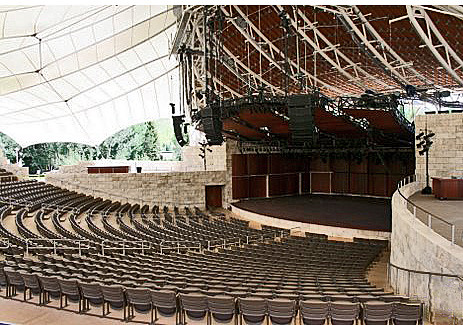
Attended the Sun Valley Summer Symphony summer gala, ‘Some Enchanted Evening.’ Headliners included Tony Award winning singers (Victoria Clark and Paulo Szot) supported by the Sun Valley Summer Symphony. An evening dedicated to the works of Roger & Hammerstein. The stars arrived, rehearsed and then performed and jetted back to New York in a 24 hour period. The choreography of their performance and the energy of the symphony appeared polished and well-rehearsed. Entrances, exits, romantic kisses. The whole evening felt much like we had flown to Broadway instead of Broadway coming to Idaho. What was most remarkable was the stars synergy. This was not two recognized talents trying to steal the evening. It was teamwork with their respective co-star, the conductor, and musicians. Visible appreciation for each others unique talents. By the end of the night the patrons wanted more, almost disappointed that they could not coax a second encore.

Clearly Victoria, Paulo and guest conductor Ted Sperling are professionals. What they could not fake was their enthusiasm and authentic passion for the place, people, and moment.

Do you have the right performers? Are you maximizing their talents? Is it authentic?

Another Survey?

While on the theme of surveys from yesterday, I recently had the chance to participate in a focus group for a major hotel chain. Very interesting and appreciated the chance to provide feedback. One of my observations (and I know many of you have the same):

Why does the more economical property in your hotel chain provide the following free or complimentary amenities when I stay: wifi, breakfast, recently upgraded room, fitness center access, parking, shuttle, business center? All for usually half what I play for the flagship hotel.

Why does your flagship property charge me extra for: wifi, breakfast, parking, resort fees, smaller room, fitness center access, parking, business center?

Does this model make sense? I have stayed in cities where if I travel one more exit down the highway I can stay in the same hotel family but get a whole lot more for my money.

Do we have our organizations arranged so the services are aligned for what you charge? Do we send mixed messages with our fees? Do customers and donors shake their heads in disbelief at our model or do they approve?

Crazy Survey

I just received a JD Power survey about a vehicle I own. I started answering the questions on the survey because I am always interested in how they design customer surveys. I made it about a page before I began to laugh. and tossed the survey into the shredder. What made me laugh? I could only imagine the scenarios where I did either of these actions in an after-market:

Does your car have tires/rims? Were they installed by the dealer or after-market?

Does your vehicle have keys? Were they installed by the dealer or after-market?

I know the intention of these questions was to gain data on upgrades or changes to the vehicle but since brevity was clearly the theme of all the questions they make no sense. Did I carry my car off the lot? Did I have it taken by flatbed and have tires and rims added and while you are at could you call the locksmith and have a set of keys made-up so I can drive this thing?

What questions are we asking our customers that make no sense? Do we allow for feedback so we can uncover objections to inappropriate questions? Have you accounted for how many customer feedback forms went to the shredder because the questions could not be answered?

Letting Your Team Shine

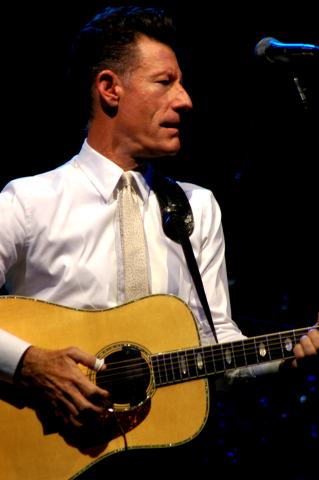
Attended a Lyle Lovett concert last night. Probably the sixth time I have seen him and his large band. He puts on a great show in my estimation. Lyle seems to have a handle on the local community and is able to make reference to a couple places he visited while in-town. It makes you feel like he went out and explored in the community and did not just roll in on the tour bus, play, and leave.

One of Lyle’s greatest skills as a performer is his ability to share the spotlight with all the musicians he has on tour with him. I recognize many of the members of his band so there appears to be a loyalty and desire to continue touring with Lyle. He arranges songs that give the entire band a chance to demonstrate their talents. The vocal back-up singers are impressive in themselves. Add a violin, bass, keyboard, guitar, cello, piano, horn, fiddle, drums and you have the making a large band.

How do you arrange your meetings so all your staff and board get a chance to shine? Does your organization inspire loyalty? Do people want to stay involved?

One of the best resources I have read and used repeatedly when it comes to executing a Capital Campaign is Stuart Grover’s book. He does a tremendous job of outlining the key steps, considerations, and resources to execute a successful campaign. What is most effective is about Stuart’s method is that it is simple and focuses on the fundamentals.

When it comes to asking for money, the process is clear that most individuals expect to be solicited for contributions. In fact the average American is barraged by appeals (email, mail, websites, phone calls, text messages, special events, etc). What helps differentiate the truly successful organizations and their fundraising efforts and the ones that just make a lot of noise is the ability to align donors with individuals they trust. If a potential donor hears from a trusted source they are much more likely to give serious consideration to making a donation. If you are the trusted source that is making the appeal, then you ability to communicate that you have invested your time, talent, treasurer and/or touch (as outlined in the Generosity Factor) is a essential. You have put some poker chips into the pot- so to speak. You have made a commitment and now you are sharing the opportunity for others to join you in this tremendous opportunity.

How do you connect with your donors and supporters? Do you have the right trusted source connecting with right donors? Has the person the donor trusts made a significant investment of their own in the project?