Innovative Concepts

Better than Facebook?

Credit

MarketPlace on American Public Media had the following exchange between Kai Ryssdal and Phil Fernandez regarding Facebook’s pre-Initial Public Offering roadshow:

Ryssdal: But if it goes bad in one of these 10 to 15 minute meetings, you’re probably have like nine more set up that day, right?
Fernandez: Nine or 25 or something like that. I’ve done them from San Diego to Los Angeles to Denver to Minneapolis to New York, all in the same day.
Ryssdal: Yeah, sounds grueling. Sounds like not a whole lot of fun.
Fernandez: You know, it’s an incredible high because what you’re doing is one of the most exciting things in a career, and at the same time, it’s about as hellish as anything I’ve ever been through.
Ryssdal: This might seem like kind of a rookie question to ask, but why do we need roadshows? Why do you guys have to go do this? Isn’t there a better way?
Fernandez: You’d sure like there to be a better way. In all things, there’s this adage that says ‘people buy from people.’ And I think this is exactly what this is — it’s people looking people in the eye and choosing whether they’re going to do business with them.
The interview highlights a fundamental point that people connect with people.  A corporation, (even Facebook) cannot create an emotional reaction by itself and with all it knows about us.  The people involved with a cause are the ones who ultimately give it a heart and soul.  This is why direct mail campaigns rarely move the needle when it comes to participation and transformative giving.  It is easy to ignore or select a token gift in response.  However, when your best friend takes you by the arm and says you have to have a very specific experience that resonates with your belief system, it can generate a chemical, biological, and physiological reaction.   If you are moved emotionally, you are ready to do what you can in your power to make a difference.
So often we are afraid to meet face-to-face with another person and ask them to take action.  We hide behind envelopes, emails, websites, and proxies.  This offers a massive advantage to those who are willing to step forward and connect with a peer.  Our fear keeps us off the stage and withholds our greatest gift, the ability to facilitate a shared experience. 
If you are better than Facebook than perhaps avoiding face-to-face meetings is a realistic business strategy.  For the rest of us, maximizing a human connection is the greatest act we can take on behalf of a cause we support.

May Day

Credit

May Day, a time to march in support of worker’s rights across the globe.  It makes me wonder about the impact of a unified effort.  Standardized testing has been a topic of educational blogs I follow.  The SAT was long theorized to be replaced by a far more sophisticated assessment tool yet it is still the necessary currency for those wishing to submit an application to a competitive enrollment collegiate institution.  What if, in the spirit of May Day the Class of 2013 opted out?  If enough students did not participate in the SAT, college admission officers would be forced to make acceptance decisions based on other attributes.  The students would have the power to present themselves more fully.  Numerical rankings that were conveniently performed based on SAT scores would no longer be available.  The data set that is critical to the college admission formula would be incomplete.  How would a college respond?  Would a student be able to submit a portfolio that better represented not only how much knowledge they had accumulated but more importantly, how they were using this knowledge?  Could a student direct a college to their progress on Khan Academy, showing not only mastery of a topic but dedication to self-paced learning?  Would linking to a blog or an extended project portfolio be worthy?  How about highlighting images on Pinterest where the student’s artwork was organized and further linked to exhibitions?  Could you submit your e-book, video that went viral, audio file about the nonprofit that you founded?  How about the sport that you had mastered, the year living abroad, work with a master musician, or the years served as an advocate for youth in local government?  Could you present your passion and explain how college was going to enhance your journey to serve others?


A college admissions officer explained that applicants at his college were ranked on a 1-10 scale.  A rating of ‘1’ was representative of a student who was a National Merit finalist, near perfect SATs, received teacher recommendations that rated the student as exceptional.  Sixty percent of these students were denied entry to the college where the admission director was employed.  The SAT did not make a difference.  These individuals who excelled as test takers were simply lumped into the highest tier which gave them the greatest probability of acceptance for any of the groups on the one to ten scale.  Yet their chances were less than fifty percent.  The decision on admission was made based on the student’s other skills and achievements.  In may ways the SAT gained them entry to a waiting room with no guarantee of an appointment.  Here’s hoping the waiting room has unlocked wifi and comfortable seats.


I wonder which incoming class of High School Juniors or Seniors will be the first to take back the college admission process and ask for a more complete representation of their unique skills and passions?  When will standardized tests with bubble sheets be regarded as a throw back, similar to tossing the kids in the back of a station wagon with no seat belts, no airbags, while the driver smoked, the right front wheel wobbled out of alignment, the gas tank was half-empty, and everyone headed towards Disneyland at 70 mph?


Here’s to you Class of 2013…

Now

Being present does not mean one is still.  It can be an active state.  A smile on your face because you just experienced a paradigm shift.  It can be leaning into the driving rain of an approaching thunderstorm.  Or crouched over bicycle handlebars as wheels sing the song of 50 mph descents.  Now is not always a meditation in silence.  Being present is a doorway to a state of gratitude.


Where are you now?

Too Much?

Credit

Every once in a while there is a chance to do ‘too much’.  A series of events fall in a compressed timeframe and the opportunity exists to push ourselves beyond what we might consider reasonable.  Two races overlap, conferences in two cities, travel itineraries, or meetings.  What I have discovered is that I enjoy participating in the frenzy of activity when it renforces my belief.  Flying overnight to a conference to only return the next evening for an engagement is energizing when my purpose is strengthened.  Racing on Saturday and Sunday, even when my legs tell me they have no interest in moving Sunday morning.  Connecting with a series of individuals in short sessions that are scheduled one after another.  It is not be confused with multi-tasking because each activity is take one at a time, there is just another event to follow immediately after.


International travel with a short duration in a new city holds the same spark.  See what you can and then sit back on the departing train or flight and allow it to soak in completely.  Take a deep breath and feel the transformation.


Too much is when there are no reasonable moments to pause.  But an energized period of action in an interval that expands our understanding of our capabilities and ou beliefs.

Wearing the Uniform

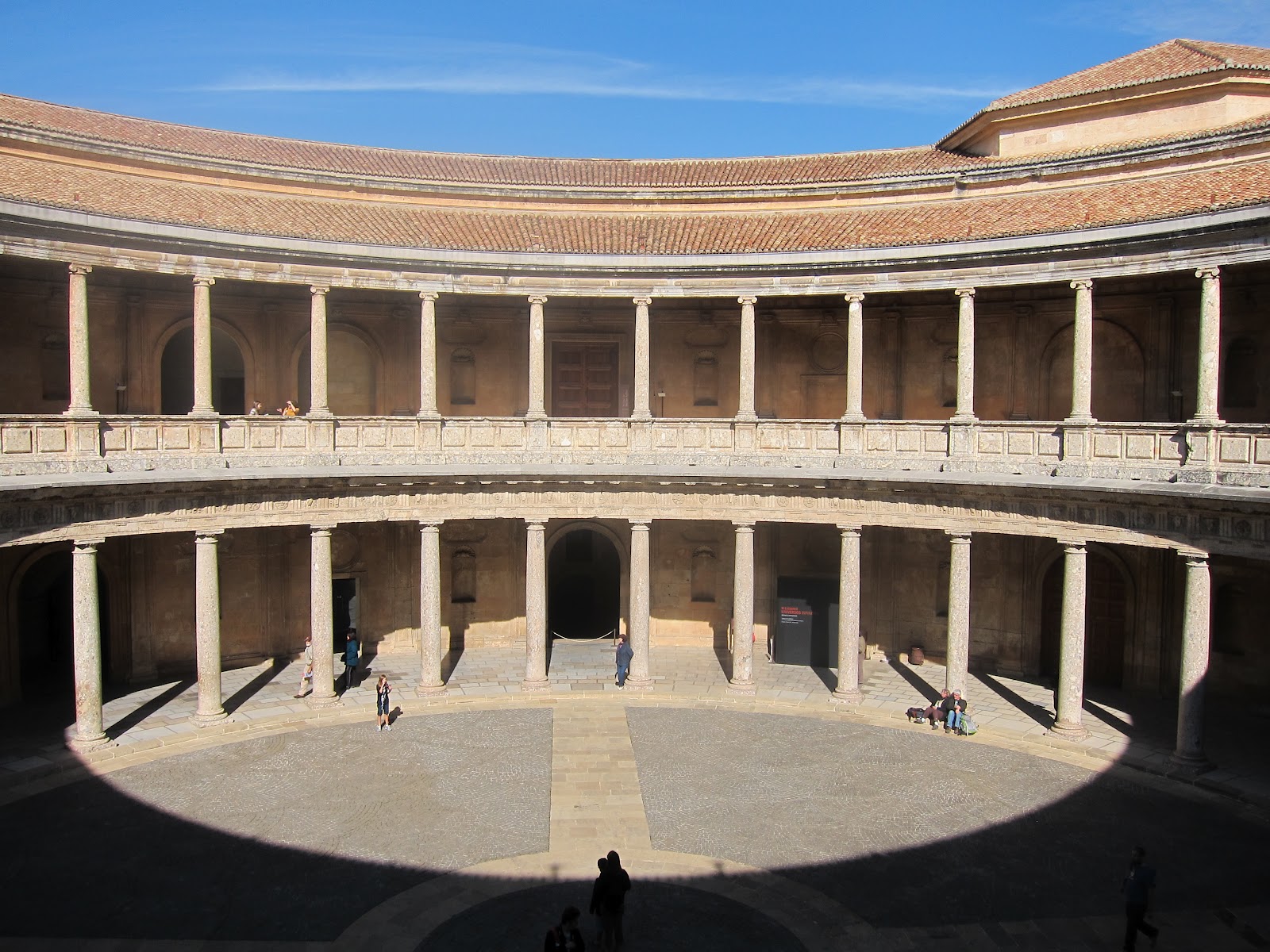
You do not need everyone to create a transformative movement.  There only so many individuals a person can connect with one-on-one before needing to rely on less personal forms of communication.  If you sent out a request for your fans to assemble in a small courtyard, who would show-up?  Are they ready for action?


Once you have the group assembled, empower them.  Trying to enroll everyone into a call to action is unrealistic.  Concentrate of those that have appeared wearing the team colors.  It is easy to frete about who is missing but the game goes on with players who wear the uniform.


This is your team! 

Membership

Credit

Membership is not a card you purchase.  It is not a discount you receive at a bookstore or gift shop.  Enrolling in a cause does not include filling out a form or getting early access to tickets.  Membership is not a priority line or badge. It is not about being listed in an annual report or having your name etched on a wall.  Membership is about what you can do to enhance a cause.  It is an action not a status.


Do not confuse frequent patronage with inclusion in a tribe.  If you joined because of features and benefits then the relationship is transactional.  If you joined because you recognized an opportunity to have an impact and have something to contribute then enrollment occurs when you join those who are ready to lead.

Instant

Credit

Mobile applications such as Where’s A Bear exist to pinpoint the exact location of bears in Yellowstone National Park.  The app stores the data between cell coverage areas which is a scarce item throughout the park.  A visitor can now more successfully play wildlife bingo and race from animal to animal sighting in hopes of seeing the Big Five (grizzly, bison, wolf, big horn sheep, elk),  Sensational Six (Big Five plus moose), or Fantastic Four (car full of tourist arguing over which of the Big Five they just spotted).  Wildlife bingo will be an even hotter competition this summer with the possibility of observing all of the Big Five in one-day’s time.


Real-time access to information does not dilute the experience.  There will always be those whose purpose is sightseeing with the windows and pedal down.  


Spotting wildlife presents unique options.  For some it is a mental snapshot and a drive-by, others might stop to snap a photo and video.  A few will want to experience a deeper level of impact from their experience.  They will seek out those who are the masterminds to providing more context.  And a final few will play wildlife roulette by wandering a bit too close.

Credit
The transformative impact of real-time information is that is does not eliminate the need for experts.  Instant knowledge separates out those who were seeking basic information from those who want to engage in a deeper discussion about a topic.