Strategic Planning

Lack of Giving


Not surprisingly the NY Times announced that donors are not giving as much to nonprofit organizations as they have in the past. They are holding back. I am working with clients who are experiencing the same downturn in contributions. Donors are recalibrating and making tough decisions.

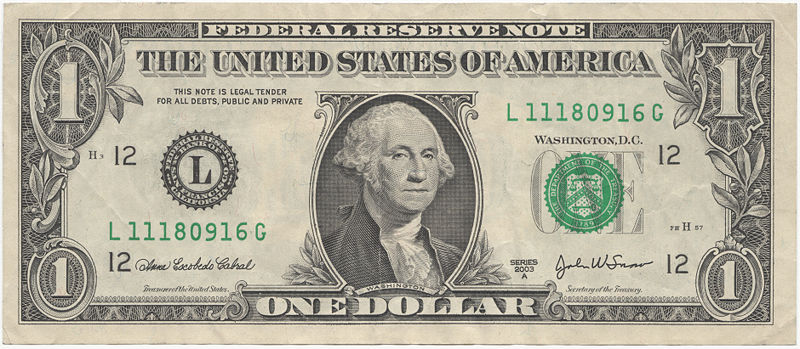
The new focus in fundraising this year appears to be focused on supporting annual operating needs. The idea is that a $1 given today is worth a $1 (no more or less). The dollar is not going into an investment fund where it may be worth less in a couple months time. A general operating donation will have an immediate impact on a nonprofit organization. The programs and services will continue (at least for today).

With many people concentrating on surviving day-to-day. The mentality of donor’s intentions have shifted. Many nonprofit organizations have already taken the standard steps: salary freezes, vacant positions remaining open, contributions to employee benefit plans being reduced, volunteers filling critical functions. Now true contigency planning is taking place. What if we cannot even hold our special event? What if we run out of operating funds?

So what can nonprofit organizations do to stay in-touch with donors. The most successful strategies I have seen include:

  • Communication: Have board and staff members reach out to donors and supporters. Do not be afraid to call and express your appreciation. One organization recently contacted me four times in ten days using a combination of board and staff members. They were asking for an annual gift but the message was clear that participation and ongoing engagement was critical.
  • Extending benefits: If a donor is not able to give at the same level this year but has a history of donating consistently consider extending benefits that were associated with their historic level of giving. The quicker an organization shows a short-term memory the easier it is to disenfranchise a donor during tough times.
  • Make the donor an insider: I recently received an email that was sent to a select group 48 hours before the same email went to the general membership. This little touch made me feel like the organization had identified me as someone who it wanted to communicate with in advance. The information did not change but the presentation and timing made a difference in my perception of how the charity valued me.
  • Be transparent: Engage your members and supporters. Seek advice. Share the big decisions facing your enterprise. I worry more about the nonprofit organizations who are not communicating and sharing information on their status. Organizations that acknowledge their challenges gain more of my trust.
  • Refine and confirm your identity: A couple of my consulting clients have made a concerted efforts to review their core identity. Being able to speak to why their nonprofit is uniquely positioned to offer the services and programs that are at the core is more valuable than ever. Donors want to invest in organizations that show signs of sustainability.

See the link to the NY Times article: http://www.nytimes.com/2009/02/26/business/businessspecial3/26GIVE.html

What Happened to Trust?


On his PBS show last night Charlie Rose was interviewing John Mack, CEO of Morgan Stanley. Their conversation provided some light into the turbulent days of September 2008 when the financial markets began to plunge and long-standing Wall Street banks folded. No drama in the dialogue that bordered on a clinical. However, a theme that appeared throughout the interview has to do with the notion of trust. For Morgan Stanley and John Mack there were moments during which his firms very existence was at stake. He spoke about living in his office with his leadership team for a three week period. The ability for credit to flow between banks had broken down and yet at the same time he reflected back that the trust among the members of his leadership team grew dramatically. For the rest of their lives the small band of people who lived in the executive suite will forever be bonded by the shared experience.

Today I sit with headlines blaring about our return to late 1990’s levels in the markets. One of Idahos largest employers just announced layoffs numbering close to 2,000 jobs. Nonprofit clients and associates are trying to survive some combination of increased/decreased demand for services and decreased funding. The news is overwhelming and a replay of the same conversations that took place in John Mack’s office.

The real question in my mind is ‘when will we allow ourselves to trust again?’ John Mack has started trusting again. He speaks as if he has weathered the worst of the storm and is ready to ride out the backside with some more bruises. He sounds reverently optimistic. His firm sees trust growing and credit is opening up.

You can almost feel the trust being sucked away from those who are going into their own economic storms. There are also those individuals who feel that the front has passed over them and they are ready for some clouds, wind, rain, and hail but they trust.

If change is constant, perhaps we just need to trust that today and tomorrow will be different.

What happens when the people you are supporting say ‘please stop’?

Reading the New York Times Magazine this weekend I was caught in reflection after completing the Questions For page. It reminded me of a couple points:

  • We get so worried about the message and messenger that we are missing a key ingredient- a expert who can speak about the real issues.
  • Celebrity draws attention. Now what?
  • Despite our best intentions, we need to remember that although the outcome may remain the same, change is going to happen and we need to be able to adjust the ‘how’.
  • Never forget to ask for another opinion.

Checkout the link the complete article:
http://www.nytimes.com/2009/02/22/magazine/22wwln-q4-t.html

When you cannot see?


A week of fog turning into heavy fog with an inversion to keep the pattern in place. How does one keep perspective if you cannot see familiar landmarks? How often do we rely on our eyesight to provide us feedback on our location and direction? What if you were speaking to a stadium full of people enveloped in fog and could not see past the first row? Would you change your mannerisms, your inflection, your passion, your cadence?

What if we practiced using our other senses to guide us? It looks like it will be a great week to practice.

Forecasting the Future?


Funny what a difference a day makes. Yesterday the state road report for driving conditions looked like a summer days. Reports of dry and clear pavement seemed to be the report du jour. Today, I see difficult conditions throughout the state and closures starting to appear of the roads with the most snow. Sometimes we have to travel on such a day and we just realize that it is going to take a lot more time and a greater amount of energy to get between locations. However, there are times when we need to reach a destination at some point and yesterday’s conditions would have been preferable to today’s mess. One of the strengths I see in great organizations and leaders is the ability to work with a strategic filter and not just a plan. The plan is rigid. The plan and accompanying schedules are tremendous when you have to meet a deadline to meet like submitting your taxes. But plans can be less ideal when responding to opporunities. I recall sitting in a meeting with a TV screen on in the background during the morning of 9/11. I cannot recall a single detail about the meeting but I vividly remember the events of the day (as many of us do). Somebody in the meeting should have had a filter that said ‘let’s meet another day.’ The opportunity for any comprehension or input was lost due to an external force. This is an extreme example but I am more certain that appropriately timed actions can lead to extraordinary results.

What if we were clear about the outcomes we desired and used appropriate filters to help us navigate the way?

The Real Question


I have found myself watching a series of House MD repeats on TV this holiday season. Although I cannot consider myself a regular follower I am intrigued by one aspect of the show. The plot balances on a series of questions posed by House and his colleagues. Lots of hows, whys, wheres, whens. Question that lead to a next series of questions and then the eureka moment.

I believe the quality of the question we ask leads to a better answer and ultimately a more accurate solution.

What is $1 worth?

The Chronicle of Philanthropy (12/11/08) recently published a study sponsored by the Philanthropic Collaborative which concluded that for every dollar contributed by a foundation to the philanthropic sector an economic benefit of $8 is realized. The research was produced by Sonecon who projected that the $42.9 billion dollars donated by foundations in 2007 returned $367.9 billion in ‘direct economic benefits’.


In these times of reduced endowment returns nonprofit organizations are increasingly focusing on annual donors. A colleague pointed out recently that a single dollar donated annually would require $20 or more in endowment principle. Stated differently, your contribution of $25 would require a $500 endowment gift to create $50 in returns annually. A $50 gift requires $1,000 in endowment principal, $100 requires $2,000 to be committed to endowment and finally a $1,000 gift needs $20,000 in endowment to generate a similar return. Does your organization have a more realistic chance of finding a donor at the $100 level annually or a donor willing to commit $2,000 donation to endowment. In these difficult times, many endowment gifts have been slashed by a third or even half due to volatile investment markets requiring eve larger gifts to match an annual fund contribution.

$1 might be worth a lot more than any of us thought.

Remember to keep giving- even if its a dollar!


Tribes

I am reading Seth Godin’s book Tribes. It discussed the difference between leadership and management. Management is defined as the manipulation of resources to get a known job done. Leadership is about creating change you can believe in. Leaders have followers. Managers have employees.

Makes me wonder how often I try to act as a manager versus a leader. When I consider interactions with family, friends, collegues, ‘to do’ lists, travel, I see a lot of managing when deadlines loom.

Perhaps I better understand why I gravitate towards individuals I deem inspirational. Many of them are providing a vision of change and not simply a blueprint.

USC Football Coach Pete Carroll said they other day that he always believes something great is just about to happen. That is a unique perspective.

Where do we focus on the majority of the time? What are you thinking now?


Practice Makes Perfect

In the continuation of the discussion inspired by the book Outliers the idea of practicing harder and better than anyone else was proposed as a key to success in Pete Carroll’s 60 Minute interview on Sunday (YouTube link: http://www.youtube.com/watch?v=ffgYLJ4Smm0). Coach proposes that the most prepared players are the ones who succeed on Saturday even though they are not always the best players. The NCAA proposes time restrictions on the duration of athletic practice for student-athletes so the very ability to reach the 10,000 expertise hour threshold proposed by Gladwell (see Lonesome Dove post) is hindered by regulation. Much of the extra training takes place on personal time- weight training, film review, sports therapy, etc. How do you maximize the effectiveness of limited practice time? What does your team need to do that is most fundamental to its collective talents? There is a story about putting the ‘big rocks’ in first (worth the read if you do not know it http://www.dailyblogtips.com/put-the-big-rocks-first/). Are you putting the big rocks in first and then working with the pebbles and sand or is your practice/day/meeting run by the sand and pebbles? I believe that more than one great meeting has reached a single important decision and had far more impact than a meeting that considered many inconsequential issues.