The Ember

Credit

A couple times each winter I cross paths with a woman at our local cross-country ski center.  I smile at her and sometimes offer a verbal greeting.  She never outwardly acknowledges my presence.  I assume that we have different agendas during out skiing time (that is the more positive rationalization I have told myself).  This weekend, we ran into each other at the trailhead on the final day of ski season.  With skis coming off and destine for the corner of the garage, she said, ‘knowing that I will see you out here every couple weeks keeps me motived.’  Trying to overcome the seismic paradigm shift challenging my entrenched belief about this woman, I muttered, ‘thank you, always good to see you out skiing.’  


This interaction reminded me of a talk given by the rector of a local Episcopal Church.  He spoke about the interconnectedness of a community of worshipers.  What motivates people to rise on Sunday morning and spend a portion of their day indoors in prayer?  A deep spiritual connection helps but he acknowledged that knowing other members of the church will be present to greet one another and notice our absence (not in judgement) builds a higher certainty of attendance.  By being present we increased the probability of others attending yet not always knowing who.


Some interactions are visible.  Students rise and have a high degree of certainty that their teacher will be in the classroom to greet them every morning.  Others are far more subtle.  What appears peripheral in our daily life may provide the most gentle of breezes that allows another person’s dream to continue to glow or even ignite into flame.  Who’s ember do you allow to glow?  Who keeps the glow of your dreams ready to ignite?  Actions that appears to be pedestrian in our own lives may be the point of ignition for someone we barely know.  Someone is counting on the vortex of your presence today.

The Discipline Slip

Credit

In elementary and middle school each teacher was rumored to have three small notepads in their desk.  One was pink, another yellow, and lastly a blue pad of paper.  The pink slips were for discipline issues, the yellow covered academic deficiencies, and the blue awarded for commendation.  As a sixth grader, these colors were as important as green, yellow, and red to a teenager testing for their driver’s license.  The thought of handing over a pink or yellow slip to a parent was mortifying, actually terrifying.  The rare blue slips of commendation found their way into my hands a few times and I think I placed them in a file hoping they would contain long term value.  If you handed any of these slips of paper with their carbon copy duplicate attached to a stranger they may get a curious glance but nothing more.  Within the confines of elementary and middle school they carried the weight of a court-martial or medal of honor.


I laughed out loud today when I recalled these slips of paper.  They are relics from a scrapbook.  But they have been replaced in adult life by speeding tickets, being served legal papers, and awards of honor.  Each tribe has their own tokens for appreciation and reprimand.  The items themselves are merely placeholders for intentions.  If we value the tribe we hold these tokens with high regard.


What tokens does your community celebrate or fear?     


Timing

Credit

You can achieve the same strategic goals of planting a forest during a 15-year strategic plan by taking action in year one or year fourteen.  The only difference is the impact of the goal.  The action taken in year one has fourteen years to mature and become viable.  The seedlings planted in the last year of the plan are juvenile and yet to take root.  Their impact is yet to be discovered.

Credit

The importance of sequencing and timing makes me wonder about educational funding.  We can invest heavily in early start and preschool initiatives that provide young children with plenty of support when they are in the most formative phase of development (seedlings) and then shape their educational growth as they reach the high school grade level (pruning phase).  But if we wait to add the greatest support (richest soils and nutrients) until a students has reached the upper grades then we have essentially missed the chance to grow a forest.  Timing and prioritization effect some strategies more than other.  I would suggest that leaving our best cultivation efforts and deepest investments for the later stages of the educational timeline results in the ultimate dustbowl.  

Credit


Click

At the championship cycling race during my senior year in high school I planned a breakaway with two other riders with the hopes of riding away at the start.  We had already race three stages over two-days so all the competitors were a bit fatigued.  We had confided our plans with a member of another team who we asked to join our efforts to eliminate other contenders by surprise them from the start.  He agreed and we dispersed ourselves across the front of the starting line.  Since the final road race was 60-miles there was no real urgency to race from the gun.  The starter’s pistol sounded and the two other riders accelerated forward.  I clipped into my pedals and then proceeded to unclip immediately.  I hesitated, attempted to rengage the cleat and pedal only to flail.  After three attempts I was finally secure but the element of surprise was long gone and my two conspirators were on their way.  I found myself completely paralyzed, having prepared to race full out from the start I was now sitting in the middle of the pack obsessing over the failed shoe and pedal routine.  My breakaway companions were eventually caught more than halfway into the race, clearly missing an additional partner to share in the effort of staying off-the-front.  The pack stayed together to the end and the sprinters rejoiced in the mass rush to the line.


The experience stays with me as a reminder of the importance of being prepared if a fast start is your strategy.  The small details of clipping into a pedal separated me from participating in what would have been a memorable adventure.

They

“They have you doing a lot of jobs at once,” I remarked to the young man who was attempting to simultaneously work the register and dole out rewards to customers redeeming their game coupons.  It struck me that “they” was an umbrella statement to cover some anonymous figure who I believed to represent management or authority.  They was faceless.  I have come to expect a they for airlines, hotel chains, large box stores, telephone solicitations and such.  I am more alarmed when the concept of they trickles down to small organizations.  If the concept of they embeds itself into a micro-enterprise, the coalition of those dedicated to a shared purpose is lost along with trust and authenticity.  


When we describe management or authority as ‘they’ then the most powerful point of interface fades away, the human connection.  When we no longer connect with a person then we jettison emotion.  I have yet to met an organization that could make an emotional connection (can Apple Co. really love you), however I have encountered a lot of people working for great causes that fostered a personal relationship.  There is no they when the team has names, stories, and time to build connections with those it serves.

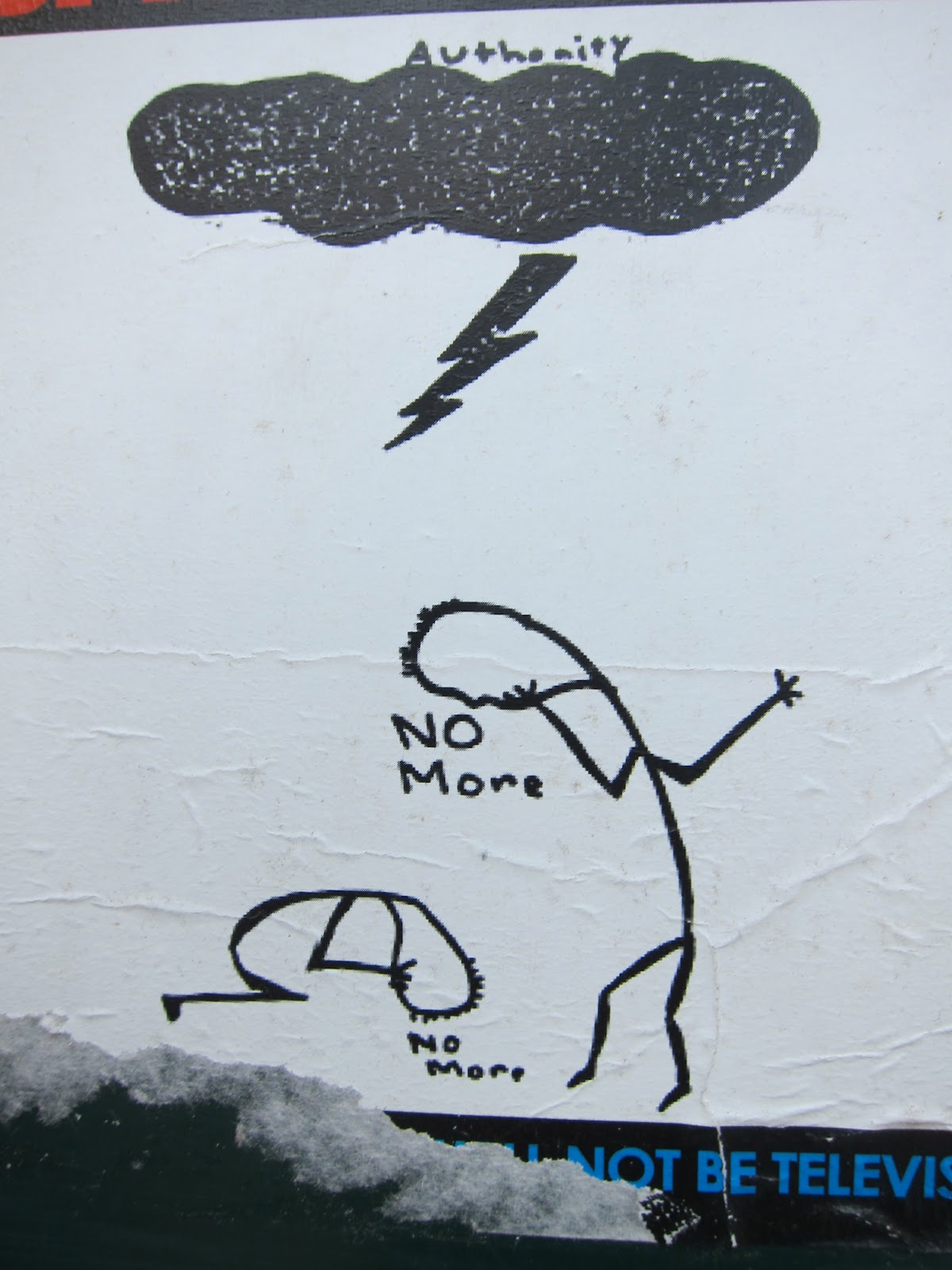
Are You Part of the No Coalition?

Credit

What else do we need to know so we can say ‘yes’ was the question from the back of the room.  Heads turned and the most silent of the meeting’s participants had just thrown us all out of the proverbial express boat to the island of No.  It was a brillant question and it completely energized the staff and supporters of the proposal.  Seconds later sheets of paper were filled with ideas from an immediate brainstorming session.  Obstacles and objections were identified as well as strengths and new points of confluence with on-going initiatives.  With one question the meeting had come to life, ideas were being shared, engagement was soaring, and camaraderie was building.  It is easy to identify one way to say no.  The real talent is discovering strategies that let you say yes.


Seth Godin’s post illustrates the defused power of no with perfection.  I am glad to have seen the collation of no battled in the arena of institutional habits.

Secure Funding

The topic of fundraising receives proportionally less time than is actually committed by organizations on the typical nonprofit board meeting agenda.  Most causes certainly report on their development/fundraising efforts but what does not get discussed is the amount of time the enterprise attributes to the effort of securing funding on a daily basis.  What if our enterprises ran like a Kickstart campaigns?  You complete a form, uploaded an introductory video, outlined your purpose and business plan and let the market place determine your viability?  If you campaign reaches its goal, you are funded and proceed; if not you work on obtaining other sources of financial backing.  The freedom that the Kickstarter model offers is tantalizing.  You make a heavy investment in fundraising upfront but then have the financial security to move forward with your project, instead of making little steps in-between runs to solicit contributions.  Nonprofits, politicians, artists, researchers, educators, and doctors should all be able to focus the majority of their time on their craft.  Of course connecting with those who invested in your dream (and their dream) is vital but it should not keep one from practicing your talent.  


How would your cause operate if you knew your revenue stream was secure for a year?  What would it bring into focus that is currently blurry?