How Many Tries?


For over a year my wireless provider has sent me a text saying they cannot reach me at my billing address. I changed my billing address over a year ago but the wireless company has a glitch in their computer system and it reverts my records to my old address. Every couple months I call customer service and update the billing address again. The representative assures me that the changes are confirmed by the computer. By the end of the month I am receiving the same text message.

My contract ends soon and I am ready to switch providers just to have a company who can keep my information correctly. It is a basic expectation and should be a simple process. If the fundamentals do not work then why should I consider investing more of my time and energy? Do you execute on the basics?

Ecological Load Factor


Continuing to read a fine line by Hartmut Esslinger. He proposes developing a future market using a pricing index that includes an ‘ecological load factor’. Meaning that the environmental impact of an item a consumer purchases would have an ELF index and the price would increase if the process the manufacture used to produce the item is environmentally unfriendly. If the product utilizes green production processes, sustainable materials, uses less energy and is recycled or returned to the manufacture at the end of its lifespan, the ELF index would be low. If the product did not meet the standards set above then the price for the product would have a higher EFL index. The index would evaluate the ecological impact of manufacturing process of product, materials used and the cost to dispose of the product at the end of its life cycle. Currently, we give tax credits for green initiatives but consumers do not have to pay more at the point of purchase. How would the marketplace change if pricing were altered to reflect the ecological load factor of each item?

How do we prepare for changes to the marketplace? What might we anticipate that supports the mission of our organizations? Where is your enterprise on the ‘green movement’ scale?

Mis-Communication


Went running earlier this week in western Colorado. I followed the road into a beautiful canyon that turns into a dirt road. To drop off the plateau and into a completely different world below the canyon rim is a favorite moment of mine. As I adventured along the county road locals were driving to town mostly in pick-up trucks. They stared out their windshields at me or gave a little nod but continued forward at a high rate of speed. What they did not consider was that their trucks were spraying gravel in a rooster tail which descended on me as I ran in the other direction. I started covering my face with my hands when they approached. What clearly appeared as the start of a friendly wave on my part was actually a self-defense mechanism. It took me a moment to realize that if I had been riding a horse down the road the drivers would have been more courteous but they were not thinking about the impact of their on a runner.

Are you on the same page with your clients and customers? Do you both realize the consequences of your actions?

Fear Announcements


Flying home on United Airlines from Denver yesterday afternoon and the gate agent made the following announcement: “The captain wants to weather warn you that due to severe thunderstorms this flight may be diverted to Idaho Falls, Idaho or Spokane, Washington (both of which are a four hour drive or more from Boise, Idaho). The announcement complete the agent asked for Zone 1 to begin boarding. The hesitation to board was obvious. Should I get on? What are the chances of the plane diverting? Is the Boise airport open right now? Have planes been landing during the day? What happens to me if the airline deplanes me in a town so far away from my destination?

Passengers started asking questions and got no answers. Then the great mobile phone game began. Passengers called anyone who might be effected by a major shift to their itinerary. I overhear calls where people were forecasting not being able to arrive in Boise until noon the following day. I called my wife and she quickly emailed me the following photo from her phone

A quick check of Flightaware.com and I saw that the airport was seeing normal departure and arrival activity. My potential panic subsided with this information. I tried to share my ‘local’ knowledge of the situation but those around me continued to make a flurry of calls and emails before we departed.

From the moment the plane door closed until we arrived in Boise there was not a single announcement about our intended plan. The pilot and co-pilot or flight attendant never acknowledged the weather warning or calmed the frenzy by announcing that we were planning to fly direct to Boise. People discussed the potential diversion and their plans until it became evident that we were descending through the storm to the airport.

This was a great reminder that you need to remain cognisant of your message. You may have clarity about your strategy internally but have you fully communicated it to your customers and constituents? Do your customers think you are on a diversion when you are actually planning to proceed as planned? A lot of energy is used and mistrust developed when you are not transparent in these situations.

When It Gets Personal


Co-op Boards are a tricky group. Not only do you need to make decisions as a board member but then you truly need to live out the consequences of these decisions in your own home. Pick the wrong new owner, agree to let the doorman go, replace the outdated chandelier and you may have just started a new version of the War of the Roses.

Interesting article in the NY Times about when it all goes wrong? http://www.nytimes.com/2009/08/02/realestate/02cov.html

Is there a better way? How do you avoid decision-making that becomes so personal?

Data On Which Age Groups Use Specific Social Media


Clients who are later adopters of technology are always telling me that they need to get on Twitter, Facebook, MySpace, etc. They need a great social media presence. I ask them who they are trying to reach with these forms of media. One group’s core audience is women between 40-70 years old. Another group serves young teens but raises 80% of its donations from the generation that would qualify as grandparents to these teens. Twitter may not be the right source to invest in for either of these groups (at least as they think it will be applied). I have mostly relied on anecdotal evidence but this recent study is truly helpful to quantify which generations are using which forms of social media.

http://www.insidefacebook.com/2009/07/30/new-study-shows-how-different-generations-use-facebook/

What has worked well for your organization? Who are you trying to reach? What feedback to you get?

Sharing the Stage

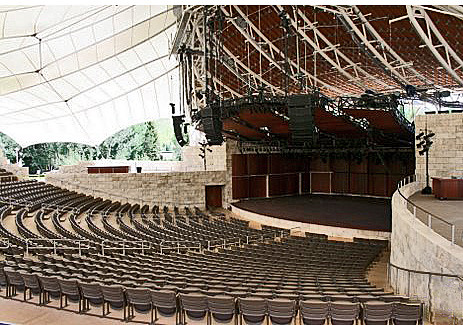
Attended the Sun Valley Summer Symphony summer gala, ‘Some Enchanted Evening.’ Headliners included Tony Award winning singers (Victoria Clark and Paulo Szot) supported by the Sun Valley Summer Symphony. An evening dedicated to the works of Roger & Hammerstein. The stars arrived, rehearsed and then performed and jetted back to New York in a 24 hour period. The choreography of their performance and the energy of the symphony appeared polished and well-rehearsed. Entrances, exits, romantic kisses. The whole evening felt much like we had flown to Broadway instead of Broadway coming to Idaho. What was most remarkable was the stars synergy. This was not two recognized talents trying to steal the evening. It was teamwork with their respective co-star, the conductor, and musicians. Visible appreciation for each others unique talents. By the end of the night the patrons wanted more, almost disappointed that they could not coax a second encore.

Clearly Victoria, Paulo and guest conductor Ted Sperling are professionals. What they could not fake was their enthusiasm and authentic passion for the place, people, and moment.

Do you have the right performers? Are you maximizing their talents? Is it authentic?

Another Survey?

While on the theme of surveys from yesterday, I recently had the chance to participate in a focus group for a major hotel chain. Very interesting and appreciated the chance to provide feedback. One of my observations (and I know many of you have the same):

Why does the more economical property in your hotel chain provide the following free or complimentary amenities when I stay: wifi, breakfast, recently upgraded room, fitness center access, parking, shuttle, business center? All for usually half what I play for the flagship hotel.

Why does your flagship property charge me extra for: wifi, breakfast, parking, resort fees, smaller room, fitness center access, parking, business center?

Does this model make sense? I have stayed in cities where if I travel one more exit down the highway I can stay in the same hotel family but get a whole lot more for my money.

Do we have our organizations arranged so the services are aligned for what you charge? Do we send mixed messages with our fees? Do customers and donors shake their heads in disbelief at our model or do they approve?