
What peak are you climbing?
One Hundred
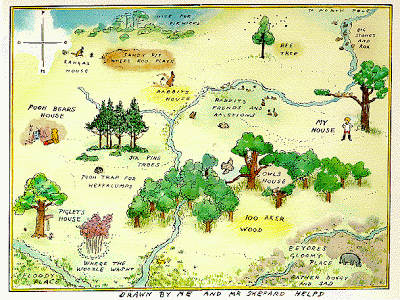 One hundredth post- thank you for reading and providing your input. I appreciate having the venue to share ideas and resources. I am off to the the One Hundred Acre Woods for a short walkabout and a chance to generate new ideas. I offer a couple global questions as I shoulder the backpack.
What is not going to change in your enterprise?
During your tenure at your current organization, what is the one thing that must be accomplished?
If your enterprise could learn one ‘new step’ (skill), what would it be?
What question needs to be answered before you can proceed?
Have a great adventure today!
For Sale
 I found a real estate magazines from ten years ago when I was listing a house for sale. I was back in the same resort town this weekend and compared the old to the current listings. Even with the current difficulties in the real estate market some of the same homes are on the market for a significant percentage increase when compared to the information I had from ten years prior. What may feel like a significant loss in value when compared to twelve months ago is quite a hansom gain if you expand your time horizon. How often do we get caught in the trap of feeling like we lost something (even if it is temporary) when in reality it is still a net positive? I recall an experiment where individuals would do significantly more to protect $50,000 that was potentially threatened by theft or loss than the same individual would do to gain $50,000 through an existing opportunity.
What is your time horizon? Do you protect what you have more vigorously than taking advantage of growth opportunities? Are you aware of how emotions impact your decision making?
Meeting Emotional Needs

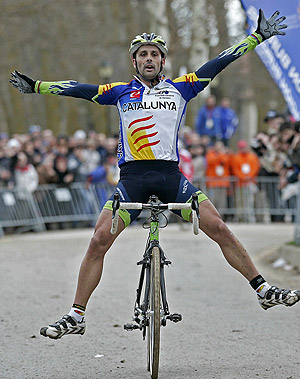


Did you have a different split-second reaction to each of the previous photos?
Do you understand the emotions of your clients, donors, volunteers, board members, staff? The Gallup Organization created a measurement tool to determine if an employee was engaged in the a job that best supported their individual talents. In the book First, Break All The Rules by Marcus Buckingham and Curt Coffman they outline the Measuring Stick instrument that was developed by Gallup. At least three questions relate directly to emotional investment at work:
- In the last seven days, have I received recognition or praise for doing good work?
- Does my supervisor, or someone at work, seem to care about me as a person?
- Do I have a best friend at work?
Just thinking about all those individuals you interact with both within and outside of your enterprise? Think about the role that emotions play. What does your organization do to recognize and support the emotions of your key constituents? How do you measure success and emotional engagement?
House Rules
 Have you ever been in a casino? Had thoughts of taking a few chips from a unsuspecting table mate and cashing them in for quick profit (the plot of many Vegas movies it seems)? I suspect most of you don’t act on this impulse. Why? The ‘rules of the house’ are understood. The casino retains the right to refuse service to anyone not meeting its guidelines, apparently this includes winning too frequently so I have heard. Have you ever checked to see where the rules of the house are posted? Are they prominently displayed on the gaming table, wall, backside of the playing cards? I have never seen them. Yet somehow we all know that there is a basic standard that we must meet in order to gamble. In my estimation, casinos do a fantastic job of establishing expectations and a culture without telling. There is no orientation, handbook, consent form to sign. How often do you enter an environment where the front-line employees are actually encouraged to dispense advice on how to beat the ‘house’? Entertainment is encouraged, especially as you place more chips on the table. But how do we know the rules? I may fly on the airlines weekly but I am certain we are not taking-off until somebody announces the rules and safety procedures. I cannot update my computer software without agreeing to a lengthy end user agreement. The local Shakespeare company cannot start a production without reminding me to silence my cellphone, not to record the performance, and clear the aisles.
How do you establish a customer experience that passively sets guidelines while focusing on your mission? Would this be helpful to your organization? Imagine an environment where clients, board members and volunteers can intuitively grasp the rules of the house? How would that change the culture of your enterprise?
Authenticity
 A characteristic that donors and supporters rank highest when considering contributing or joining a social causes is ‘authenticity‘. Individuals want to invest in the original, the trustworthy edition, the organization committed to meeting the needs of the cause with values that match their own. All of this sounds basic. But, how many enterprises deviate from being authentic by taking some of the following actions?
- Adopting strategic plans that are full of unrealistic goals and lofty language
- Creating a culture that makes patrons uneasy when they engage with the organization
- Programs that are not consistent with the organization’s mission
- Hiring an Executive Director or key personnel that do not embody the organization’s values
- Accepting donations/grants from individuals or foundations that represent values that conflict with the nonprofit
- Building a board with members who do not appear committed to the organization’s strengths
- Launch a branding effort that looks nothing like the organization everyone has come to know
Would you prefer to visit the Statue of Liberty in Las Vegas or New York? Do you prefer to view the Declaration of Independence housed in the Archive Building in Washington, DC or a framed version hanging in your City Hall? Is your preference to meet your hero in person or take a picture with their facsimile at the wax museum? In which of these experiences would you be willing to invest more of your resources?
How do you remain authentic as an organization? Can you define it? Have you asked your supporters? How is it represented daily in your organization’s decision-making?
Blame Storming
A bit of humor to start the week and a reminder that strategic planning can go wrong. I have participated in planning sessions that verged on ‘blame storming.’ One of the techniques that seems to be effective in altering the blaming process comes from Tony Robbins. I ask three questions, when I see a group focusing on a micro details that are not going to be the cornerstone in establishing a strategic vision. First, what outcome is the group trying to achieve (describe what success looks like)? Next, describe why reaching this outcome important (get clarity about the emotional investment in achieving success)? Third, what are the key action steps that need to be taken (now I am seeking more detail)? This technique seems to help raise the conversation to an altitude of 30,000 feet (outcome) and then work back down to the ground-level (key details). Now enjoy a short video of what comes easiest to many people when frustrations run high.
A New Perspective on the 4th
Sometimes you see something that alters you understanding of how things work. I just saw this brief video clip and played it 3 times. Perhaps this upstages any firework show. I now have a new appreciation for volcanoes. I reminds me of the quote from Oliver Wendell Holmes, “The mind, once expanded to the dimensions of larger ideas, never returns to its original size.“
What has expanded your mind recently?
History Repeating Itself

“Don’t worry, everybody has three mortgages these days” Ghostbusters
Funny throw-away line twenty-five years ago has a different meaning today. Our response to the line today has an edge in our laughter (if there is any). With change constantly upon us, predicting the future is best left to those possessing clairvoyant skills. But there are reliable patterns and cycles during which we can prepare our organizations to thrive.
What are you anticipating? What trends do you anticipating returning? How are you positioned to succeed?
Instant Professional Development
 I am always looking for opportunities to expand my knowledge base: learn something new, refine existing thoughts, add a new perspective, or stumble across the unknown. As a cyclist, there is a refrain that goes through my mind- ‘always be pedaling’. So may people I ride with have a tendency to put effort into the pedals when necessary and then coast the downhills. If power can be applied to the pedals and the result is a favorable use of energy then I pedal. I believe the same is true for professional development. If an opportunity exists to learn, I take advantage of the opportunity.
I stumbled across the “How To” section of the Wall St. Journal online today. Great brief interviews with CEOs of Fortune 500 companies about leadership and managing.
http://guides.wsj.com/management/
How do you develop professionally?

