
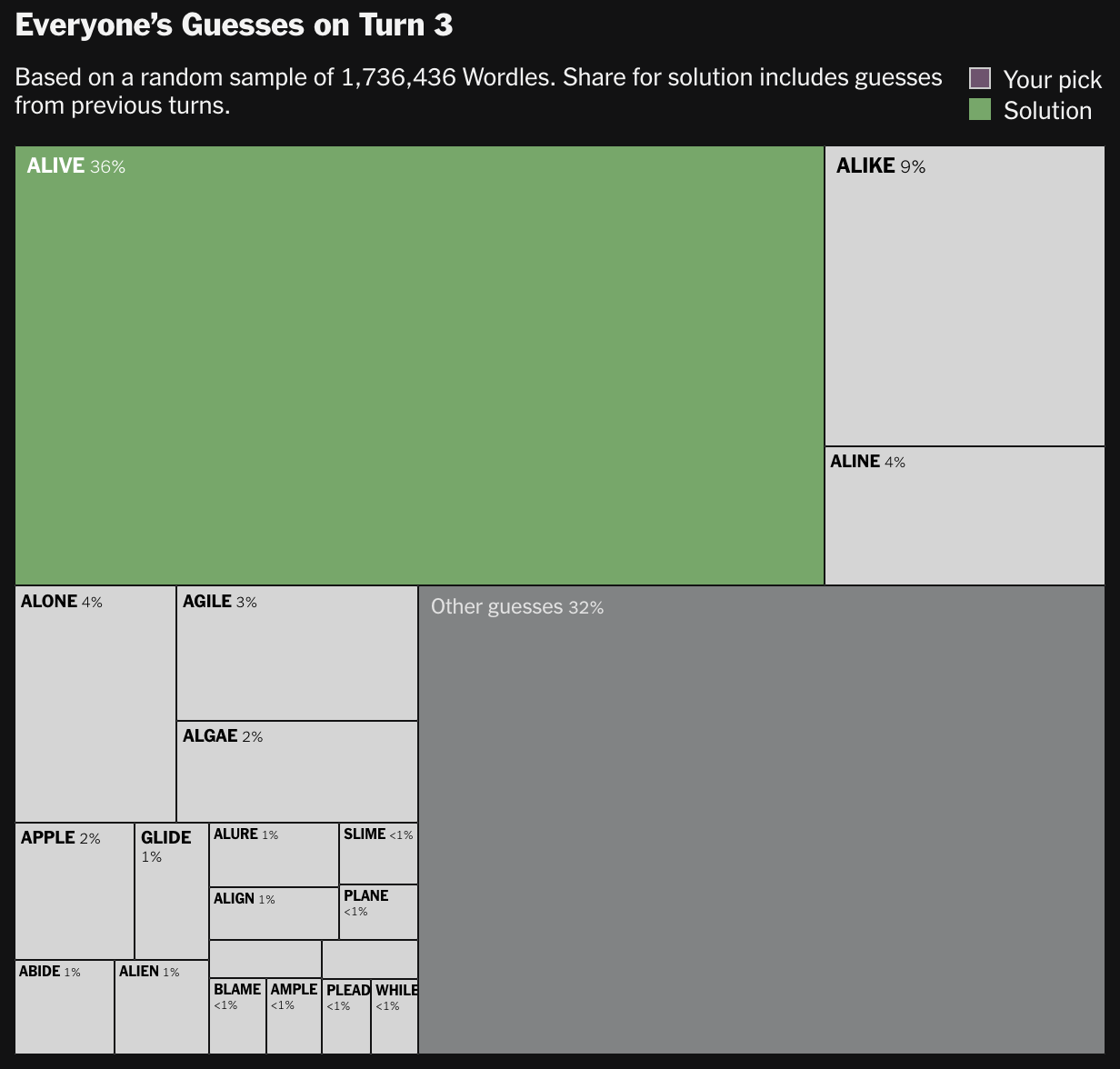
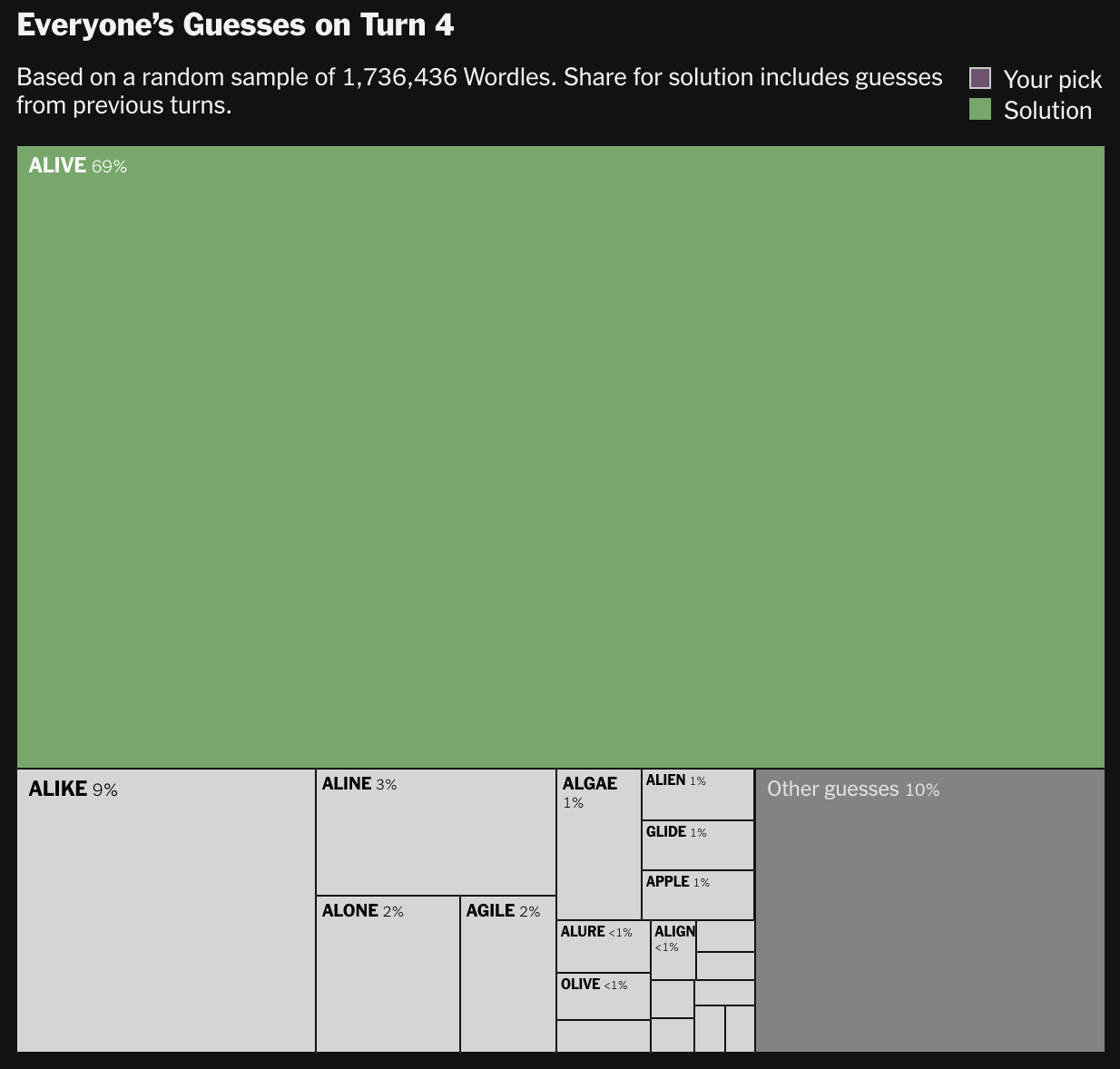
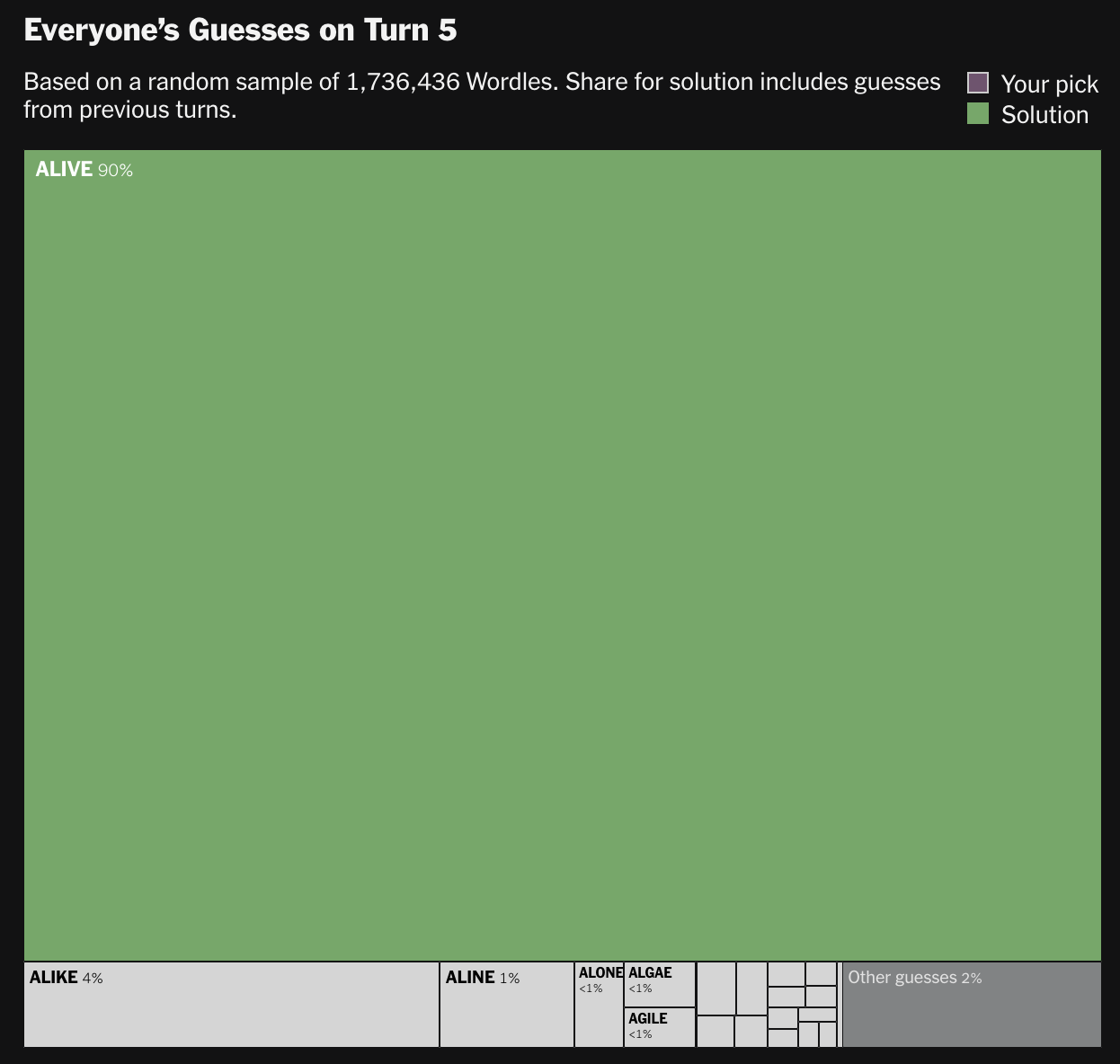
After solving the New York Times Wordle, you can review your results using the WordleBot. The WordleBot breaksdown our guesses versus a large sampling of other players. On most days, a consistent completion rate develops. Typically, ten percent solve the puzzle by their second try. A third are successful by the third attempt. Two-thirds are correct by attempt number four, and ninety-plus percent complete the puzzle on attempts five and six. Occasionally, the wordle aligns with the starting word many players employ, and the success rate is elevated, or the word includes a unique letter, and the results skew towards a lower success rate.
Competitive advantage in the Wordle world starts when we solve the puzzle by the second guess to be an outlier or the third guess to be in front of the majority. How does this apply to our work? At some interval of time, we will encounter a new technology, trend, or way of thinking. We have a choice, to actively engage the new or passively await the market to sort out the viability of the thing and then adopt when the majority move. Or, be a laggard and await the moment our old platform is no longer supported with updates.
What is the process your team employs to evaluate new opportunities? Who are your organization’s scouts that bring these initiatives to the group for reflection? How does your mindset influence the decisions you make in regard to proceeding, waiting, or ignoring?
*** Tomorrow’s post continues the discussion
 What-if-concepts