competitive advantage

Why Nobody Picked Me

Larry uses random chance to decide which of two friends to visit every day for a month. Each friend lives an eight-minute subway ride away, but they live in opposite directions from the closest station to Larry. Trains to each friend’s neighborhood arrive at Larry’s station every ten minutes, so he walks to the platform and boards the first train to arrive. After committing to this experiment every day for a month, he recognizes that he has seen his friend Henri 85% of the time and his other friend Cole only 15% of the time. He traveled to the starting station at spontaneous times and boards whichever train arrived first. Why does he end up visiting Henri so much more frequently?

The transit schedule is such that the train to Henri’s neighborhood arrives one minute before the train to Cole’s neighborhood; therefore, it is likely that the next train is headed towards Henri since there is only a single-minute period every ten minutes when the next train departs and heads in Cole’s direction. More specifically, trains to Henri’s arrive at 08,:18,:28, etc, versus Cole’s train at 09,:19,:29, etc.

We wonder why we are not selected more often to do the work that matters. Sometimes, we live in the shadow of the more dominant enterprise. Other times, we do not retain the network reach of another cause. Sometimes, we offer the same service, but the schedule works against us. Understanding how and where we are uniquely positioned to act is part of assessing our competitive advantage. When you have an emergency and call 911, dispatch tries to assess the nature of your call before sending emergency services. Launching the Confined Space Rescue Team with ropes and flexible stretchers does not solve a working structure fire. Dispatching the Swift Water Rescue Team clad in neoprene and flippers does not work well for a winter avalanche rescue. Knowing when to launch our services and to whom is vital to serving with impact.

Investors vs. Investments

In the 1990s, Boeing had a 60% market share among commercial aircraft manufacturers and a decision. Did the company concentrate on pleasing its investors and focus on stock prizes, or did it invest in a next-generation aircraft design? In the book Flying Blind: The 737 Max Tragedy and Fall of Boeing, Peter Robison suggests that the interest of the investors took precedence over the pleas of the engineers to invest in a new aircraft design. Harvesting profits was considered the work that mattered. It was safer, had a quicker reward phase, and was more predictable than investing millions into a next-generation design. Eventually, Boeing launched the 787 program in the early 2000s but continued to use stock price as a core metric. When the 737 aircraft came up for an update, Boeing decided to use the existing platform instead of starting with a fresh sheet of paper and launched the Max series. A quick scan of current events and the top 737 Max new stories are about failures and flaws, even an inability to provide Wall Street with earning guidance for 2024.

To expand on this theme, return to yesterday’s post on competitive advantage; there is a tipping point in all our enterprises. When do we prioritize our investors/donors/members/customers, and when do we prioritize investing in our work/programs? What do our core values suggest? How does our strategic framework align with our decisions? If the social sector is working on problems that cannot easily be solved; otherwise, a corporation would be monetizing the program, then why are we not launching more innovative programs? Should we not be finding the others (Seth Godin’s podcast on Akimbo) who are ready to act and launch our work?

Competitive Advantage

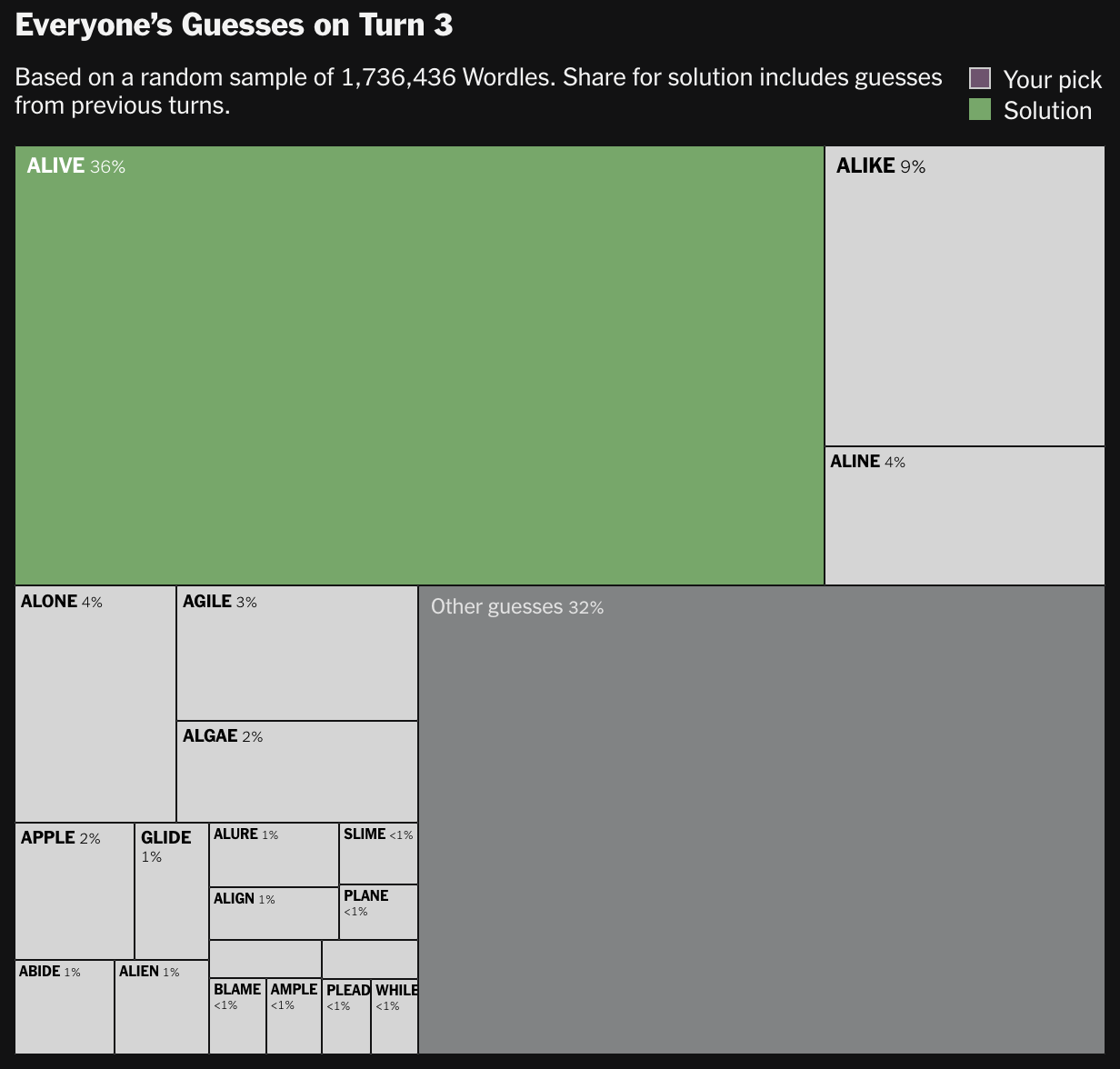
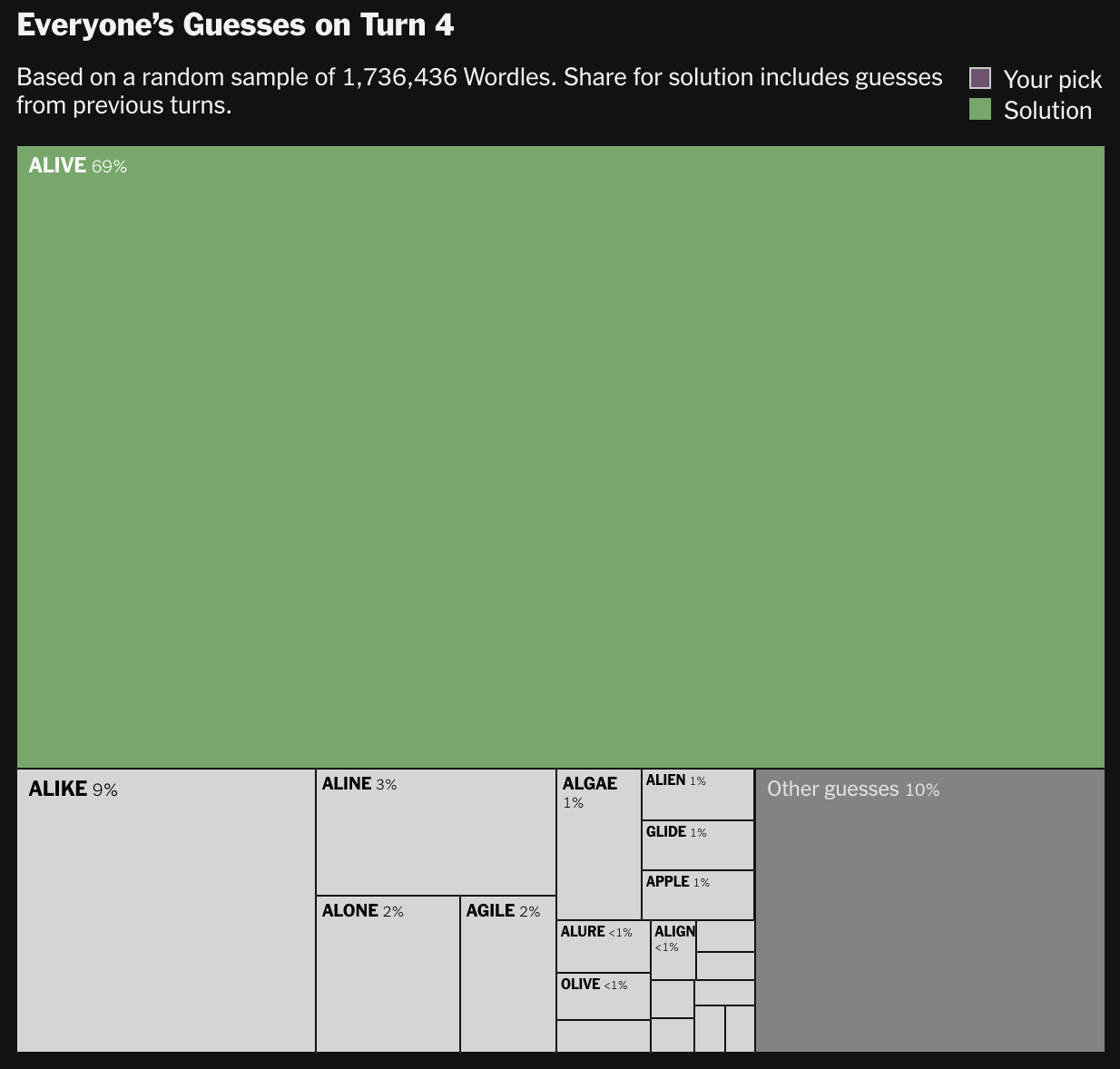
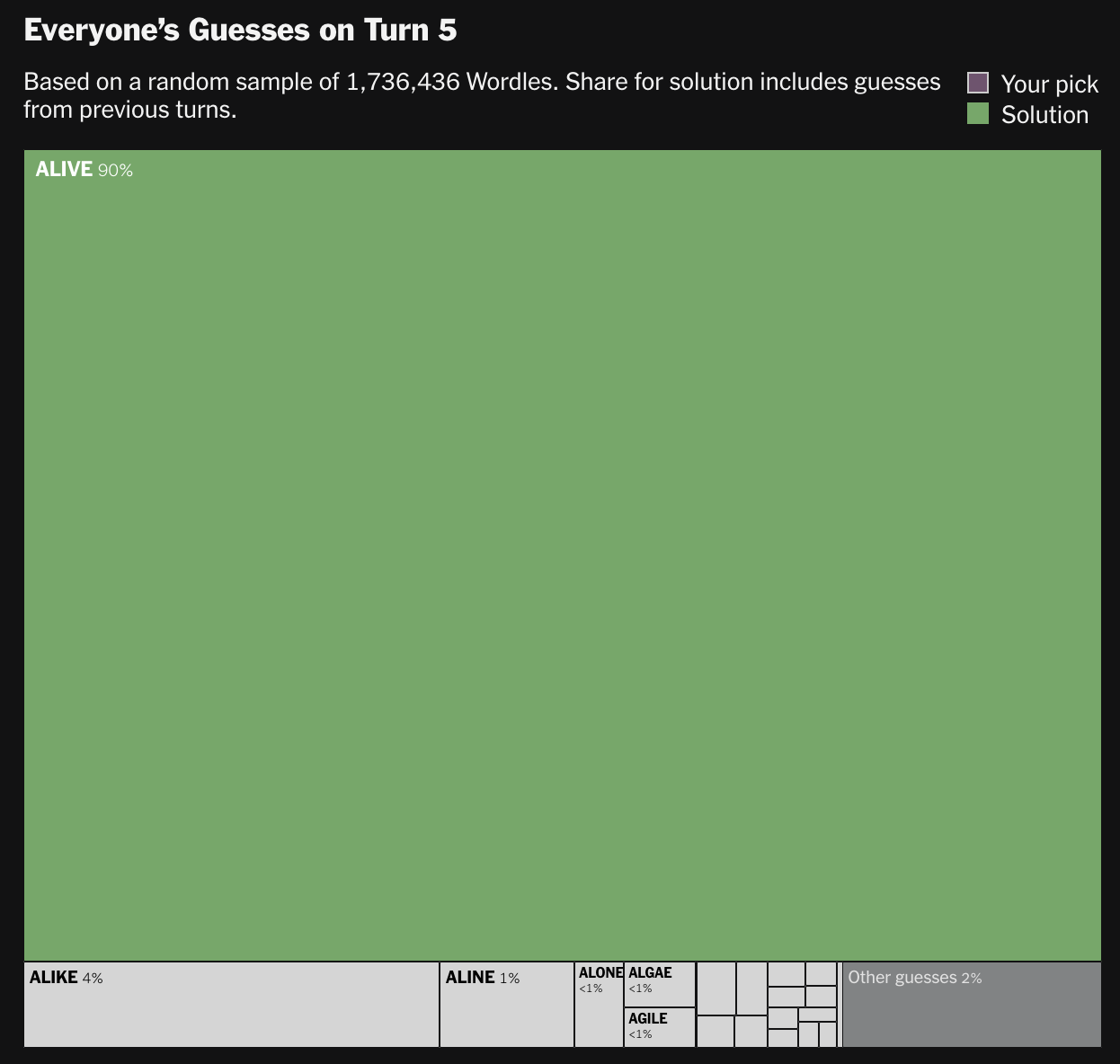
After solving the New York Times Wordle, you can review your results using the WordleBot. The WordleBot breaksdown our guesses versus a large sampling of other players. On most days, a consistent completion rate develops. Typically, ten percent solve the puzzle by their second try. A third are successful by the third attempt. Two-thirds are correct by attempt number four, and ninety-plus percent complete the puzzle on attempts five and six. Occasionally, the wordle aligns with the starting word many players employ, and the success rate is elevated, or the word includes a unique letter, and the results skew towards a lower success rate. 

Competitive advantage in the Wordle world starts when we solve the puzzle by the second guess to be an outlier or the third guess to be in front of the majority. How does this apply to our work? At some interval of time, we will encounter a new technology, trend, or way of thinking. We have a choice, to actively engage the new or passively await the market to sort out the viability of the thing and then adopt when the majority move.Or, be a laggard and await the moment our old platform is no longer supported with updates.

What is the process your team employs to evaluate new opportunities? Who are your organization’s scouts that bring these initiatives to the group for reflection? How does your mindset influence the decisions you make in regard to proceeding, waiting, or ignoring?

*** Tomorrow’s post continues the discussion