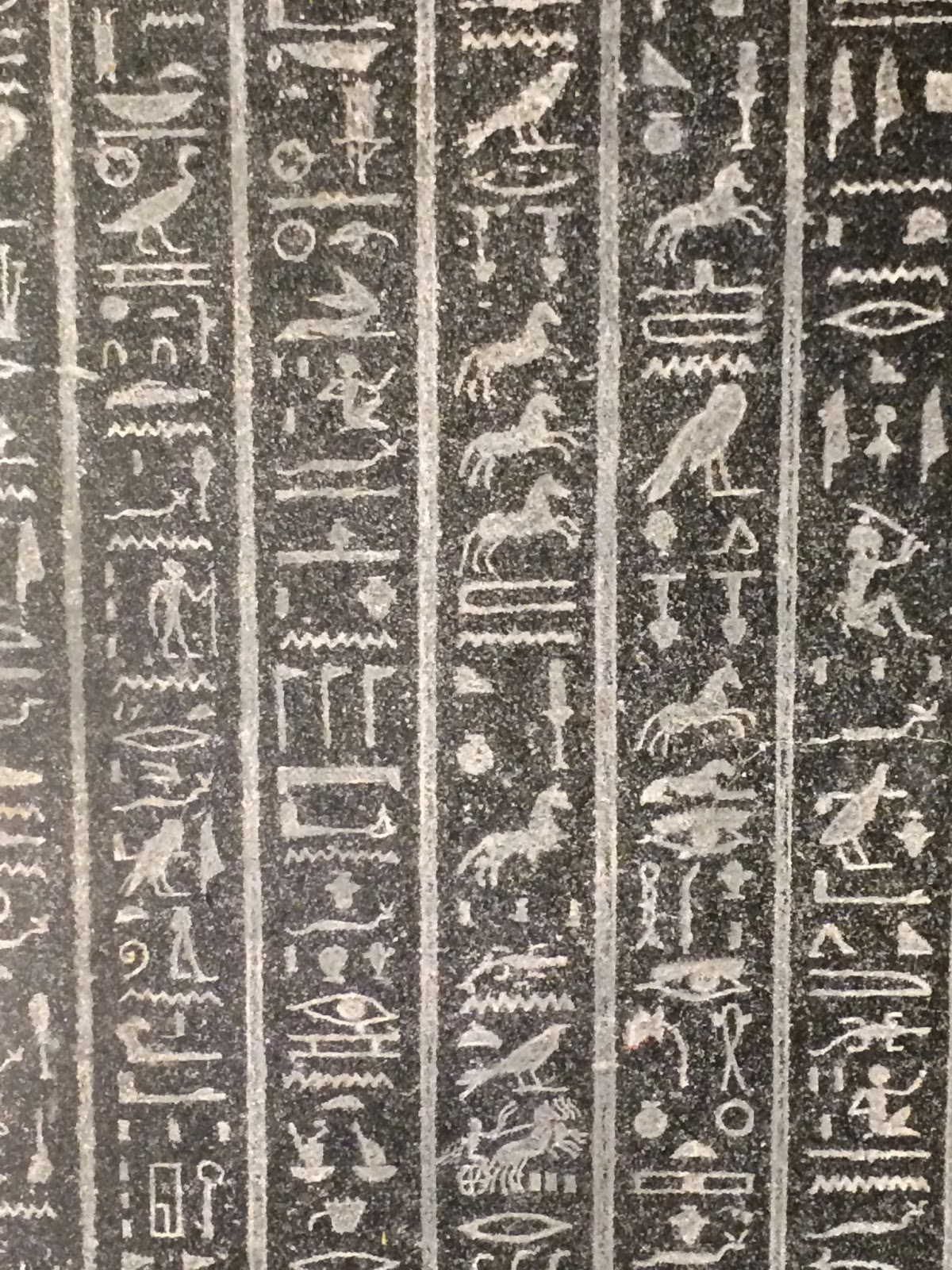
If they can get you asking the wrong questions, they don’t have to worry about answers. Thomas Pynchon
Author: whatifconcepts
Stories Are Waiting
What stories are you waiting to tell? Which stories are you hoping to embark upon? Consider telling one story and staring a new one today.
In Step
A story highlighting the power of soldiers marching in-step caught my attention. As it turns out some soldiers are requested to ‘break step’ when marching over bridges. The genesis for this protocol can be traced back to an incident in 1826 where a British platoon marching in-step created sufficient vibrational resonance to structurally damage the Broughton Suspension Bridge. The incident has been repeated by the military foot soldiers of other nations.
It is a colorful example of the impact a small but well coordinated group can achieve. When we are connected to a common purpose and headed in the same direction, we do not need everyone to make ourselves more powerful. We need those who share a vision of a better future and are willing to coordinate their actions. Who is marching with you?
Awareness
The impact of our actions is not always visible. The opportunity to recline your airline seat may appears to be a generous benefit that may in turn have unintended consequences. Even if we choose to use the full range of the seats extension, how we recline sends a powerful message. The slam back without warning suggests the person in seat in front has little thought about what may lay behind. The person who assess their options with at least a visual scan has already demonstrated a courtesy and empathy to a shared journey in a spatially challenged environement.
How do we assess our impact? Is there someone to provide feedback on our blind spots? Do we realize it is not only why we act but how we execute our actions that matters?
John Green: How to Read
BoardSource Leadership Forum Day Two
Will Novy-Hildesley and Heather McLeod-Grant introduced planning tactics around Adaptive Strategies for The New Normal. Participants completed a quick and easy to follow workshop on planning for the future by answering the following questions.
- Core: What are the six words (preference for verbs over nouns) that describe your organization. Now underline the top three. Finally, circle the single word that best describes your cause. Is it authentic? Does it resonate? Words like inspire, empower, engage are used by many organizations and may hard to serve as differentiators. Consider a word that is unique. This word represents your purpose or core belief.
- Explore: Using the example of bouldering in the sport of rock climbing the presenters illustrated the importance of having a proving grounds. Bouldering allows climbers to fail repeatedly due to low heights and the presence of padding for crash landings. This form of practice has transformed the routes being climbed on the bigger rock faces because climbers have found a safer place to fail as they prepare. What initiative could your organization attempt that will transform your journey even if you fail repeatedly at the start?
- Connect: Who do you need to connect with that is outside your current sector/area of expertise? Example, Boise State Football Coach Chris Petersen exchanges leadership ideas with other leaders in a group called “The Gang.” The members come from diverse sectors but each is uniquely positioned to talk about leadership.
- Evolve: What specifically will your organization look like when it reaches it next level of excellence? Will their be wait lists to serve on the board? Will model the Zappoos strategy of paying people to not take a job if they have any reservations after orientation? Will your organization be branded as the leader within your sector? Will your vision be met? This is your strategic focus.
Sterling Speirn, the CEO of the Kellogg Foundation gave the keynote talk. He had insightful observations for funders and the nonprofit community.
- Be willing to hold board/staff meetings where there is no decision-making or votes. Have a generative conversation about “what-if?” Focus on sensemaking, not decision-making.
- When does counting people change to people counting?
- Do not be so quick to limit an initiative to a time and dollar cap (e.g. 5 years of funding and $500,000). Commit to a problem until it is solved or be willing to be involved for a generation.
- His mantra as the new CEO years ago, ‘I did not come here to change the foundation, I came here to change the world.’
- Be willing to challenge the sentiment, “change is great, you go first.”
Best of BoardSource Leadership Forum Day One
Tim King from Urban Prep in Chicago was the morning keynote. Tim is a remarkable speaker (to get a glimpse into his passionate delivery see his 2012 Commencement Address). A couple themes from his talk:
- “We believe”
- You either do or you do not believe. There is no halfway.
- What would it take to stop believing?
- Altering World view
- If you want people to have another path forward, you need to provide another world view
- Change
- Change does not happen by just thinking bigger and and dreaming. We must act.
- If you want people to change their dance, you must change the music- African Proverb
- Ritual plays an important role in change. At Urban Prep the freshman class receives their school blazer on the first day of school
- Our work is not for us, it is for others, those that follow. We are planting trees from which we will never experience shade.
Janelle Brittain and Joe Wilkins presented from their collective experience helping organizations take bold risks. Themes from their presentation included:
- Assess the boards appetite for risk. Map out each individual’s comfort level for change.
- What is the Ripple Effect of your organization’s decision. Consider the ripples beyond just the local and immediate community
- How to make the case for decision that involves bold risk:
- Focused Opening
- Why? What is the opportunity/impact?
- Alignment with strategic goals
- Paint a picture of completion
- Options for moving forward. What is the smallest step an organization can take with the greatest impact? What is mandatory?
- Testimonials- who else has traveled this path?
- What are the downsides?
- What is the impact if no decision is made?
- Create a sense of urgency.
- Convert Skeptics
- Appreciate them first and respect their ideas
- Identify and clarify the concerns
Finally, Cathy Trower, author of The Practitioner’s Guide to Governance as Leadership focused on the role of board accountability.
- Take time in the sensemaking stage. Do not rush to decide. Framing an issue is as important for what it focuses on as it is for what it leaves out.
- Board’s must make sense out of the data they are provided. They cannot just except it and move forward without inquiry.
- Encourage robust discourse and consider not voting on a decision until an opposing view has been expressed.
- Create a culture of inquiry. Consider framing issues with a best case, most likely case, and worst case mindset.
- What if the board assessed the CEO partially on the quality of the critical questions that they brought to the board?
- Effective leadership is avoiding making authoritative and absolute right answers
The Gift of Apprenticeships
One of the greatest gifts each of us can offer is an apprenticeship to somebody inspired by our art. Not an internship that is limited to low-level job assignments and the hope that the intern absorbs the culture by osmosis. Rather, a dedicated opportunity to amplify a passion; to be granted hands on opportunities and game time exposure.
As a former Emergency Medical Technician, no amount of training on a simulator manikin could prepare me for a call. Training helped me familiarize myself with the equipment and procedures but inevitably an actually response challenged all my assumptions. Driving snowstorm, language barriers, combative patients, and precarious locations all needed to be experienced. Medical emergencies seemed destine to happen in the most challenging settings. Only with repeated opportunities to respond did my skill set improve.
Consider that many business schools are now foregoing theoretical case studies in place of apprenticeships with companies. The theory is that the MBA students will work on actual projects that benefit the company and a performance stepping-stone when they graduate. An apprenticeship offers an applicant a dramatically different answer to the question, ‘what experience do you have?’
When we reflect on our journey there are people we learned significantly more from than others. Many of those individuals were enthusiastic enough to offer us spot on the stage to experience the spotlight and a real audience.
New
I walked past an airport kiosk selling Bose headphones and speakers. A “new” sign hung under one item. The Bose representative sat in a chair fully immersed in an ebook. Metallica blared from the speakers. The music and “new” sign were going to be responsible for any sales today. The salesperson was too caught-up in something more important.
Branding an item as new does not mean people with spring into action. We must connect and provide significance before real and meaningful interactions can take place.
Purpose vs Fame & Money
![]() |
| Calvin and Hobbes animation |
Bill Watterson, creator and chief philosopher of Calvin and Hobbes fame is a remarkable example of staying aligned with ones purpose. He ended artistic production of his comic strip at the pinnacle, pole position in the funny section in every newspapers. He wished to control the future of his art and its application. His followers were shocked. It was as if the sitcom Seinfeld called it a career after season five and had foregone syndication. Bill’s work on Calvin and Hobbes continues to be a source of inspiration, finding itself the thread that weaves together life’s lessons.
Bill’s recent interview with Mental_Floss is illuminating. The upcoming movie Dear Mr. Watterson, scheduled for release on November 15, 2013 should continue to expand the adventure.
Most inspiring is the care with which Bill took to stay true to his beliefs. The money and fame were growing exponentially yet he chose purpose and that made his art even more precious.