Author: whatifconcepts

Empowering those that inspire so they can excel at the work that matters.

Sharing the Stage

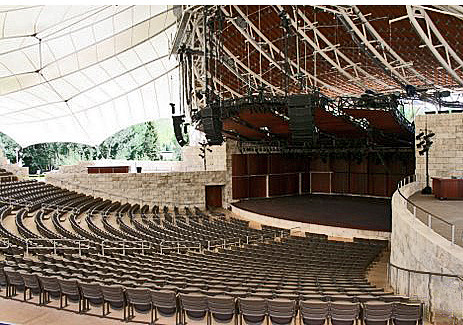
Attended the Sun Valley Summer Symphony summer gala, ‘Some Enchanted Evening.’ Headliners included Tony Award winning singers (Victoria Clark and Paulo Szot) supported by the Sun Valley Summer Symphony. An evening dedicated to the works of Roger & Hammerstein. The stars arrived, rehearsed and then performed and jetted back to New York in a 24 hour period. The choreography of their performance and the energy of the symphony appeared polished and well-rehearsed. Entrances, exits, romantic kisses. The whole evening felt much like we had flown to Broadway instead of Broadway coming to Idaho. What was most remarkable was the stars synergy. This was not two recognized talents trying to steal the evening. It was teamwork with their respective co-star, the conductor, and musicians. Visible appreciation for each others unique talents. By the end of the night the patrons wanted more, almost disappointed that they could not coax a second encore.

Clearly Victoria, Paulo and guest conductor Ted Sperling are professionals. What they could not fake was their enthusiasm and authentic passion for the place, people, and moment.

Do you have the right performers? Are you maximizing their talents? Is it authentic?

Another Survey?

While on the theme of surveys from yesterday, I recently had the chance to participate in a focus group for a major hotel chain. Very interesting and appreciated the chance to provide feedback. One of my observations (and I know many of you have the same):

Why does the more economical property in your hotel chain provide the following free or complimentary amenities when I stay: wifi, breakfast, recently upgraded room, fitness center access, parking, shuttle, business center? All for usually half what I play for the flagship hotel.

Why does your flagship property charge me extra for: wifi, breakfast, parking, resort fees, smaller room, fitness center access, parking, business center?

Does this model make sense? I have stayed in cities where if I travel one more exit down the highway I can stay in the same hotel family but get a whole lot more for my money.

Do we have our organizations arranged so the services are aligned for what you charge? Do we send mixed messages with our fees? Do customers and donors shake their heads in disbelief at our model or do they approve?

Crazy Survey

I just received a JD Power survey about a vehicle I own. I started answering the questions on the survey because I am always interested in how they design customer surveys. I made it about a page before I began to laugh. and tossed the survey into the shredder. What made me laugh? I could only imagine the scenarios where I did either of these actions in an after-market:

Does your car have tires/rims? Were they installed by the dealer or after-market?

Does your vehicle have keys? Were they installed by the dealer or after-market?

I know the intention of these questions was to gain data on upgrades or changes to the vehicle but since brevity was clearly the theme of all the questions they make no sense. Did I carry my car off the lot? Did I have it taken by flatbed and have tires and rims added and while you are at could you call the locksmith and have a set of keys made-up so I can drive this thing?

What questions are we asking our customers that make no sense? Do we allow for feedback so we can uncover objections to inappropriate questions? Have you accounted for how many customer feedback forms went to the shredder because the questions could not be answered?

Letting Your Team Shine

Attended a Lyle Lovett concert last night. Probably the sixth time I have seen him and his large band. He puts on a great show in my estimation. Lyle seems to have a handle on the local community and is able to make reference to a couple places he visited while in-town. It makes you feel like he went out and explored in the community and did not just roll in on the tour bus, play, and leave.

One of Lyle’s greatest skills as a performer is his ability to share the spotlight with all the musicians he has on tour with him. I recognize many of the members of his band so there appears to be a loyalty and desire to continue touring with Lyle. He arranges songs that give the entire band a chance to demonstrate their talents. The vocal back-up singers are impressive in themselves. Add a violin, bass, keyboard, guitar, cello, piano, horn, fiddle, drums and you have the making a large band.

How do you arrange your meetings so all your staff and board get a chance to shine? Does your organization inspire loyalty? Do people want to stay involved?

One of the best resources I have read and used repeatedly when it comes to executing a Capital Campaign is Stuart Grover’s book. He does a tremendous job of outlining the key steps, considerations, and resources to execute a successful campaign. What is most effective is about Stuart’s method is that it is simple and focuses on the fundamentals.

When it comes to asking for money, the process is clear that most individuals expect to be solicited for contributions. In fact the average American is barraged by appeals (email, mail, websites, phone calls, text messages, special events, etc). What helps differentiate the truly successful organizations and their fundraising efforts and the ones that just make a lot of noise is the ability to align donors with individuals they trust. If a potential donor hears from a trusted source they are much more likely to give serious consideration to making a donation. If you are the trusted source that is making the appeal, then you ability to communicate that you have invested your time, talent, treasurer and/or touch (as outlined in the Generosity Factor) is a essential. You have put some poker chips into the pot- so to speak. You have made a commitment and now you are sharing the opportunity for others to join you in this tremendous opportunity.

How do you connect with your donors and supporters? Do you have the right trusted source connecting with right donors? Has the person the donor trusts made a significant investment of their own in the project?

“As military strategist Shun Tzu observed, it is victory, and not mere perseverance, that is the essential goal of any battle”

Have you ever noticed how many nonprofit organization’s and businesses pat themselves on the back for their perseverance? Enduring is noble, heroic, creates legends and is written about in history. It does not always mean that it is the most effective way to reach an outcome or goal. I have recently received numerous emails from social enterprise organizations highlighting their determination during difficult times. These narratives certainly stir emotions but they make me wonder if I am supporting an organization that is closer to its sunset than sunrise.

One of the strategies outlined by Hartmut Esslinger in his book a fine line is “The Fourth Line: Building Strategic Reserves.” He recalls how Caesar kept a fourth line of army hidden in the trees during a military battle. The fourth line was the ultimate strategy for success since the enemy was not expecting the reserves to appear. During more difficult economic times and challenges to programs and services, this is the time to reveal the fourth line. These are the organizations that seems to be thriving. Hartmut talks about Steve Jobs return to Apple and how he quickly changed the business model of the company without revealing the product that defined their sector such as the iPod, iTunes, and iPhone. Once each of these were launched they owned the marketplace and the competitors reacted with sloppy replicas at best.

How is your organization thriving? Do you have a fourth line? Are you persevering and enduring or are you thriving?

Nine is Devine

Imagine for a second, your best team experience. Think of an achievement in sports, theater, school, volunteering, travel, etc.

What was the team experience? How many people do you recall being involved in the group? When I do this exercise in a consulting engagement most people say their memory involves 5 to 7 other individuals. Nothing scientific, just anecdotal evidence.

I am more convinced that nine individuals on a board or committee is the ideal size. Here is my rationale. Studies have shown that groups of ten and over trend towards parliamentary communication patterns. There is less of a collaborative conversation and more often the speaker addresses the Chair (or leader) instead of the entire group. Individuals feel less accountable and are more willing to miss meetings because they are convinced that their point of view will be represented by another member of the board. The dynamics of discussions take on a different chemistry as group size changes. I am not saying the Supreme Court gets it right every time but it is interesting to me that there are nine justices. The other trait boards over nine tend to exhibit is to start adding as many major donors as they can to the board. Major donors clearly have passion and the talent to invest significant funds into a cause. That does not immediately make them great decision makers. I encourage groups to focus on identifying a committed group of nine individuals who represent diverse points of view and are willing to be accountable for the decisions they make. You can always expand but it takes years to contract for most organizations.

As a former firefighter and EMT, I took an Incident Command class as a prerequisite course. One of the skills you learned was to be very clear about who you were assigning a specific task. If you were dealing with bystanders then you would either refer to them by name or acknowledge them by saying, ‘you in the red shirt, I need you to to call 911, now.’ Make the same statement without making eye contact and assigning responsibility to a crowd of on-lookers and your chances of success are much diminished.

What has been your most effective group sizes when it comes to making decisions in a team setting? In reality, does your preferred group size meet reality? Are your boards and committees larger or smaller than your preference?

New Landscape

On vacation this week and went for a five hour mountain bike ride this morning. It was tremendous and perhaps most memorable because almost two years ago a wildland fire tore through 45,000 acres, consuming most of the landscape that I rode today. Many of the valley’s residents were displaced or forced to evacuate. This took place during the height of summer tourist season. It nearly devastated Sun Valley’s Bald Mountain Ski Area and continues to have a negative financial impact on local businesses. But there is a remarkable side to the story. It opened new skiing options since the fire completely incinerated all the trees and vegetation, leaving just charred trunks. The trails I rode today are in their second summer of regeneration. Flowers and new plants have filled the forest floor and mountainside.

I came across the vista (pictured below) from the trail to give an updated perspective. It has completely changed the experience of mountain biking on Baldy. You can see miles ahead and have new views that were previously hidden by the lodge pole pine trees.

Have you prepared for how the landscape of your enterprise might change? What are the unseen opportunities that you might realize? Can you anticipate the unanticipated?

Post-it Marketing

I follow a variety of blogs as many of you do. The other day I noticed that a blogger I know was using post-it notes to spread messages containing statements that had a social awareness theme. It reminded me of the power of grass-roots marketing. When you take existing infrastructure and give it a new use paradigm shifts are possible. Check out http://samaritanblog.blogspot.com/2009/07/post-it-inspiration_21.html.

How can you enhance your message and brand using the most basic of tools? Do you tend to notice a child’s lemonade stand at the side of the road more readily than the local convenience store? Is the story you are telling remarkable?

Q

Q, James Bond’s supplier of all things destructive and detonating. When watching the films today, the gadgets seem to be antiquated and almost humorous in their design. Polaroid cameras that shoot lasers, exploding alarm clocks, and plastic explosive tooth past. What was revolutionary is now better displayed in the spy museum as a relic of the a past era. I am reminded that fewer members in Generation Y wear wrist watches since their mobile phone or MP3 player serves as their time piece.

What has changed in your field of expertise? Does your success still rely on Polaroid cameras and wrist watches? Do you have the right people in the room when making critical decisions?