Belief

If We Win- I Am In

If I ask you to envision a chair, what do you see?  How about an elephant?  Now, what do you see when I mention youth education program?


Here is my anxiety about trying to connect with individuals using features and benefits as the primary point of intersection.  Taking the elephant example, you may have pictured an adult elephant standing in a zoo enclosure.  For someone else they see a young juvenile running in the African savanna.  Another image may be of a purple elephant dancing.  Additional renditions might include an ivory tusk sitting on bookshelf in a study. How about the whole cartoon depiction of elephants?

Favorite cartoon elephant is?

  When you talk about a service or program as an introduction to your organization’s work, odds are high that the person listening has a very different picture in their mind than the one you are trying to articulate.  However, when we start by talking about what we believe, that brings a strong emotional response that offeres an authentic point of intersection.  It is not deceptive or misleading since belief is one that resonates powerfully for both parties.  Programs and services change over time.  They can easily inspire and disappoint at the same time.  Beliefs stay true if the actions you take to manifest them are consistent.


I would highly favor identifying a point of connection around a shared belief than feature.  Ask any sports team that builds a fan base while winning and then watched it crumble when they endures losing seasons.  The true believers continued to come to the games because the shared a connection that was not defined by a win-lose record.

Sleuthing and the Golden Circle

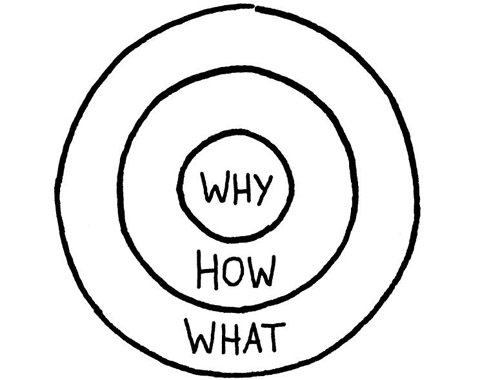
Simon Sinek’s Golden Circle

I had the pleasure to present to a class of students working in or preparing to join the nonprofit sector.  A question was posed about how to understand an organization’s “why” if the nonprofit cannot articulate their belief.  After providing my best on the spot answer I thought more about how to decode an enterprise’s “why”.  Here are some strategies that have served me:

  • Most organizations have immense amounts of literature, online content, and stories about “what” they do.  They can tell you every program, service, and metric.  This is low hanging fruit and easy to slot into the “what” portion of the Golden Circle.
  • The sleuthing begins when you unpack the organization’s “how.”  Begin by asking what values are important to an organization when they select a program or service?  How do they deliver their services? What is the organization’s hallmark?  Why?  What people do they hire to join the team and why?  How does their Help Wanted sign read?  How are they uniquely positioned to fulfill their mission?  Somewhere in these questions one will begin to assemble the “how.”  Remember that “how” is not tangible, instead it is commitments to maximizing a cause’s purpose.
  • The “why” may appear a void but these shortcuts may help.  Ask why the cause was founded.  What problem or opportunity was the founder trying to impact and address?  Founders are amazingly coherent when articulating the purpose of an organization.  Ask the founding story or what the early years were like at the cause.  Consider a query about the organization’s current signature event/program?  You can even use the Seth Godin approach and ask if one were to describe the organization’s greatest super power, what would it be? Lastly, you can always ask the Chief Executive or most visionary employee why they chose to join the cause?  What do they believe that the organization amplifies?
The cause may not be ready to discuss its “why” but with some leading questions one should be able to assemble enough information to understand the enterprise’s purpose.

What question’s do you ask to get to “why”?

Impact of Disney

If Walt Disney had earned billions of dollars but closed his company upon his death what would have been the legacy and the impact?  What if he had died broke but with amusement parks in place and a company ready to expand and become the center of entertainment for generations to come?  Is the goal of your cause to reach a number or to leave a belief in place that continues to serve beyond our lifetime?

credit


Clarity About Purpose

Photo

Sometimes you will make a decision that angers a lot of people.  You will not satisfy the majority.  However, if you articulate what you believe and why you believe it you build a foundation of authenticity and trustworthiness, two characteristics that cannot be easily faked.


As an example, Joan Anzelmo who served as Superintendent of the Colorado National Monument turned down a request to hold a 2007 stage of the then named Quizno’s Pro Cycling Challenge.  Numerous politicians in Colorado made appeals to the Secretary of Interior to over-rule her but her decision was upheld.  The promoters and cycling community were shocked but her rationale is compelling and her blief certain.  She believed that, “A mega sporting event is not just compatible with running a national park.”  Agree or not, she was upholding her purpose as a Superintendent, even though she was cycling enthusiasts on the side.


How have your beliefs guided your decisions, even when they are not popular?

I Believe

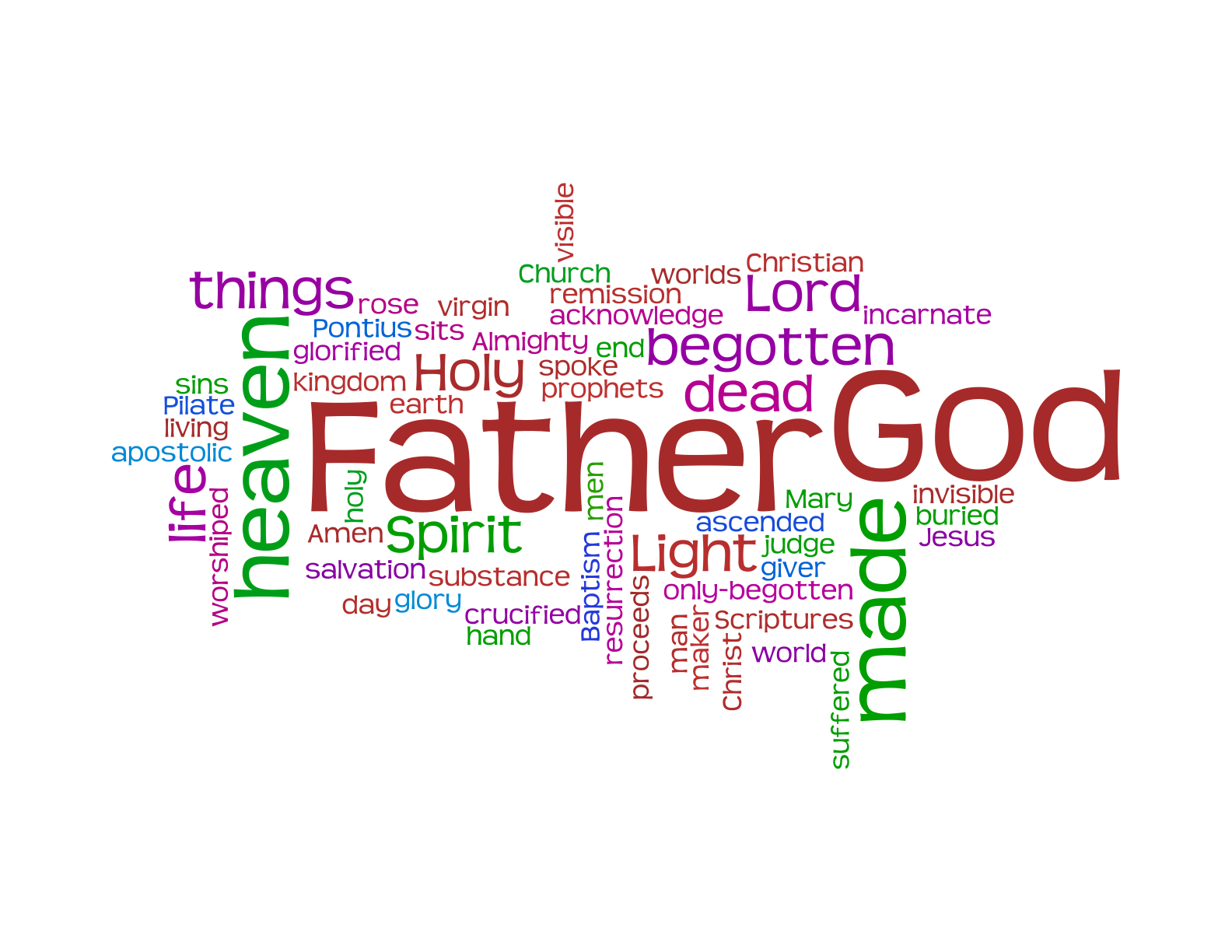
It struck me this weekend that religion does a better job than most causes in stating exactly what it believes.  Take the Nicene Creed from the Episcopal Church. 

We believe in one God the Father Almighty, Maker of heaven and earth, and of all things visible and invisible.
And in one Lord Jesus Christ, the only-begotten Son of God, begotten of the Father before all worlds, God of God, Light of Light, Very God of Very God, begotten, not made, being of one substance with the Father by whom all things were made; who for us men, and for our salvation, came down from heaven, and was incarnate by the Holy Spirit of the Virgin Mary, and was made man, and was crucified also for us under Pontius Pilate. He suffered and was buried, and the third day he rose again according to the Scriptures, and ascended into heaven, and sitteth on the right hand of the Father. And he shall come again with glory to judge both the quick and the dead, whose kingdom shall have no end.
And we believe in the Holy Spirit, the Lord and Giver of Life, who proceedeth from the Father and the Son, who with the Father and the Son together is worshipped and glorified, who spoke by the prophets. And we believe one holy catholic and apostolic Church. We acknowledge one baptism for the remission of sins. And we look for the resurrection of the dead, and the life of the world to come. Amen.

There is not a lot left unsaid.  The picture of what the church stands for is pretty well stated in this creed.  How well does your enterprise communicate its creed?

Context

I read an article that asked the interviewee for a wish.  The respondent said that they wished, ‘a different political party was in control of congress in Washington, DC.’  A wish that probably resonates with half the population at any moment in time.  The issue is that the comment was made before the last congressional elections and the political leadership has switched parties.  Now the statement reads differently than intended.  Had the interviewee been specific and said which party they wished to see in power then the meaning would have weathered current events with a little more grace.  Context is important.  Painting a detailed picture about what you believe typically lasts longer than a vague suggestion.

Rankings and Ratings

Robert Parker is known as wine advocate.  His 100-point rating scale is akin to a movie review from Roger Ebert.  A 95-point wine that one has never heard of gets attention when it is 4 points higher than your all-time favorite.  A wine you may consider could require a personal recommendation from another advocate to overcome a low Robert Parker rating.

It raises an interesting question.  How does one avoid resting their fate on a rating system that is the preference of one individual?  How to standout from on a leaderboard that may not reflect your strengths?  It is similar to being authentic.  One cannot fake authenticity.  You simply state what you believe and then allow your actions to be measured against your beliefs.  One cannot completely ignore a prominent rating scale but one can be known for some characteristic that is clearly not captured by a ranking.  Volvo for years was know for the safety of its cars.  Even thought they may have not been stylish, if your chief motivation was a safe car then one would give less consideration to low luxury rating but focus instead on the safety features. Initially the Prius design was unconventional but for those who believed in making a statement about the environment, it was the perfect representation.

If one defines what they believe and acts accordingly, rating scales are less likely to apply. 

Just Listen

The moment I expressed my concerns with an online subscription service, the customer representative quickly apologized that I was not going to complete the transaction, rattled-off the toll-free number, and then hung-up.  Sounds familliar.

The funny thing is that had he just listened for a moment, my issue could have been solved and he would have closed the deal.  But his senses were so tuned to identifying a non-performer and getting to the next call that the opportunity was lost.

How do you make sure you really hear what your customers are saying?  How do you listen for their real needs?  If you believe what your fans believe then taking a moment to at least acknowledge your common belief.  It may be the starting point for a completely different type of conversation.

Too Many Choices

If you unclear about what you believe then you need to offer more choices.  One of the brilliant parts of Facebook is that you can ‘like’ something or comment.  There is no dislike, maybe like, perhaps, somewhat, neither buttons.  You post your thoughts and friends and fans can support your sentiment or not.  

Are you clear about what you believe?  Perhaps one way to test this is to run a brief poll.  Ask for responses.  Can you accept like and dislike as the only two answers?  If you need a five point scale to measure your impact, perhaps you have not been clear about your cause.  One colleague put it this way, a question that requires a range of satisfaction should really say, ‘I agree and I am a fan’ and then all the other possible answers should say, ‘I do not agree but I am this polite/diplomatic.’

For or Against

 I am for justice, diplomacy, thinking strategically, wilderness, professional development for teachers, bicycle lanes, cross-country skiing.

I am against fraud, disrespect, TSA pat downs, highly restricted donations, riding without a bike helmet, promotions based solely on tenure, groups that promote hate, dictators who repress citizens, 


You can agree or disagree with what I believe.  What is interesting is that it is harder to create a movement around what you believe.  It is far easier to attract a crowd by shouting what you are against.  To collect people who believe what you believe takes far more work and you need to identify the specific confluence of my belief and theirs.  If I announce I am against something, then everyone who does not believe exactly what is being attacked is a potential ally in my campaign.  The against crowd is usually driven by a self-perpetuating energy but if you surveyed them their beliefs would be scattered all over the map.  If you ran the same survey for the supporters, their beliefs be very tightly grouped.


Which group of fans are you attracting?