Social Sector

Like a Fine Bottle of Wine

When one orders a bottle of wine in a finer restaurant there is a well crafted ritual.  A sommelier will pour a taste into the glass of the patron, providing an opportunity to ogle, swirl, sniff, taste, and swallow the varietal.  If the wine is as anticipated then it will be served to the guests.  If there is a problem the sommelier will provide the patron with options.  The process carries a strong level of inherent trust that comes from a tradition.  When done well the presentation is an art form in itself.

I have noticed how easy it is to deliver a service (the bottle of wine) to a customer and consider the transaction complete.  Did we introduce the opportunities to our guest and allow them to pick the appropriate service (introduce the wine list, help orient them and make recommendations)?  Do we help the client get started (show them the label, open the bottle, and pour an initial taste)?  Are we immediately available to gather feedback (awaiting the nod of approval that the wine is as anticipated)?  Have we assembled the resources for others to share in the experience (placed wine glasses with the other guests)?  Are we alert to their needs (check on the patrons enjoyment of the wine and prepared to bring another bottle)?  Are we memorable (do we steam the label off a particularly memorable bottle or provide a patron with the business card of the proprietor of the winery)?  Are we available to join the celebration (be prepared for the guest who wants to pour us a small taste of an especially fine vintage).

Enterprises that treat the services they offer like a fine bottle of wine build loyalty, are memorable for their expertise, raise prices, and break out of the commodity race.


Cheers!
Secrets of the Sommeliers: How to Think and Drink Like the World's Top Wine Professionals 

My Idea

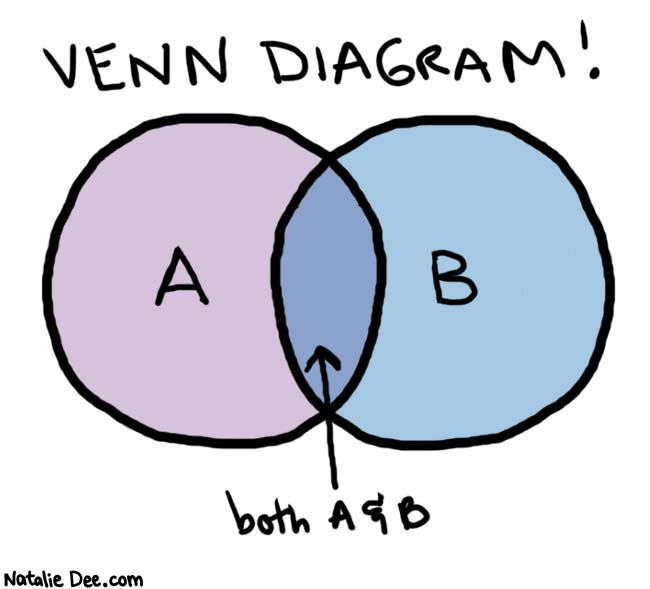
One of the barriers to successful mergers or partnerships is the emotional attachment to the idea. It is challenging to let go of a concept that we raised from the creative incubator and developed into a reality. The arguments for developing a partnership may be compelling.  But is the letting-go of the ownership of an initiative that often keeps an enterprise from transitioning to the next level.  What does not show-up in a Venn diagram is the power of emotion.  Sometimes small considerations that allow for the founder to keep some attachment to the original concept can allow the partnership to progress.

Not Everyone Needs to Be on the Board

I served for ten-years as paid-on-call firefighter in a resort community.  As you spend more time on the department you become more proficient at handling assignments.  As your skills advance you are recommended for additional training and eventually you assume a leadership position.  With enough training you can find yourself on the outside of a working structure fire in a oversight role instead of inside performing the duties ones imagines for firefighter.  The untold secret was that the further you advanced up the chain-of-command the less likely you were ever to see the nozzle and axe handle.  Yet most of us joined to be on the front line and be inside the burning building.

I believe the fire service experience transfers to the social sector.  Not everyone needs or aspires to be in leadership.  Every major donor to your organization does not wish to be on a board member.  The networking king or queen of your community may be ideally suited in their role as a social connector.  A volunteer may just want to assist with reading development.  If we sincerely wish to maximize people’s talents we need to understand their purpose and motivations.  They may be happiest on a ridge with a shovel in their hands and smoke all around them.

Sometimes Average is Enough

An exchange between two guests on WHYY’s Radio Times caught my attention this morning.  In acknowledging WalMart’s increased presence in the super market sector a guest essentially proposed that WalMart does not need to be better, they just need to be as good as their competitors.


That comment struck a deep cord with me.  Many businesses model themselves on the commodity approach.  If they can be as good as the name brand competitor but offer the product at a lower price or with some attached feature then they get the sale.  They win.

It reminds me of the philosophy proposed in Seth Godin’s book, The Dip.  If you do not create a deep enough dip between your product and service then there is no barrier to slow your competitors from matching your features. Products are easy to replicate in this global marketplace so suddenly we are left with a few variables.  Personalized service, an emotional connection, a belief in the organization’s purpose, a desire to make a statement, an individualized experience.  When we analyze what distinguishes us from our competitors there is very little on the commodity side.  It is usually the intangibles that tip the scale in our favor.  


Philanthropically minded individuals who has submitted an organizational grant request to a foundation that seems perfectly aligned to fund one’s cause can often be disappointed to see they were passed-over for a less obvious choice.  Many times the personal relationships between the foundation and the successful grantee are the golden key that provided success.


What features and benefits provide your cause with the greatest return on investment.  It may be the intangible items that are the hardest to measure.

The Dip: A Little Book That Teaches You When to Quit (and When to Stick)

Recognition

“There is no public park in the land with a statue erected to a committee”

Some of the greatest accomplishments have come from a committee.  A well organized group containing a clear purpose can reach great heights.  Strategic plans are developed, new Executive Directors are selected, financial sustainability is mapped out, fundraising galas are run, transformational capital campaigns are executed by committees.  Committees can also be some of the least recognized and appreciated work centers for an organization.  The chair of the committee may receive the appropriate commendation for guiding the committee to a well received result.  But rarely is each member of the committee honored for their contribution.  Appreciation for a high level of performance builds organizational momentum and inspires others to extend themselves.
A couple recent examples of recognition:
  • A mention of the committee members by name on the enterprise’s website, newsletter, social media
  • Host a lunch where the committee members can gather in social setting to share their accomplishment
  • Provided members with a small pin- a Boy/Girl Scout type of approach to recognizing service
  •  Providing a complimentary ticket to the event the committee members organized so they might invite a guest to enjoy the festivities
  • A thank you note from a Board Chair
  • Simple personalized gift such as a sleeve of golf balls with the organizational logo

There are many opportunities to serve on a committee but often the enthusiasm to join is colored by the experience of the last committee. 

Autonomy

Getting people to follow a predetermined path is not easy nor rewarding task.  We have come to value autonomy.  Daniel Pink speaks about the important of autonomy as a critical component of motivation in his book, Drive.  How do we allow those that want us to succeed to do so in a manner that is consistent with their values and talents?  Retweeting, forwarding emails, liking, and voting in online contests remains compelling to a few and perhaps for a limited amount of time.  Some of the greatest movements have provided the parameters and allowed the fans to form their own tribes.  You may be able to orchestrate the wave during a football game when everyone is sitting in the stadium but it is much more challenging when people are remote to the event.

Consider the Surfrider Foundation.  This is an organization that Beth Kanter highlights in her book, The Networked Nonprofit.  This advocacy group allows each chapter to customize the national logo to represent its local topography and seas scape.  Risky proposition perhaps from a branding aspect and developing continuity but the membership’s allegiance to their local chapter outweighs the possible drawbacks. 
    
Are you empowering or constraining your strongest advocates?

Drive: The Surprising Truth About What Motivates Us The Networked Nonprofit: Connecting with Social Media to Drive Change

Same Seats!

Walking through the parking lot today I encounter group of students returning to their van from a school field trip.  From the back of the loosely formed pack I distinctly heard the shout, ‘same seats!’  Another student chimed in with a similar response and so it was decided by a voice vote that the motion for same seats carried.

The mentality of same seats is easy to embrace.  It preserves the known and controls the immediate future.  If I like my seat then I am lucky.  If I was neutral on my seating options then I am probably part of the silent majority.  Only the few who were slammed in the seat by the wheel well or next to a less than appreciated seatmate are the vocal minority. 

The ‘same seat’ flashback reminded me how young I was when I learned how to manage change.  How much of this elementary school organizing strategy has carried over to my work and that of enterprises I serve?  Do we literally sit in the same seats at board meetings?  I worked with one organization that placed a customized tea or coffee mug at each person’s seat prior to the meeting and it was clear where the power resided (just watch whose tea was brewed first).  Are meeting agendas as structured and preserved in tradition as the coronation ceremony for a monarch?  Does our budget look the same every year with just a few adjusted numbers?  Are the same faces tackling the same conversations?  Has our mission statement stayed the same since it is etched into stone?  Do we continue forward with the same programs because our founders established them?

I wonder how many causes carry forward with the ‘same seat’ mentality because it leads to a sense of certainty.  What if we yelled, ‘everyone off the bus’ and took stock of who and what we had on-board.  Happy travels. 


Looking for some innovative ways to manage change, check out the Heath brothers latest book, Switch.
Switch: How to Change Things When Change Is Hard

Putting the Band Together

If you were asked to put together a garage band- simply to hold jam sessions, who would you invite?  If you were asked to assemble a group to play at a sold-out stadium would you change who you include in the band?

Do you find it interesting that some of the legendary musical groups split-up for no apparent reason?  Perhaps money, women/men, fame, travel becomes the distraction.  Then some acts book a reunion tour.  Do you think it is for the fame and money or have they reconnected to their purpose?

I would suggest that if you assemble a garage band because you have a shared purpose- a love of music, a message to send, a common platform, or any other number of reasons, the purpose should carry you forward.  If you never play a cord for a person outside of the garage or if you are making a living from iTunes payments the purpose does not change, however the results certainly look different.  

When we began planning based on the results we risk losing a direct connection to our purpose.  The results start to control us.  One of the great attributes of the human existence is that we recalibrate quickly to a new reality.  We can jump from poverty to lottery winner.  It take little time for a person to consider their new wealth the benchmark from which they exist.

Why do you want to play music (or whatever activity inspires you)?  Who shares your vision?  Write it down.  Invite those specific individuals who ‘get it’.  Exclude those who do not get it- there are plenty of garages for other bands.  Be certain.  It will amplify your experience, no matter what stage you play on.