Uncategorized

After the Hard Part

After you complete the hard part, then what? Do you stop and rest, or do you continue forward at a recovery pace? Can you accelerate on easier terrain, or is your journey finished? Tour de France riders do not call it a season after three weeks of bicycle stage racing. They move on to the next round of events (World Championships, Olympic Games, Vuelta Espana, etc.).

A way to distinguish ourselves is not by completing the hard section but by our actions after cresting the headwall. A social sector organization that completes a capital campaign and then goes silent is remarkable for not being able to double-click on its campaign’s impact. An enterprise that goes viral for a compelling story and continues to make that event its sole highlight reel for successive years is the equivalent of riding off into the sunset.

How might we plan for the crux move and the terrain that follows?

In Media Res

One of Gary Larson’s superpowers was the ability to illustrate THE FAR SIDE from the perspective of ‘in media res’ (in the middle of things). Why The FAR SIDE is a masterclass in storytelling, provides a thoughtful YouTube example. He captures the actions that proceeded in his cartoon panel and suggests the ending.

Try this icebreaker exercise: provide a sheet of paper with three blank cartoon panels and ask team members from your organization to illustrate the enterprise’s strategic plan (or a big project, future expansion, major goal, etc.). When our space for storytelling is truncated, we tend to ground ourselves in the essential plot points. The results of this activity might assist us in telling better stories in the future when we paint a vision of where we want to go.

Being of Service

Leaving the barn for a horseback ride, dirt and debris from one horse collects in the aisle. So, I could sweep just outside my horse stall. Or, I could sweep the entire aisle. The entire job might take a few additional minutes, and it leaves the barn cleaner for those who come after.

Are we serving ourselves, or are we being of service to others? We cannot always do more than needed but when we do, we amplify the work of those around us.

One More Interval?

If you have energy for one more interval (high intensity, shorter duration effort) during endurance training, should you do the interval, or is it more beneficial to finish the workout before reaching empty? Sports physiologists suggest that the body is like an iPhone battery. It performs best between 80-20% of charge. Draining the battery (body) too much causes the battery to lose functionality, and maintaining a constant 100% charge decreases total battery life. We can take steps to expand our functionality in that sweet spot, but ultimately, there is a threshold for return on investment.

How might we understand that the attributes of ‘grit,’ ‘fortitude,’ and ‘never say quit’ are noble but potentially misguided if not utilized in the right circumstances? Leaving one more interval (effort) in our capacity may be more impactful than finishing the workout (project) in total exhaustion. What is your ideal performance bandwidth if you selected a percentage of effective output (like a mobile phone battery)?

Chekhov’s Gun

Chekhov’s Gun is a narrative principle where an element introduced into a story first seems unimportant but will later take on great significance. The principle postulates that any seemingly unimportant element introduced into a story—an object, a character trait, a backstory, an allergy—should later have relevance. https://www.torontofilmschool.ca/blog/chekhovs-gun-definition-examples-and-tips/

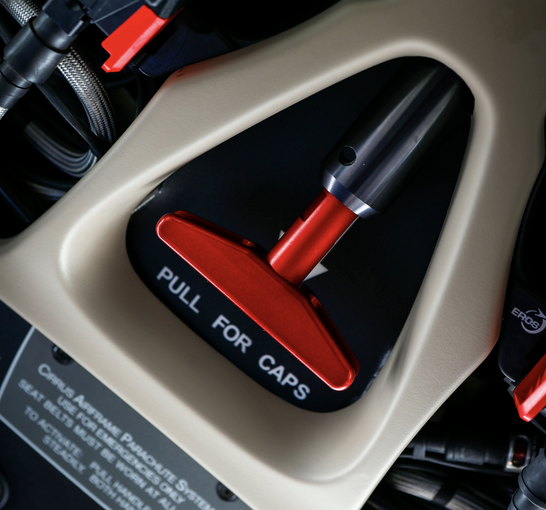
What do you include in your organization’s plan that nods to future activity, and what is identified as a safety device? For example, an organization might title its expansion ‘Phase One’ to reference bigger plans in the future. Circus SR series of planes places a handle to activate a parachute to avoid catastrophic emergencies. Placing a ‘loaded gun’ on the stage can drive the narrative, or it might be a safety measure, with no intention of being deployed.

How might we monitor the intention of the devices highlighted in our plans? Without proper orientation, our team members might be waiting for us to activate the safety mechanism and be disappointed when we launch a future initiative.

Wave for Less Resources

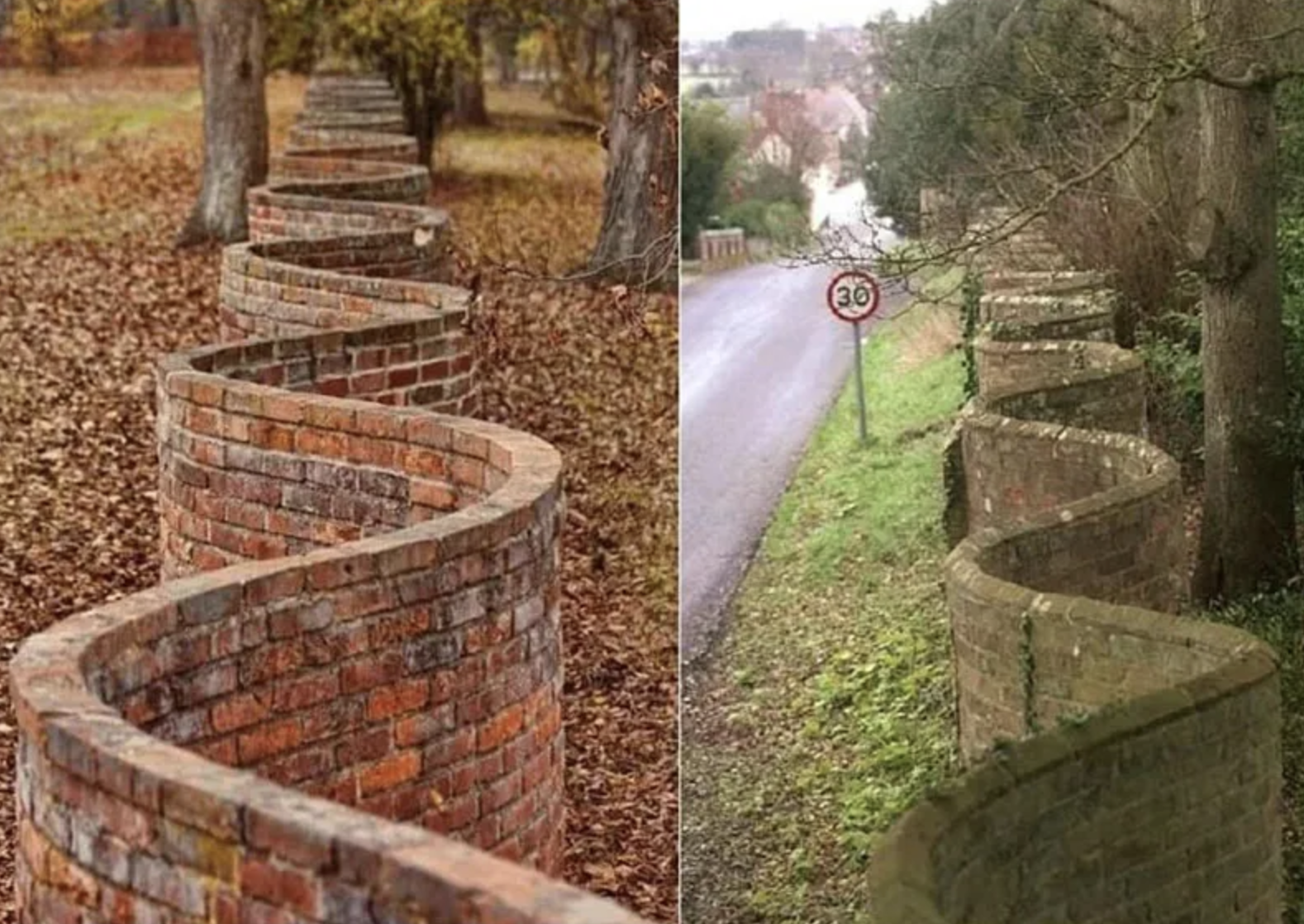
A brick wall built in the shape of a wave (arch) can support itself with a single layer of bricks. A straight wall needs two or more layers of bricks to remain structurally sound. The wave technique was superior for employing fewer bricks to build a wall that connected the same points as a straight-line brick wall.

How might we deploy our resources to maximize our intended impact? A straight line is easy to visualize but may not be our best use of resources.

Rebuild vs New Build

When do you rebuild, and when do you build new? If you are Scenic Hudson, committed to making a transformative investment in Poughkeepsie, NY, you rehabilitate an old Standard Gauge factory into your new headquarters. Building new would have been less expensive, but this project is the most significant undertaking beyond the expansion of a prison complex next door. The location is uniquely positioned at the junction of old railway lines and on the eastern terminus of the Walkway over the Hudson. The site is under construction and led by local contractors and the Mass Design Group.

How might we invest in our mission even when it costs us more resources in the initial phase? How might the long-term impact of our work resonate for our enterprise and the community while preserving a part of the community’s history?

Taking Profits

When do you take a profit from an appreciated investment, and when do you hold your with a growth strategy. Reading some cryptocurrency forums, there is a robust debate between those who have sold their holdings and those who see a much more enriched future. Several people were underwater a year ago as their purchase price was higher than the crypto currencies’ current value. Many stated they would cash out immediately if they could return to par. Many who held their positions are on the profitable side of the ledger, their mindset revised to maximize returns.

How do we balance real-time evaluation with long-term objectives? When we encounter an open lane of travel and make remarkable progress, it is easy to forget that traffic jams and significant barriers can manifest almost spontaneously. The obstacles may significantly alter our estimated time of arrival. What is your strategy for taking profits and when do you hold in hopes of a long-term appreciation in value?

Do Not Tap the Glass

‘Tapping the glass’ is a poker term for commenting on another player’s play, especially when they feel the tactics are substandard. Players at the table who feel the comments are unnecessary will suggest the vocalizing player ‘not tap the glass.’ The analogy is that tapping the glass makes the fish in the tank aware of your presence and disrupts the environment.

How do you handle ‘glass tappers’ in your enterprise? What if the glass tapper is a donor or member who is commenting on your staff’s performance for excessive reasons? What if it is a peer organization vocalizing their thoughts about your organization’s perceived lack of impact? What are the conditions when tapping the glass is necessary and when it is disruptive to the culture of your cause?

Strategic Planning Declines (in gamers)

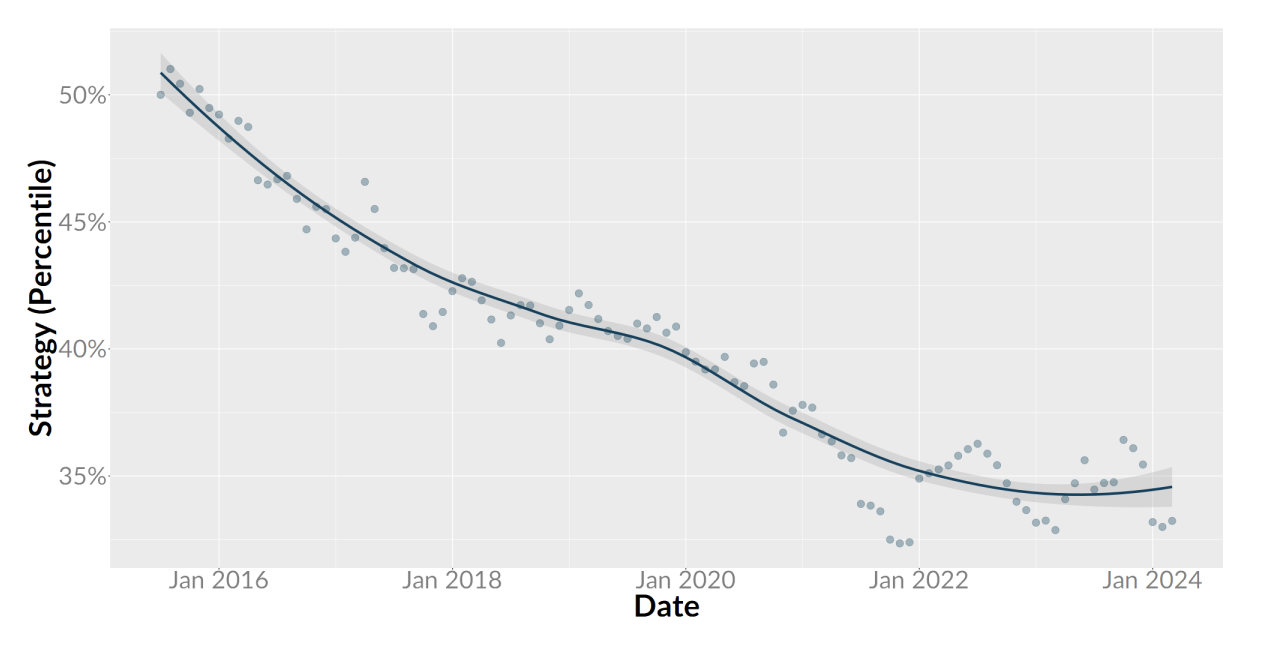
Quantic Foundry released a study that showed a decade-long drop in strategy as a key characteristic of gamers.

In this light, the decline in Strategy is likely not an idiosyncratic phenomenon among digital gamers, but parallels the general reduction in attention spans observed by researchers in different fields.

How high of a priority is strategy and strategic thinking within your enterprise? Do you see more or less time and resources dedicated to this mindset? In what direction do you believe strategic thinking is headed? If you anticipate the demise of strategy, what attribute will fill the liminal space between action and dreams?