The take-off and landing of an over-sea flight might get the most attention, but the cruise portion of the journey is where the distance is covered. The middle portion of our journeys is often overlooked, but it can have the biggest impact. A tailwind might push a commercial airliner to exceed 800 mph. A headwind and diversion for weather can create extended delays.
How might we recognize when we are in the middle portion of our journey? This is an opportunity to do the work that matters.
Contrast is what makes us stand out. It reveals ideas we might miss the first time we encounter an idea or opportunity. When we play the Where’s Waldo game, Waldo appears simple to find when introduced alone on the book’s cover. However, inside the book, Waldo is camouflaged when embedded in the images.
How might we leverage contrast to add depth or dimension to future deliberations?
If professional athletes aspire to have an inspired fan base attend their events and cheer for them during a competition, is their reciprocity that they offer an interchange when encountering recreational athletes during training sessions? Said more directly, if amateur cyclists wish teams of professional cyclists greetings as they pass on the road, are multiple blank stares back from the pro squad a promising way to engage with fans? Might they lift a finger in recognition or utter ‘hi’?
How might we not overlook simple exchanges all due to our focus on assembling the greatest audience to cheer for us at our signature events? How might we remember that the most casual interactions might be the cement that creates a bond? Some of the most pleasing memories are formed in the unscripted moments orchestrated by serendipity.
There is audible frustration that current professional sport all-star games are becoming performative. There is little incentive to win, concerns about injuries, protective egos, and a growing apathy. How might an all-star event become noteworthy? Who is an all-star game for, the players or the fans? How might we ensure we are not hosting events that become irrelevant, even when we have the right people in the room?
Without awards, how would we know where we rank? How do you measure progress? Do you wait for the annual award show to allow for recognition or disappointment? What if you only have your personal results to use as a measurement? What if you only get a data report once a year? How long does an award sustain your efforts? Are you still talking about an elementary school spelling bee victory, a middle school track and field win, a high school team victory, a college academic achievement, a workplace honor from an accrediting agency, or the nod of appreciation from a co-worker? Awards have a shelf-life unless they are extremely rare (Noble Prize, Olympic Gold medal, World Championship). Awards might be waypoints to acknowledge and re-energize our efforts, but they cannot nourish or sustain us unless high school is the highlight of our lives.
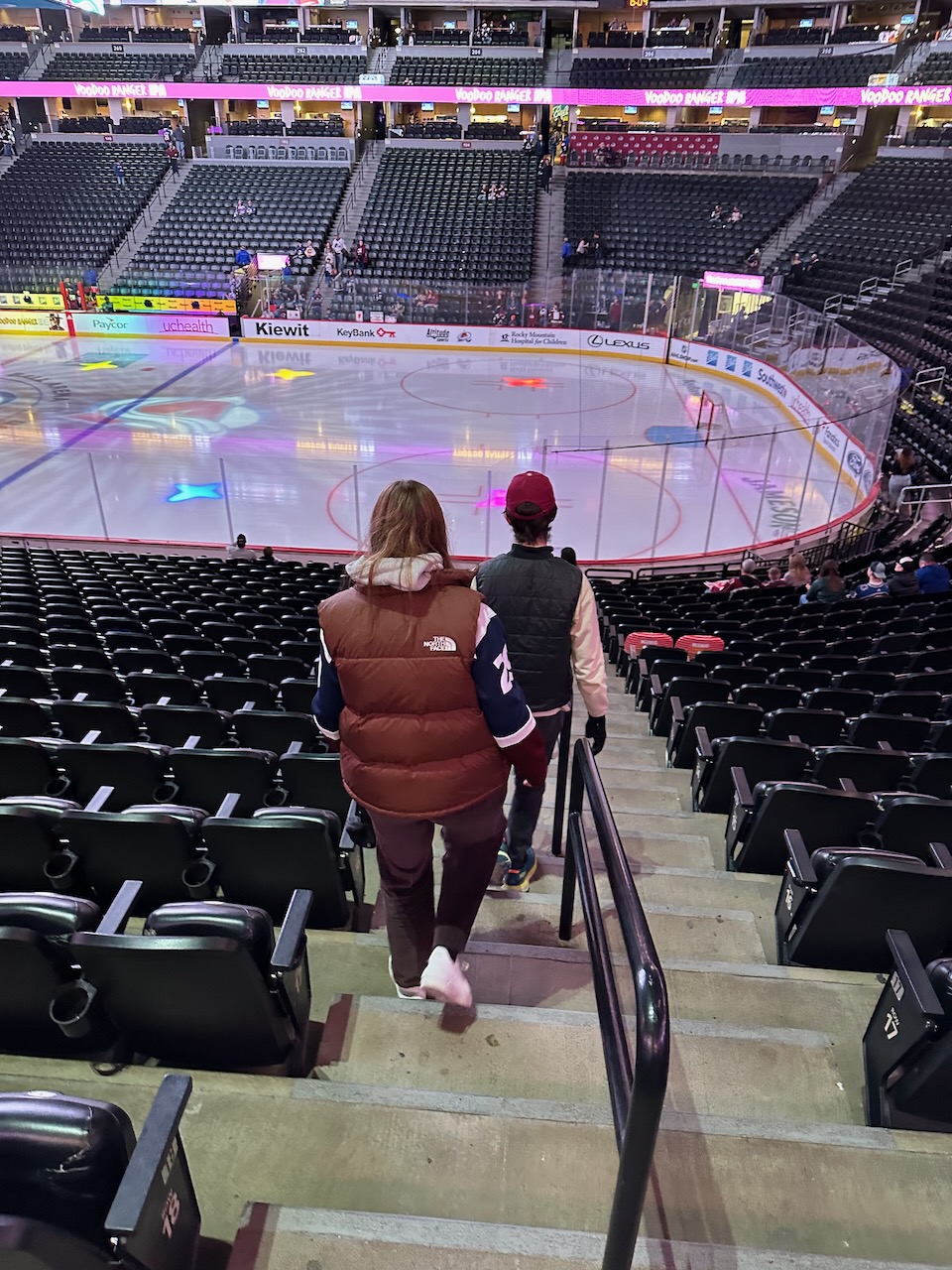
What if we reserved the front rows for our super fans? How might our programs feel different if the people occupying the floor seats were highly passionate, dedicated, and knowledgeable? How might your audience’s mindset change if they were upgraded? The other option is to sell the best seats for the highest price (or allow transactions on the secondary market) and set high expectations. If we pay a premium, the margin to delight people is usually marginal. We can control certain aspects of our events, so why not promote the individuals who cheer for everyone?
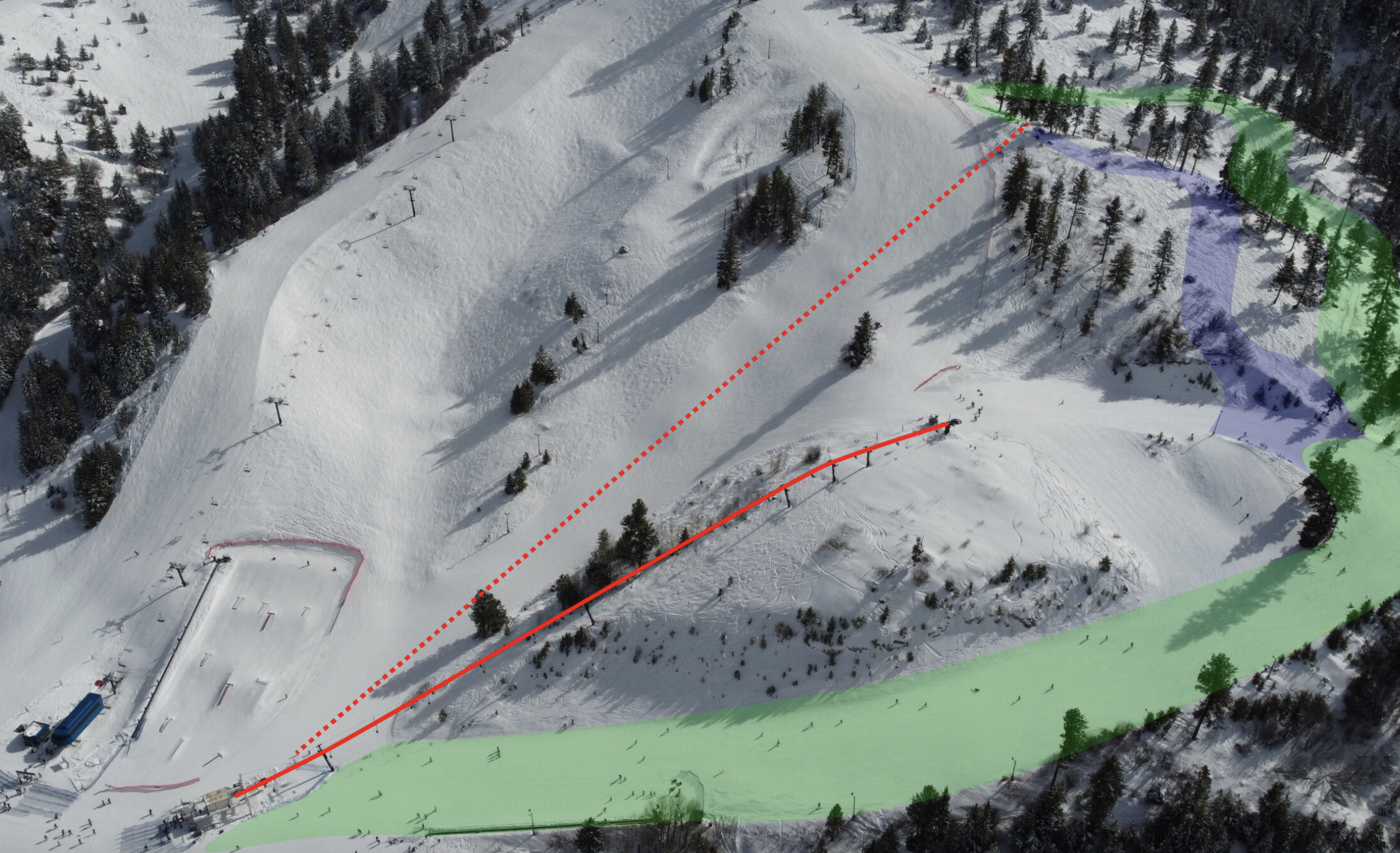
Bogus Basin Ski Area- Proposed new lift dotted line. The existing lift represented as solid line
When rebuilding a ski lift, placing the lift towers in the same locations as the original version may not be necessary. Reconstruction is a chance to reimagine how the ski lift functions and even alter the impact of the ski lift. The first ski lift was constructed in the low point (valley) of pioneering ski runs. The thinking was skiers would gravitate to the ridges to make their turns. Skiers, acted on by gravity, naturally returned to the canyon portion of the ski run and inevitably dodged lift towers that occupied the preferred fall line. So, the ski lift was reconstructed on the ridge lines, reversing the original paradigm.
How might we utilize reconstruction to update our alignment? What if we are expanding the size of the board? Do we seek weak ties to broaden representation on the board, or do we double down on the skill sets and attributes currently serving the board? What if a key partnership changes? Do we find the next best organization to fill the vacuum, or do we review the program and assess future needs before moving forward? How do we remain curious, even when we have invested in a functional platform?
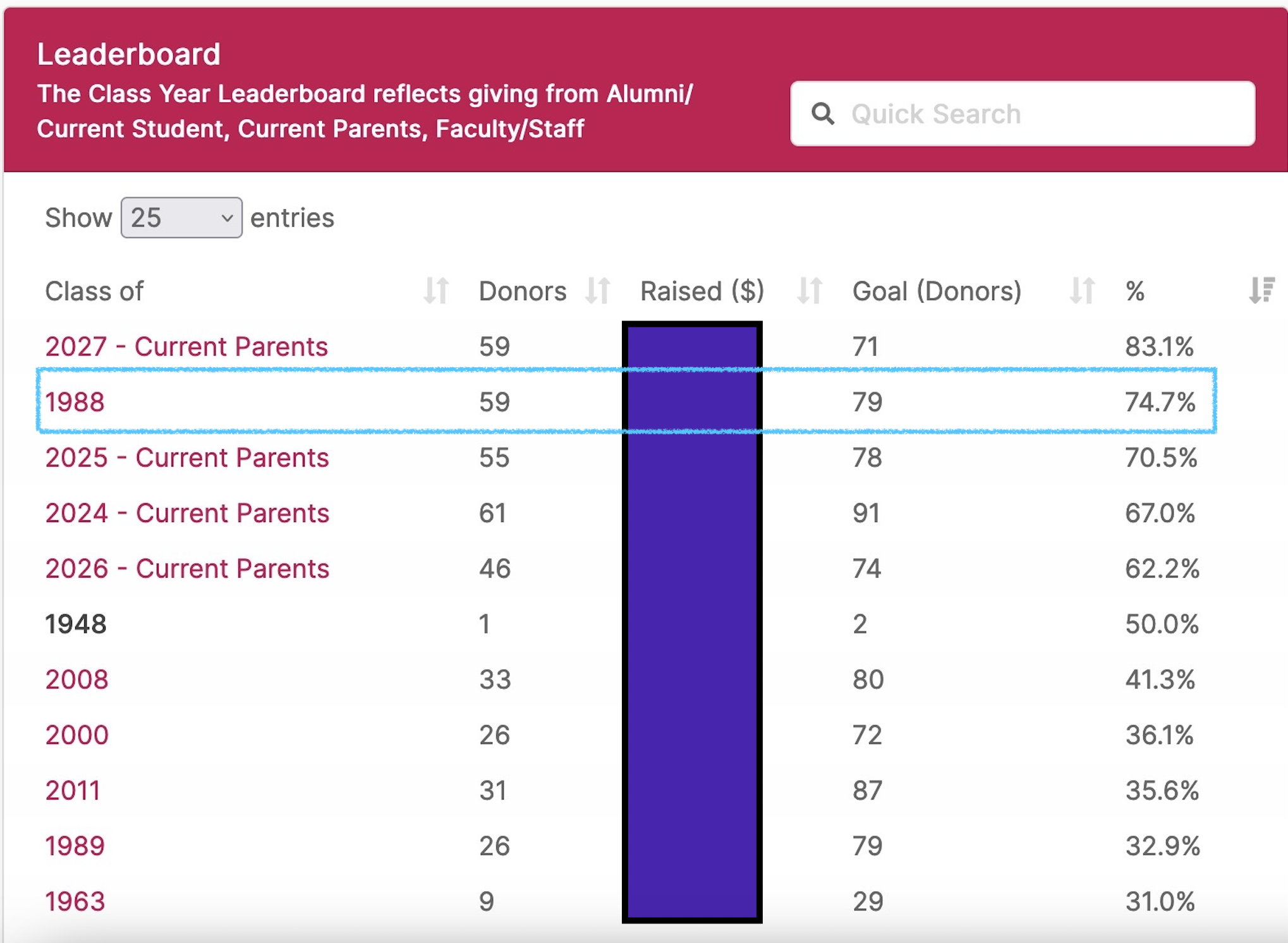
When a group does something noteworthy once, we call it a blip. But if they repeat it again, and again, and again, we search for clues. During a school’s annual day of giving, the graduates from the class of 1988 participate at an extraordinary rate. There is nothing unique about these graduates, no celebrity offering tickets to their next event or incentive scheme that makes participation transactional. Simply put, one class member dedicated themselves to staying in contact (pre-social media) with most of the class. They sent out several emails before and during the one-day philanthropy event. Class members respond, and the cascade of contributions flows, with the participation rate edging toward 80% (the above screenshot was taken before all gifts were made). Other class agents attempt to replicate the giving patterns of the class of ’88 with mixed results but usually cannot sustain the participation rate. The class of ’88 is an outlier, not necessarily managed by the school, but a once-a-year revival.
How might your cause embrace your outliers? Where do you offer support? Where do you stand aside and allow the organic nature of their actions to proceed, unencumbered by systems? Which outlier activities are transferable, and which are not easy to replicate?
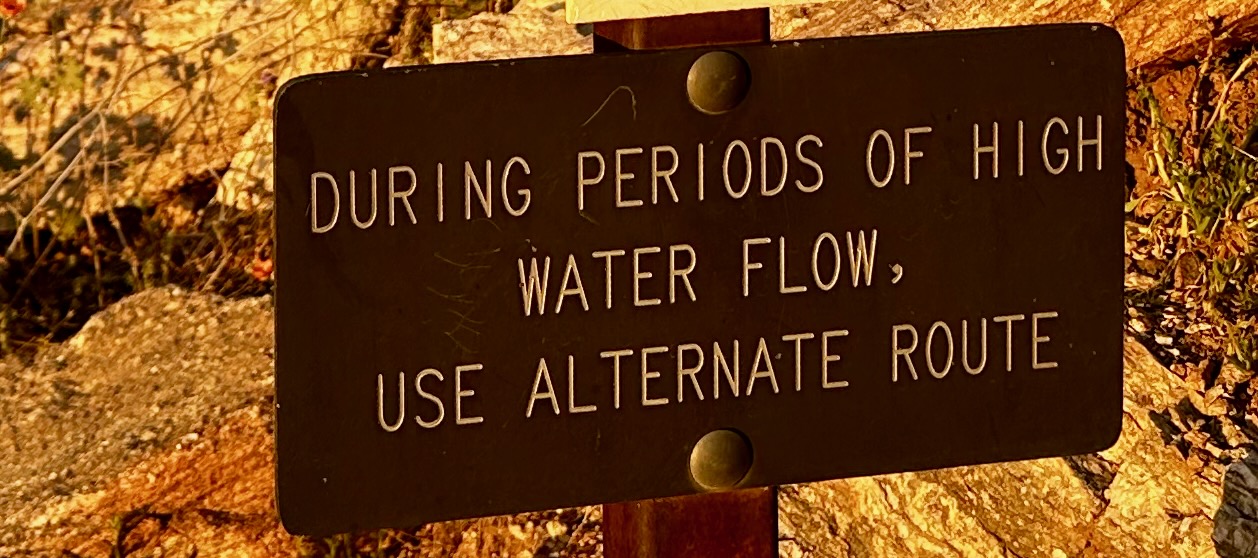
Alternate routes, alternate team members, and alternate itineraries are not for everyone. It is the road less traveled, a side track that reinforces the primary route and, by name, implies it is less significant. However, it gets us further down the trail if required. Consider all the Olympic and World Championship events where an alternate team member is sitting on the bench, at home, or competing at a secondary event. These remarkable individuals were one place away from making the team. They were tantalizing close to being in the game. Due to their consistent presence, insights and support, they are a catalyst for the selected athletes.
Who are your organization’s alternates? The individuals not on the staff or the board but who can jump in when necessary. The substitute teacher that fills in for any absent teacher. The volunteer who can jump in at the last minute to engage with donors or run a checkout station during the big gala. The former staff member who knows how to coax a report from an aging software system. Having highly competent reserves ensures your enterprise continues its journey even when an alternate travel route is required.





 What-if-concepts