 |
| CosmoCaixa |
Seth Godin got it right in his post. We each have a purpose and sometimes it take the right problem to bring the clarity we need to start applying our best ideas.
|
| CosmoCaixa |
Seth Godin got it right in his post. We each have a purpose and sometimes it take the right problem to bring the clarity we need to start applying our best ideas.
 |
| Rainy Day |
| The Daily Show With Jon Stewart | Mon – Thurs 11p / 10c | |||
| How a Bill Doesn’t Become a Law | ||||
|
||||
American Cancer Society, American Diabetes Association, and American Heart Association defeated a bill that promoted their collective core values. They lobbied against what they teach. Being able to promote their self-interest appeared more important that the health of those they are entrusted to serve. Trust, authenticity, and organizational purpose are lost when belief and action do not intersect.

Professionals for Nonprofits released a study about the status of nonprofit employment in New York, New Jersey, and Washington DC. The report released the Top Ten Essentials for nonprofit employees which suggests some interesting priorities. Number one and two are intangible qualities. Trust is a feeling. There is no accreditation process to measure outright trust. The Better Business Bureaus, Charity Navigator, and other certification organizations review past operational behavior but do not award a merit based on trust. Mission statements come in second on the Top Ten list. These narratives provide each organization with the opportunity to define its purpose. Both trust and mission statements speak to the importance of an enterprise being able to articulate what it believes and then acting in accordance with their stated beliefs. Even the trust formulas I offered last month are based on intangible attributes. If you want engaged employees, volunteers, donors, and fans the importance of defining purpose and developing trust cannot be overlooked.
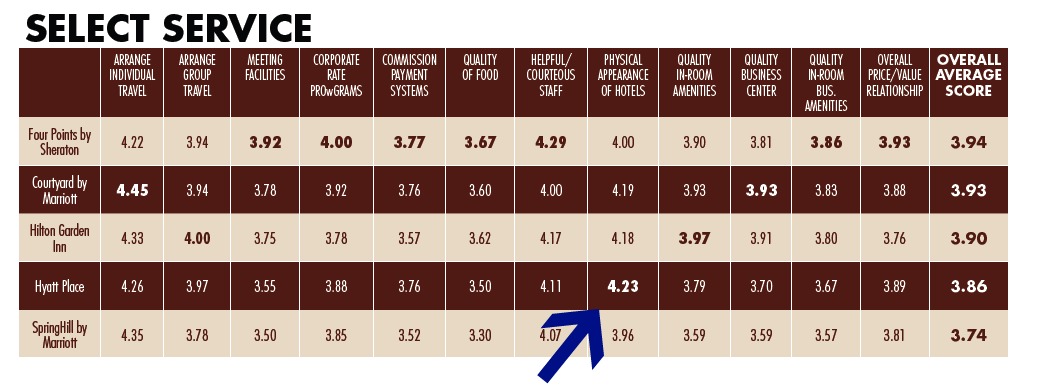
The Business Traveler’s News released its 2011 ranking of major US hotels. In reviewing the report, it is interesting to see that curb appeal does not always equate to the highest overall ranking. Hyatt Place leads the way on physical appearance but finishes fourth in the overall ratings. It provides a reminder that some of the best work is being done by those who built their enterprises from the inside out. If there is a clarity of purpose then the exterior is a reflection (and result) of the core.

Location, location, location is well stated mantra of real estate. However, even location alone does not always guarantee the biggest return. Most would agree that the penthouse views in Hong Kong come at an extremely high cost. However, CNN found some roof top arrangements that were stuck in an undefined market. They had the views but lacked the certainty about the future to justify any significant market price. Location is an heavily weighted attribute but certainty carries more power. The perception about control of ones future was perhaps all that was lacking from keeping these locations from selling for hundreds of thousands of dollars.

Continental Airlines will be the first US carrier to receive delivery of the new Boeing 787 aircraft. The plane is regarded as the best choice for airlines looking to fly long-distance routes and reap the benefits of an energy efficient design. It is the newest toy for a commercial pilot and everyone wants a chance to fly it. How does the airline handle the interest from its pilots? Continental gives priority to the most senior pilots. Those who have the most time with the company get first option to participate in an extensive training program and then be available to fly the planes as they are introduced into Continental’s fleet. Sounds like a respectable system. A Wall Street Journal article mentions one potential downside to the approach. The most senior pilots are likely to retire in the immediate future. It raises an intriguing question. Should an enterprise invest the most in those who are about to reach the end of their service? In the commercial airline industry, this date-certain is age 65. The article mentions that Continental has budgeted for the quick rotation expected from their first group of senior pilots. From the perspective of building an engaging and supportive workplace the philosophy of rewarding those who have given the most seems equitable and completely fair. From a budgetary and resource allocation standpoint, would it not seem more appropriate to invest training in less senior pilot and therefore ensure a tenure of service and learning that should result in limited turnover?
The idea of training, promotion, and retirement makes me consider the trends in the social sector. How often are the highest positions in leadership held by those who are most senior in the cause? How many Board Chairs will retire from the board after their term as President expires? Do organizations consider the make-up of the leadership or is seniority given the most weight when selecting leaders? What investments could you make in a new board member who shows promise of leadership that you may not be able to make in the individual who is about to depart? If the phrase, “it is his/her turn next” enters your leadership nomination process then perhaps it is time to discuss alternative models. Seniority is an important attribute but it should not be equated directly with leadership.
 |
| Boxes in the Centre Pompidou |
It may not always be about thinking outside the box, it may be equally important to make sure you are in the right new box. A blank canvas may offer too many possibilities. Paint in some details and it may provide inspiration for your next best idea.
 |
| Grand Palais, Paris |
Some causes have become so universal that they are associated with a single word, color, or event. The Grand Palais in Paris was a wash in pink tonight and immediately we knew there was an international breast cancer event. What is distinctive about your enterprise?
 |
| Paris Sushi |

