What is this about?

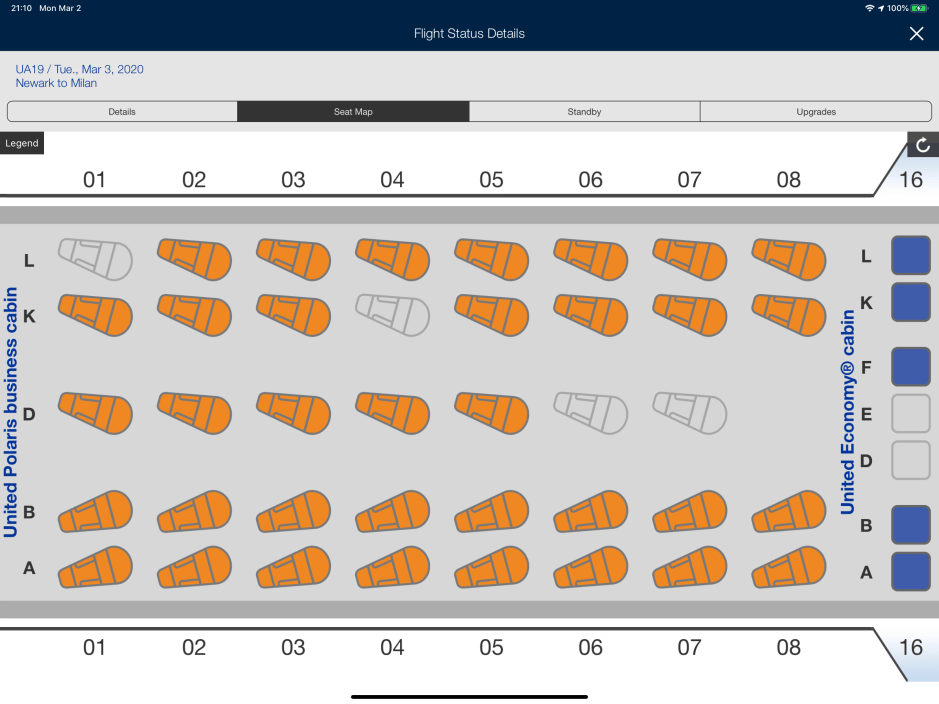
The above image is a screen gab of the seat map on a United flight from Newark, NJ to Milan, Italy in early March. I had a ticket and a season of cross-country ski racing and training in preparation for the World Master Cup in Cogne, Italy. Only a few days before the flight, the organizing committee cancelled the event in response to the COVID-19 outbreak in the Lombardy region of Italy. The United flight departed and flew the route, despite having less than fifty passengers on board.

The organizing committee made the best decision, despite the economic and emotional hit to the local community. During the planned week of racing, the restrictions of travel grew increasingly prohibitive, and eventually even leaving Italy would have been close to impossible.

For a period of time, the decision-making of the organizing committee and the representatives for the nations with participating athletes centered around the economic impact. Deposits had been made, vendors secured, hours of labor invested into the events creation. Once the tide turned and the local government began mandating closures, the human element became the highest priority.

It is easy to use numbers, timelines, financial impact, hours committed to a project as justification for proceeding. The challenge is to remember why we are doing what we are doing. The ability to frame our work around an essential question. In hindsight, the decision to cancel a week of ski races was the only decision. In real-time, the facts and figures manufactured disorientation and misalignment with the true purpose of the event.

Sometimes the flight goes on without you but the best decision is not getting on board. If we orient ourselves to the purpose of the trip, it is easier to step aside an evaluate our choices instead of being swept forward by the boarding process.

How do I….?

Screen Shot 2020-01-08 at 9.31.08 PM

When social media became the nonprofit sectors’ favorite broadcast medium, it was free and gaining reach daily, many conferences would hold social media breakout sessions.  They were typically titled, How To Leverage Facebook And Advance Your Mission, or something similar.  Without fail, the presenter would be interrupted by a well-meaning individual who had not signed-up for Facebook (or the social media platform the session was discussing) and ask for a tutorial on creating an account.  It was such a common occurrence that session attendees would start walking out if the presenter could not quickly refer the questioner to a resource guide.  Some conference avoided the trap by placing a disclaimers on the session, stating attendees must have an active account and be modestly proficient in navigating on the platform.  For years, I witnessed leading content experts reduced to front line tech support, everyone in the session missed the opportunity to benefit from the speaker’s knowledge and prepared remarks.

It strikes me that we often treat new board and committee members similar to the unprepared conference attendees  One of the reasons to facilitate a robust orientation process, link new board members with a mentor, communicate frequently with the new board members, and provide on-going education for the entire board, is to reduce the tech support moments.  If not everyone is operating on the same basic platform, then we cannot benefit from each others wisdom.  If our meetings are put on pause so we can allow everyone to create an account, perhaps we need to reconsider how we are setting everyone up for success in advance.  Our time is limited, how we remove obstacles in advance of assembling says a lot about our care and impact.

Sometimes

2FAD7FC9-5F0D-41B8-B6C1-CE395A9BC4B4_1_201_a

Sometimes the journey is difficult and we seek safety and certainty about the outcome of the adventure.  Sometimes the conditions turn, our assumptions prove wrong, and the final result tips towards failure.  When these moments finally pass, we are able to reflect back with sharper details and sensations than most moments.  I recall how cold my hands felt at the end of a winter training session when I under dressed and the headwind generated polar windchill factors.  I hunker down when I feel intense heat, memories of crawling into structure fires as a volunteer firefighter.   I skip a breathe thinking of my front road bike tire unable to maintain traction as I slid across the pavement, five hours into a twelve hour cycling competition.  I see traces of the cycling wound, my fingers are haunted by a phantom numbness, and the heat from a bonfire sets off a reflex to go low.

These memories from our wildest adventures add depth to our being.  They do not define us because we will find new journeys with equally perilous outcomes.  To believe we are defined is to suggest that we have finished exploring.  Seek out the difficult and challenging.  The reason we continue to plan and set goals is due to the human element and that is what adds depth to the journey.


First Choice

F4058850-351B-4254-8A2B-B8BEB01C73F8

Our first choice is not always the best choice.  The first option may be convenient and meet a need for perceived progress but the results can be less than desired.

Do you click the first link during a Google search, even when the first result has clearly paid for search engine optimization?  Did you propose to the first person you dated, on the first date?  Did the pilot of your flight land the plane the moment they saw the destination city?  Did we nominate the new Board Chair based on the first name mentioned in a passing conversation?

Taking a moment to consider options often leads to better results.  In our rush, frenzy, and scattered moments, we settle for anything that looks like a decision.  Is it better to make any ferry, even when it heads to the wrong island or is waiting for the right boat a better choice?

What if we commit to looking for at least three options when we reach a decision point?  How might three choices change our deliberations if the available answers range beyond yes or no?  What other opportunities might appear when we make room for curiosity?  How might adopting a three option mindset exponentially change the impact of your work?


End-User

WJFTI3u8QgqsRQ1QQScJMA

When we forget about the end-user, our design is likely to be flawed.  We no longer ask the right questions and adopt an empathetic mindset.  If we build a trail, open to hikers, bikers, and equestrians but leave overhanging boulders and rock slabs that cannot accommodate a horse and rider, we are saying ‘this is not really for you.’  The design may have been intended as accessible for multiple user groups, but the construction crew was not thinking about one of the user groups when they built the trail.

How might we avoid building for an end-user but forget to hold their needs above ours?  What is convenient during planning and construction might result in unnecessary barriers and frustration for the user.

Missing Data


Screen Shot 2019-09-18 at 10.00.17 AMGoogle Street View provides comprehensive data on many European Union member countries.  However, Germany and Austria are not well mapped.  Due to privacy concerns, much of Germany opted-out or restricted Google from proceeding with its mapping project.
Sometimes we believe we have a complete data set only to learn that we do not see the whole picture.  If we do not take into account the human element, we may find by the numbers decision-making leads to unanticipated failure.

Curiosity Helps Detail that Matter

Screen Shot 2019-08-27 at 8.06.09 PM

A decimal point sinks a submarine

After reading the above article, you know that somewhere early in the design phase, someone made an error.  A small mistake in the context of all the engineering required to build a submarine.  However, the fact that nobody caught the error means that the final design and fabrication created a very expensive anchor that will now rest on the ocean floor if not fixed.

If we embrace the assumptions that everything that was completed before our part of the project was accurate and correct, then we are in for a few surprises.  Nobody intentionally hands us the error-strewn project.  Our willing to revisit the work we inherited often gives us a greater appreciation for the depth of thought but also the embedded faults.

We are better for the proof-readers, editors, curious minds, and insightful questions.  A culture of curiosity builds on that which went before and hopefully identified the moment we made a wrong-turn or fateful decision.

Sometimes

Sometimes we must step back before going forward.  Sometimes we should descend before ascending.  Sometimes our immediate direction of travel is not our final heading.

Real-time assessment of our performance needs context.  There are moments when we are traveling below parameters, but for a good reason.  If we manage by the numbers, we miss the opportunity to understand our surroundings and seize the opportunity.  Wayfinding is our greatest asset, why not embrace it?