When we hold a precious stone up to an intense light, it reveals any inclusions and blemishes. We might be utilizing the stone for a purpose that does not require a high grade, or we may intend to make the stone the centerpiece of our work, which would benefit from fewer visible inclusions.
What light do we deploy to explore our organization’s inner workings? Do we have a culture of curiosity that is open to examining our enterprise’s status? Does a generative conversation make us stronger as a team or does it reveal fault lines that create more friction?
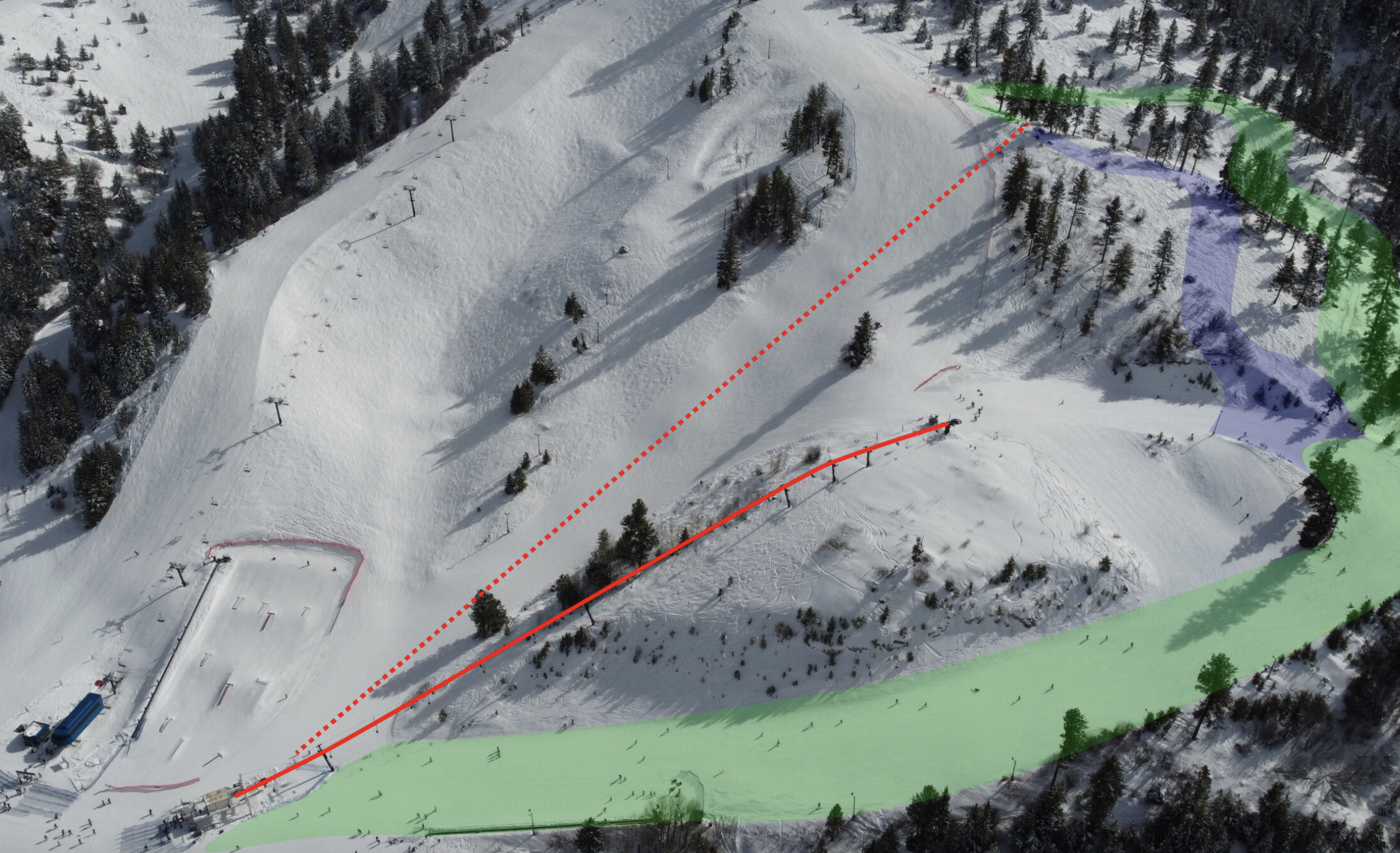
If we make real-time decisions, be aware of our mindset and the moment we decide. No skiers were riding the chairs in front of me, there was no snow on the south slopes, and nobody was skiing the mogul run below the chairlift. A good observation in real time might be that it is time to shift the ski area’s operations to a minimal viable status. The snapshot does not capture that both photos were taken in the last minutes of the ski day for this part of the mountain; everyone had departed or was exiting via other runs.
How might we balance the long view with the immediate facts? How might we remain more holistic when there is a variance in the budget, a blip in enrollment, a change to a donor’s giving habits, a shift in how board members attend meetings or a disruption experienced by a peer organization? How might we prioritize a culture of curiosity over the desire to fix the immediate issue?
Bogus Basin Ski Area- Proposed new lift dotted line. The existing lift represented as solid line
When rebuilding a ski lift, placing the lift towers in the same locations as the original version may not be necessary. Reconstruction is a chance to reimagine how the ski lift functions and even alter the impact of the ski lift. The first ski lift was constructed in the low point (valley) of pioneering ski runs. The thinking was skiers would gravitate to the ridges to make their turns. Skiers, acted on by gravity, naturally returned to the canyon portion of the ski run and inevitably dodged lift towers that occupied the preferred fall line. So, the ski lift was reconstructed on the ridge lines, reversing the original paradigm.
How might we utilize reconstruction to update our alignment? What if we are expanding the size of the board? Do we seek weak ties to broaden representation on the board, or do we double down on the skill sets and attributes currently serving the board? What if a key partnership changes? Do we find the next best organization to fill the vacuum, or do we review the program and assess future needs before moving forward? How do we remain curious, even when we have invested in a functional platform?
When it comes to obtaining customer input, executives often think a multiple-choice survey will be the most cost-effective option. They have their place, of course, such as if you want to know the percentage of people who liked or disliked something. But these instruments are shallow and derivative at best, and at their worst they can be annoying and counterproductive. So don’t let them become an excuse for not talking to the customer.
Net Promoter surveys, pre-retreat questionnaires, automated phone calls, and ring the bell if you received good service; each is a tactical way of generating feedback. On balance, they hinder strategic insights from conversations with clients (those receiving your services). A fundamental case for performing focus group sessions or design-thinking workshops is the ability of one real-time participant to build on the idea of another attendee. This process of idea generation does not translate to the opening list of feedback tools. If you run a single proprietor business and the store is only open when you are present, then you have the chance to engage every customer in some type of generative question about why they chose to do business with you. As the number of team members interacting with customers expands, these conversations are harder to generate, and the ideas are rarely collected in a single repository and reviewed. Therefore, it is convenient (for the business) to send out surveys and seek quantitative feedback. This is the detour from human-centered design. If you were asked to select the ‘type of person,’ you are based on one of six choices that applied to all humanity; how accurate of a representation would the data reveal.
What if we prioritized gathering feedback that focused on genuine interactions with our clients? Where possible, gather a cross-section and create an opportunity for generative feedback (free pizza and beverages are well received). This is a key activity that highlights an organization that embraces a culture of curiosity and invests in a remarkable strategic planning process.
How might we select genuine input that does not populate into a dashboard report? How might we gain more clarity about our super fans and why they trust the work that we have deemed essential?




 What-if-concepts