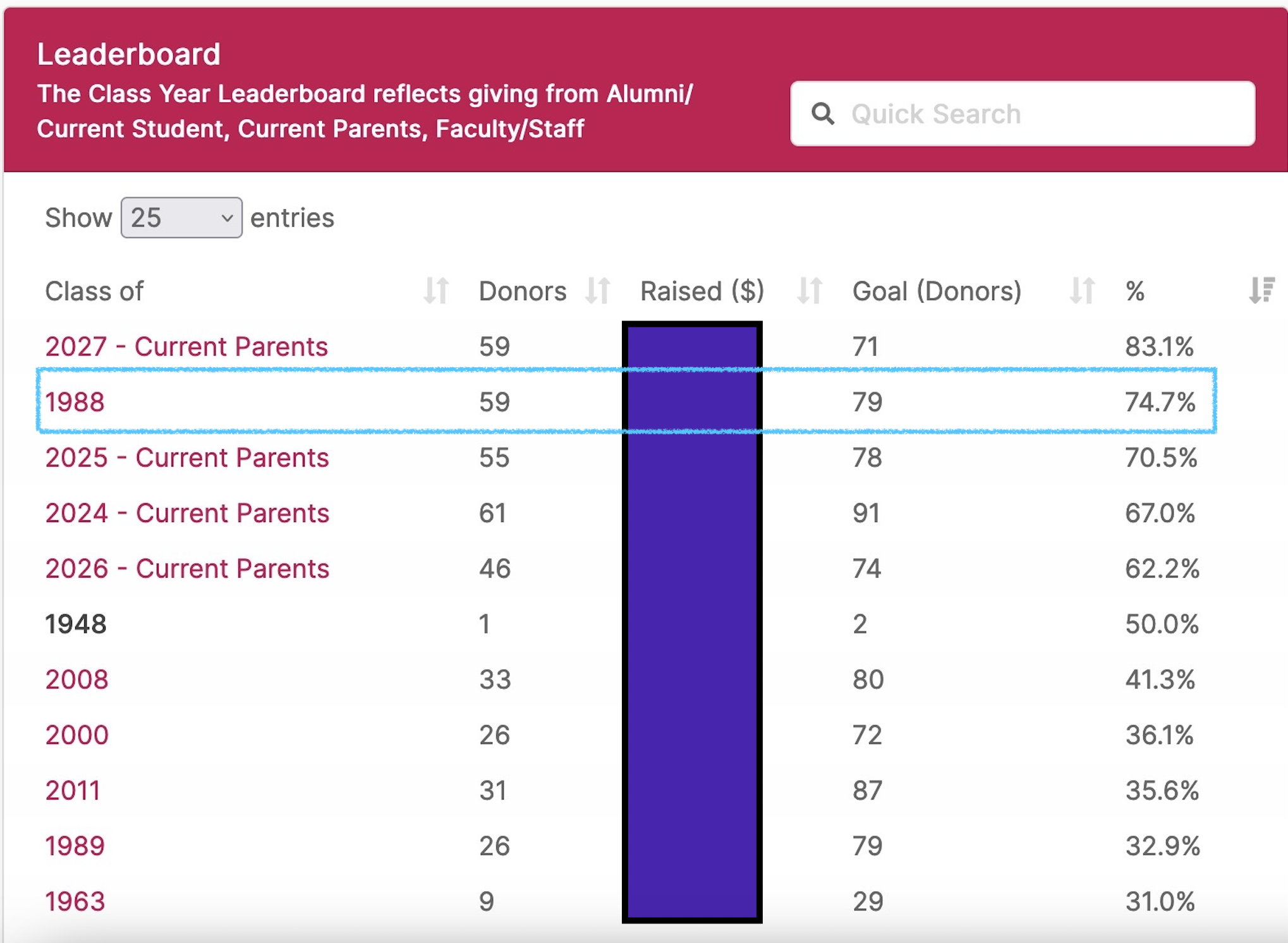
When a group does something noteworthy once, we call it a blip. But if they repeat it again, and again, and again, we search for clues. During a school’s annual day of giving, the graduates from the class of 1988 participate at an extraordinary rate. There is nothing unique about these graduates, no celebrity offering tickets to their next event or incentive scheme that makes participation transactional. Simply put, one class member dedicated themselves to staying in contact (pre-social media) with most of the class. They sent out several emails before and during the one-day philanthropy event. Class members respond, and the cascade of contributions flows, with the participation rate edging toward 80% (the above screenshot was taken before all gifts were made). Other class agents attempt to replicate the giving patterns of the class of ’88 with mixed results but usually cannot sustain the participation rate. The class of ’88 is an outlier, not necessarily managed by the school, but a once-a-year revival.
How might your cause embrace your outliers? Where do you offer support? Where do you stand aside and allow the organic nature of their actions to proceed, unencumbered by systems? Which outlier activities are transferable, and which are not easy to replicate?
 What-if-concepts