How do you understand if we are making progress? If we use your peers’ momentum as a metric, are we sure they are advancing? We might be keeping up only to realize we are motionless?
How might we use external waypoints and independent confirmations to assess our progress?
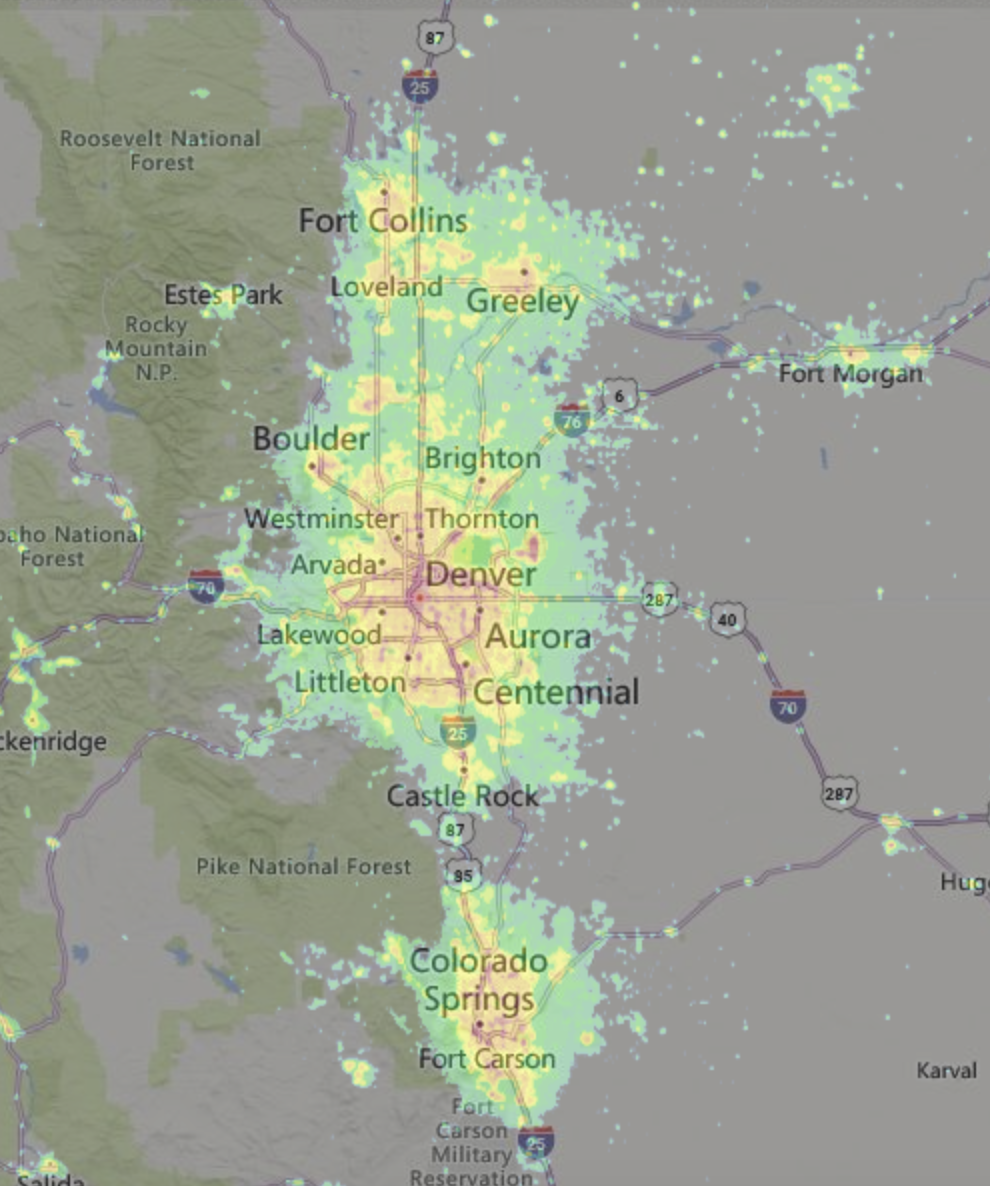
What are the benefits and residual impacts of our work output? When we look at the light pollution map, we see where the man-made illumination has the most radiance and which parts still retain dark sky characteristics. There are now Dark Sky Reserves dedicated to preserving regions from human-produced lighting.
What is your power source? Does it rely on pure power, or do you benefit from additional forces such as aerodynamics and physics? How might we ensure we are not wasting power by generating massive outputs but increasing drag by forgetting to put appropriate pressure in our tires?
How might we strategically deploy our power to do the work that matters?
I raced the Engadin Ski Marathon in an all-day blizzard, with an amended course due to snow threatening the stability of the ice on the larger lakes; it was a unique iteration. Due to the snow and windy conditions, a preferred racing line became evident, and long queues of racers formed. Overtaking other competitors required a significant energy investment to ski in the deeper powder and headwind. On challenging days, the mentality favors those who can keep their mindset on progressing when the opportunity appears. A gap in the line forms, and one can jump ahead and wait for the next chance. But sometimes, remaining in the line is the best strategy, and navigating the biggest pinch points, this act abides by the unwritten racing rules.
What trip wires and circuit breakers have you established to be indicators of danger ahead? Are these signs easy to follow or obscure and challenging to comprehend? If they resonate, embed your self-interest in evaluating whether to proceed or return to find a more reliable path forward.



 What-if-concepts