A tremendous resource to manage inspiration, surprise, emergency, boredom, anxiety in the moment.
“A minute is like a moment with handles on it”
A tremendous resource to manage inspiration, surprise, emergency, boredom, anxiety in the moment.

To ride with the pack is safe. You can predict the effort required to finish the race. If you are feeling strong you can go to the front of the peloton and set a pace that benefits those following. If you are feeling weaker you can be sheltered from the wind by stronger riders. To ride ahead solo is daring and uncertain. It takes commitment to a vision that the effort of of pushing ahead will have its rewards. Those who seek the unknown are often overtaken by the pack. But on occasion they are rewarded in the most spectacular fashion. Finding themselves arriving at the finish solo, celebrating the outcome of molding the unknown to meet their belief.

If you follow NCAA football you are aware there are a few scandals taking place right now. It is alleged that boosters have paid for numerous athletes to receive goods and services deemed illegal by the NCAA. One sports commentator puts the blame right back on the coaches. He claims that if you just recruit the best athletes you are risking athletic performance at the sake of other qualities that may be important in an academic setting. If you recruit the best individuals who will make a difference in their respective communities then the scholarship is more than just a trade of athletic talents for education.
How many causes have you seen who recruited the most visible member of the community but suffered due to the individual’s expectation that their name was sufficient service to the organization? Others recruit the best decision-makers who are committed to serving the enterprise. They may happen to be philanthropically minded, networkers, or even well-known but the cause loves their board members for their core talent first.

You will receive 0% of the gifts you never ask for. Hope is a poor philanthropic investment plan. You may not receive 100% of the commitments you request but you will certainly spark a conversation in all of your asks. Even if an individual chooses not to invest in your cause, if you listen well you will have received something immeasurably more valuable than the assumptions that kept another person from making the ask. Go on the journey, even if it appears dark and uncertain.
Something hidden. Go and find it. Go and look behind the Ranges— Something lost behind the Ranges. Lost and waiting for you. Go!
Ruyard Kipling, The Explorer, Stanza 2 (1903)

Our deepest fear is not that we are inadequate. Our deepest fear is that we are powerful beyond measure. It is our light, not our darkness that most frightens us.’ We ask ourselves, Who am I to be brilliant, gorgeous, talented, fabulous? Actually, who are you not to be?


Some dream just take longer to actualize than others.

Leadership is not about standing in the spotlight and talking about yourself. Leadership is getting others to stand in the spotlight and empowering them to share their gifts. The stage is a platform from which one can preach or engage. If you find yourself talking about ‘my’ or ‘I’, perhaps your motivation is the celebrity of the title and the accoutrements of office. If you speak about ‘we’ and ‘us’ then you are representing the tribe that is united around a belief. Leaders work the spotlight seamlessly, moving its beam to illuminate the highlights of those who have volunteered. Leaders stand it the spotlight’s glare when accountability is needed, apologizes are required, and contrition is appropriate. If you find yourself squinting, perhaps you need to exit stage left and allow the talents of your team to shine. Our job as leaders is to cast the roles and direct the play, not take the lead.
I stand here before you not as a prophet but as a humble servant of you, the people. Your tireless and heroic sacrifices have made it possible for me to be here today. I therefore place the remaining years of my life in your hands.
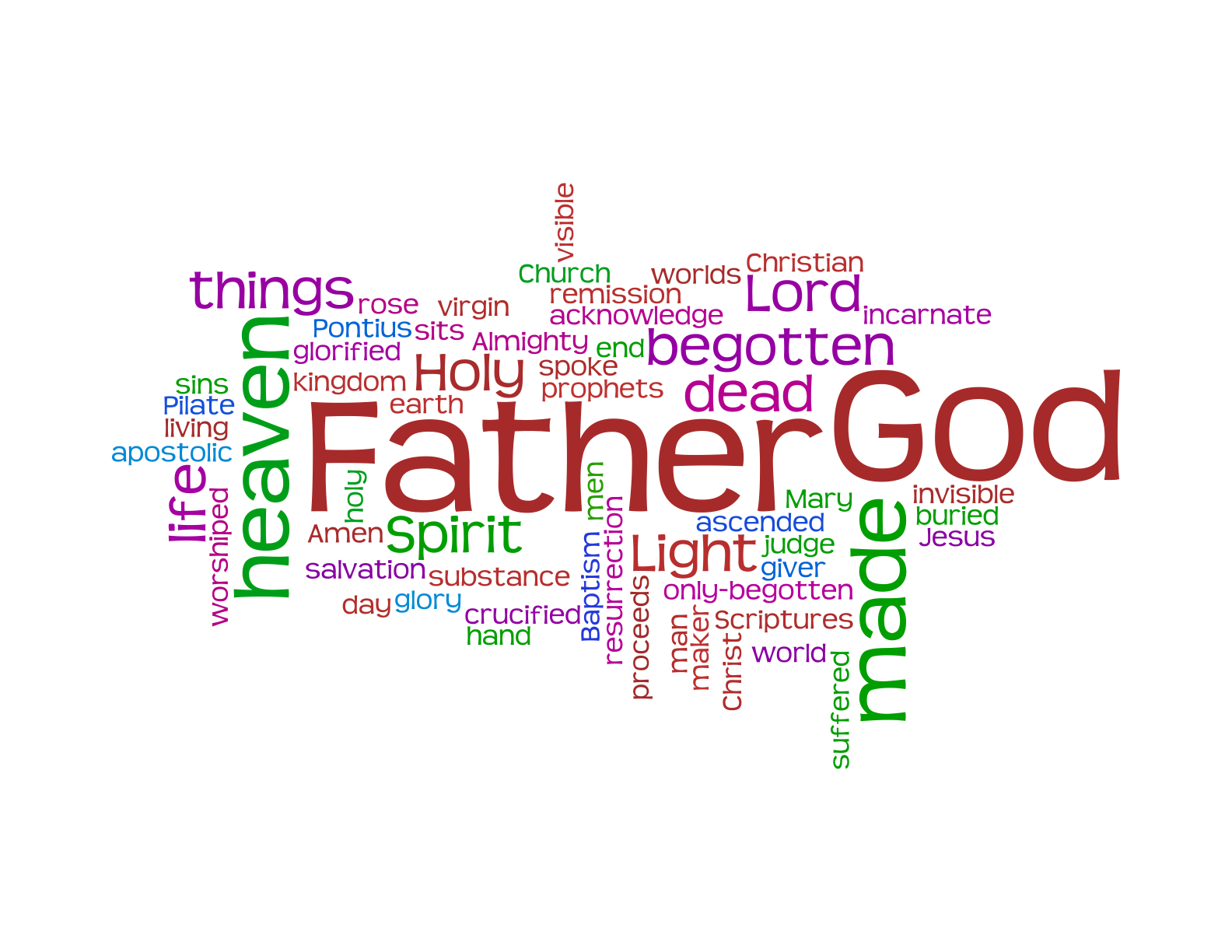
It struck me this weekend that religion does a better job than most causes in stating exactly what it believes. Take the Nicene Creed from the Episcopal Church.
We believe in one God the Father Almighty, Maker of heaven and earth, and of all things visible and invisible.
And in one Lord Jesus Christ, the only-begotten Son of God, begotten of the Father before all worlds, God of God, Light of Light, Very God of Very God, begotten, not made, being of one substance with the Father by whom all things were made; who for us men, and for our salvation, came down from heaven, and was incarnate by the Holy Spirit of the Virgin Mary, and was made man, and was crucified also for us under Pontius Pilate. He suffered and was buried, and the third day he rose again according to the Scriptures, and ascended into heaven, and sitteth on the right hand of the Father. And he shall come again with glory to judge both the quick and the dead, whose kingdom shall have no end.
And we believe in the Holy Spirit, the Lord and Giver of Life, who proceedeth from the Father and the Son, who with the Father and the Son together is worshipped and glorified, who spoke by the prophets. And we believe one holy catholic and apostolic Church. We acknowledge one baptism for the remission of sins. And we look for the resurrection of the dead, and the life of the world to come. Amen.
There is not a lot left unsaid. The picture of what the church stands for is pretty well stated in this creed. How well does your enterprise communicate its creed?

My friends who worked as waiters and waitresses talked about the $100 tip. They would return to a table they had served to clean-up and find an extraordinary tip the when calculated added up to far beyond the normal percentage. It was like winning the jackpot in their minds. The tip was a form of victory. Then the question came, what next?
Another friend said the best tip they received was an offer to work at a patron’s company. The individual was not offering an immediate reward but was making a longer-term commitment in my friend’s talents. The pay-off took longer but the impact was far reaching.
What rewards are you offering? Which ones are truly meaningful?

My son wants a Lego Death Star. I told him I would buy him one block a day and we figured that it would take 3,803 days. I then suggested he could get it faster if he compounded the number of blocks. Turns out he could have all the pieces for his Lego Death Star in13 days. I makes me wonder, where are the organic opportunities within each enterprise to experience exponential growth?


