Uncategorized

How Does the Group Benefit When You Arrive?

When you show up, does the room get smarter, more insightful, diverse, empathetic, energized, or committed? What trait or characteristic do you lend that adds value? It is a question to ponder when being asked to serve. Do we have something remarkable and or unique to offer? We might be the only ones without an advanced degree, but we have experiences that elude academics. We might be the only ones who have trekked this route previously, even if it was at night and we failed to reach the destination. For all the board and team matrices that attempt to map our attributes on spreadsheets, it is often the unquantifiable that is our greatest asset.

I have traveled far to attend board meetings where my presence contributed little until a key inflection point. I offered a three-sentence reflection that I believe helped us make a better decision. For 99% of the meeting, I was not essential, there were other voices to cover the same perspective I was thinking. However, when the moment came for a critical insight that I was uniquely positioned to articulate, I was willing to contribute. The room was better for the presence of each attendee.

Intermission

How do you use intermissions? Is it a chance to discuss what you just experienced?  Is it an option to break out of your current mindset and adopt a new one (check your phone, get a drink/snack, smoke break)? Is it a moment to find the restroom? Is it a chance to prepare for what comes next? Or is it a possibility to sneak out of the event?

Do you prefer structured or unstructured intermissions (request to complete a task versus free time)? Intermissions are liminal events in our lives. They connect two scheduled events with something partially unstructured. Sometimes, we are desperate for intermission, and on other occasions, we hope for no intermission.

What does an intermission tell you about the experience we are curating?

How Using the Phrase:’ _(#)_ out of 100,’ Might Update Our Beliefs

How might we employ Bayes’ Therom, tested and written about by Kahneman and Tversky, to provide more reliable goals and outcomes when planning? Simply deploying the visual representation of the theory might quickly confirm or recant our hypothesis and assumptions.

Actual social sector scenarios I encountered where this deliberation framework might resonate:

A performing arts group evaluates how much of the community seeks opera and, of that subset, how many are drawn to celebrated performances versus those seeking unknown operas.

A land conservation group trying to draw attention to its efforts to preserve and manage riparian ecosystems in a region. How many community members are influenced by the river, and of that group, how many are willing to risk their social capital to act on behalf of river preservation?

An education institution launching a new foreign language program trending at other peer schools. How many students are interested in any foreign language and are ready to commit (or start) to a new foreign language program? How many students commit three years of study to their foreign language studies?

Projection vs. Reality

What content we project to our audience versus what we experience behind the scenes are often strikingly distinct realities. Some of us focus on the dip between the two existences. Others see the possibility to invest in creating the magic that makes our stories richer and more robust.

Which mindset is your default? How does it impact your approach?

The Human Effect

Prioritizing a human-centered approach fundamentally transformed the fan base of F-1. Profiling drivers and their individual journeys provided an access point that previously was not easily accessible. The choice to pivot from the cars and technology to the driver unlocked a new level of engagement and storytelling.

Unsolicited vs. Customized

When we receive unsolicited communications, we expect errors, inaccuracies, and uninteresting proposals. It is similar to driving past billboards on the interstate; only occasionally does it apply to our needs. When we receive customized communication, our expectations increase. We expect our names to be spelled accurately, that personalized details will be embedded, and the pitch for a service will aligned with our general areas of focus. A customized piece can reinforce our relationship with the sender, or it can disrupt that trust. 

How might our communications add value and depth to our relationships?

Investors vs. Investments

In the 1990s, Boeing had a 60% market share among commercial aircraft manufacturers and a decision. Did the company concentrate on pleasing its investors and focus on stock prizes, or did it invest in a next-generation aircraft design? In the book Flying Blind: The 737 Max Tragedy and Fall of Boeing, Peter Robison suggests that the interest of the investors took precedence over the pleas of the engineers to invest in a new aircraft design. Harvesting profits was considered the work that mattered. It was safer, had a quicker reward phase, and was more predictable than investing millions into a next-generation design. Eventually, Boeing launched the 787 program in the early 2000s but continued to use stock price as a core metric. When the 737 aircraft came up for an update, Boeing decided to use the existing platform instead of starting with a fresh sheet of paper and launched the Max series. A quick scan of current events and the top 737 Max new stories are about failures and flaws, even an inability to provide Wall Street with earning guidance for 2024.

To expand on this theme, return to yesterday’s post on competitive advantage; there is a tipping point in all our enterprises. When do we prioritize our investors/donors/members/customers, and when do we prioritize investing in our work/programs? What do our core values suggest? How does our strategic framework align with our decisions? If the social sector is working on problems that cannot easily be solved; otherwise, a corporation would be monetizing the program, then why are we not launching more innovative programs? Should we not be finding the others (Seth Godin’s podcast on Akimbo) who are ready to act and launch our work?

Competitive Advantage

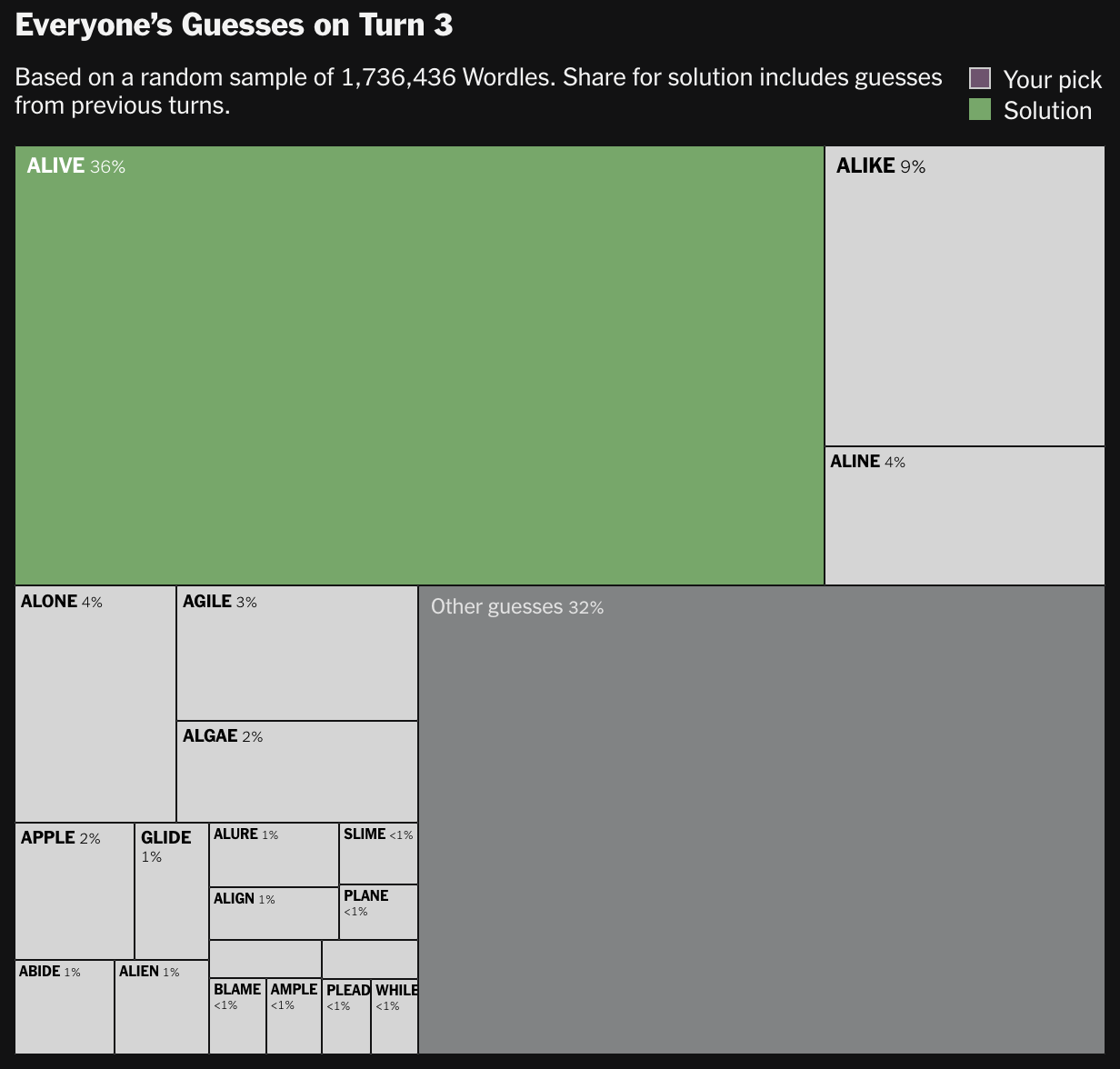
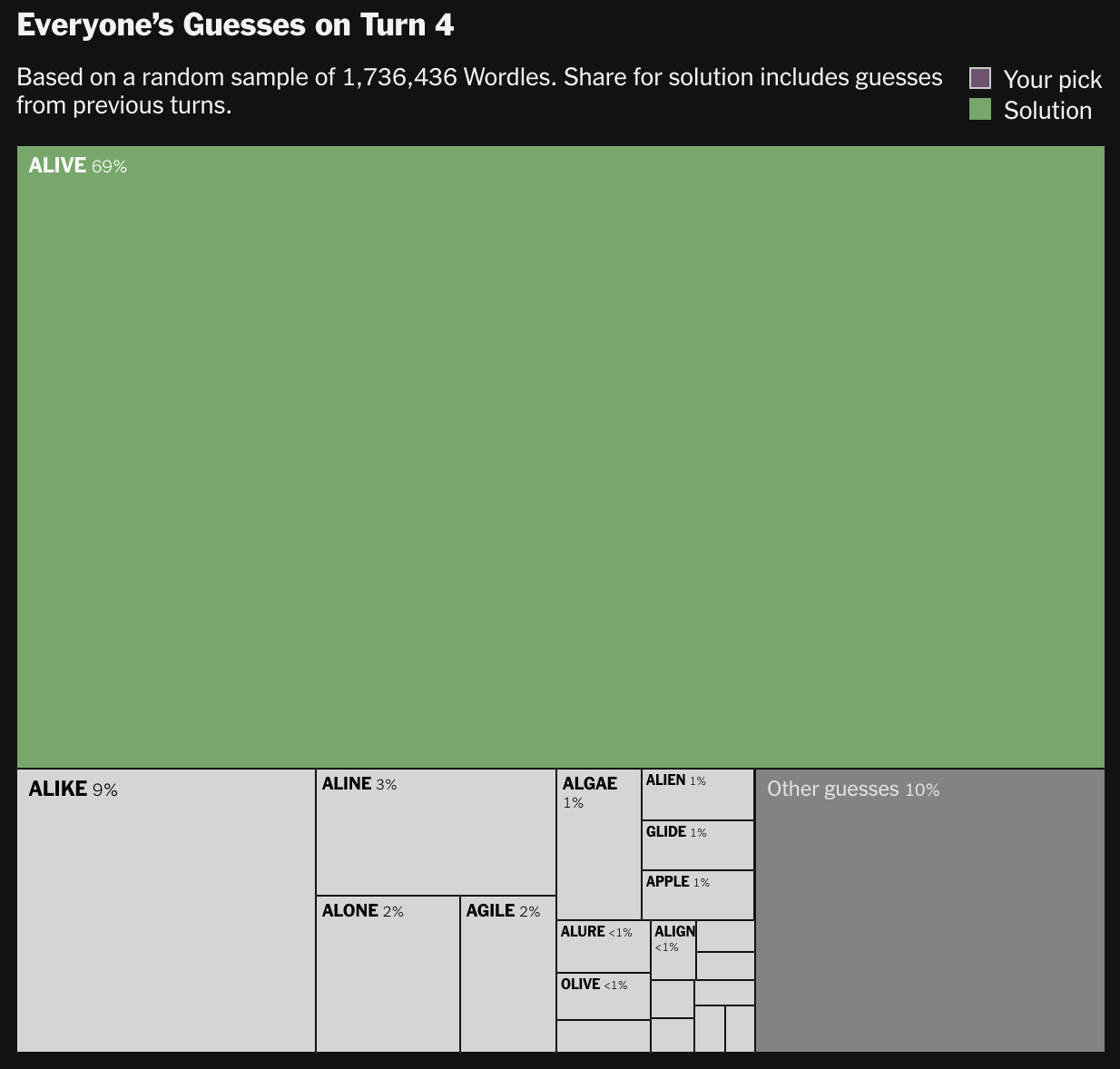
After solving the New York Times Wordle, you can review your results using the WordleBot. The WordleBot breaksdown our guesses versus a large sampling of other players. On most days, a consistent completion rate develops. Typically, ten percent solve the puzzle by their second try. A third are successful by the third attempt. Two-thirds are correct by attempt number four, and ninety-plus percent complete the puzzle on attempts five and six. Occasionally, the wordle aligns with the starting word many players employ, and the success rate is elevated, or the word includes a unique letter, and the results skew towards a lower success rate. 

Competitive advantage in the Wordle world starts when we solve the puzzle by the second guess to be an outlier or the third guess to be in front of the majority. How does this apply to our work? At some interval of time, we will encounter a new technology, trend, or way of thinking. We have a choice, to actively engage the new or passively await the market to sort out the viability of the thing and then adopt when the majority move.Or, be a laggard and await the moment our old platform is no longer supported with updates.

What is the process your team employs to evaluate new opportunities? Who are your organization’s scouts that bring these initiatives to the group for reflection? How does your mindset influence the decisions you make in regard to proceeding, waiting, or ignoring?

*** Tomorrow’s post continues the discussion

A Walk In the Woods

A walk in the woods builds numerous benefits, as the University of Utah reports. Using EEG monitors, the study invested in quantifying data that was less pronounced in previous experiments that relied on self-reports from subjects.

How might we adopt access to nature in our workplace? How might generative thinking expand due to our ability to interact with nature?

Slight Disruption, Major Impact

Ninety-nine percent success feels extraordinary. But if the one percent disturbance is the central communication outlet (see iCloud mail), then dissatisfaction can outweigh the other successes. How might we remember that not all detours create the same experience? How might we be prepared to communicate and fix the detours that are critical? What is the cost of pointing to all the services that performed when our community is focused on the damaged link?