AI

AI

I prompted my photo app’s virtual assistant to identify images that contained artwork from my albums. Along with photos of traditional art from museums, it also produced some random pictures, including car tires that I had taken for an online ‘for sale’ post. I would not have selected the car tires as artwork if I had done this task manually.

AI is adept at compiling lists of information rapidly. It has yet to navigate the process of determining the validity of its response. For example, I received a special event announcement via email. There were several typos and a reference to a non-existent calendar date. This error-filled invitation was quickly followed by an apology email stating that the AI-generated draft had been sent before the professional team had started editing.

If we want something quick and are willing to accept inaccuracies, AI may be a good starting point. If we want a piece that will resonate, human oversight is probably required.

Algorithm and AI

Currently, on a book tour, David Sedaris has a great line in one of his pieces about how Instagram’s algorithm knows he wants to see a video of a Komono Dragon eating a live goat. The absurdity of the subject matter and the likelihood that such a video exists creates humor and repulsion.

NPR’s All Things Considered broadcast a story about AI generating the first result in a Google search. Using their proprietorial platform Overview, the search giant has allegedly suggested ingesting rocks for nutrition and putting glue on pizza to keep the cheese from sliding off.

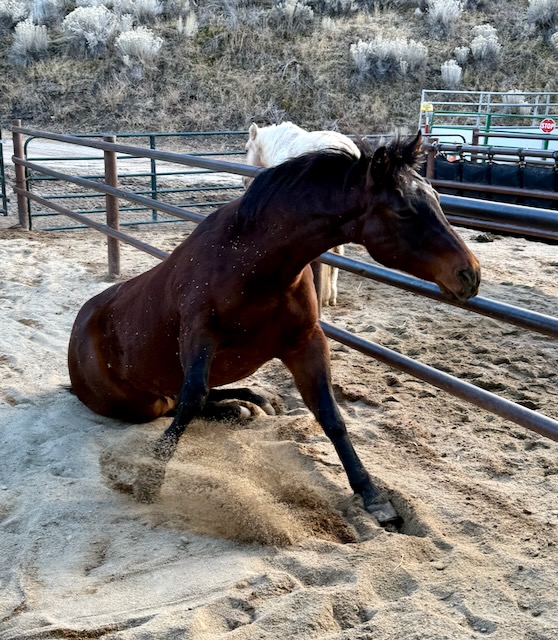
These models are unsteady, like a horse struggling to reach its feet after napping in the sun. They require a lot of power and input from outside data sources to create better results. The more we excel at our exceptional work, the higher the likelihood that algorithms and AI benefit from our creation. But they will always be working on a probability scale. Their suggestions and forecasts will be models. We possess the ability to fill the liminal space between real-time and strategic priorities. While the models might focus on ways to get a napping horse to stand, we can consider the choices we will make on this particular horse, using a specific bridle, while out on our favorite trail just beyond the barn’s fence line.

When Does Craft Matter?

Do you care if you receive a donor letter written by AI? How about a school report card remarking on your student’s progress generated by a large language model (LLM)? What if it is a piece of original artwork painted by a bot? What is your threshold for accepting human craftsmanship versus artificial fabrication?

We are navigating a changing landscape. Software programs and apps assess the likelihood of AI or human authorship and provide an estimation in percentages. What do you feel is essential that maintains a human touch, and what can be leveraged to an LLM platform?

How might we discuss our AI thresholds before we find ourselves simply adopting them out of convenience?

For demonstration purposes, below is Chtgpt’s rewrite of the above blog post. It is laid out with more structure, employs more sophisticated language, and is academic in nature. As a reader, which do you prefer?

Navigating the Evolving Relationship Between Human and Artificial Creations

In today’s evolving landscape, the distinction between creations authored by humans and those generated by artificial intelligence (AI) is increasingly nuanced. Software programs and applications now possess the capability to assess the probability of AI versus human authorship, often providing confidence estimates in percentages. This advancement prompts us to consider what elements of creation require a distinctly human touch and where leveraging large language model (LLM) platforms can be beneficial.

Maintaining a Human Touch

Certain aspects of creation are deeply intertwined with human experience and creativity. Artistic expression, emotional resonance in writing, and the intuitive judgment involved in decision-making are domains where human involvement traditionally adds unique value. The ability to convey complex emotions through art, capture the subtleties of human experience in literature, or make nuanced ethical decisions are areas where the human touch remains irreplaceable.

Leveraging LLM Platforms

On the other hand, LLM platforms offer unprecedented capabilities in generating content that is coherent, informative, and contextually relevant. They excel in tasks such as data analysis, content creation for routine reports, and even generating original artworks based on learned patterns and styles. These platforms can efficiently handle repetitive tasks, freeing up human creativity for higher-order thinking and innovation.

Establishing AI Thresholds

As we integrate AI into various aspects of creation and decision-making, it becomes crucial to establish clear thresholds for its application. Rather than adopting AI solutions purely out of convenience, careful consideration should be given to where AI enhances efficiency without compromising the integrity of human-centric values like creativity, empathy, and ethical judgment.

Initiating the Conversation

To navigate this transition thoughtfully, organizations and individuals must engage in open dialogues about AI thresholds. This involves defining criteria for when AI is appropriate, ensuring transparency in its implementation, and continuously evaluating its impact on the quality and authenticity of our creations. By proactively discussing these thresholds, we can harness the benefits of AI while preserving and celebrating what makes human craftsmanship and creativity uniquely valuable.

In conclusion, as we navigate the intersection of AI and human creativity, maintaining a balance between leveraging LLM platforms for efficiency and preserving the irreplaceable human touch is paramount. By establishing clear AI thresholds and fostering open conversations, we can shape a future where technology complements, rather than replaces, human ingenuity and expression.

Analog Adds Depth and Dimension

What follows is a strategic plan generated by ChatGPT for a generic nonprofit land trust.

Mission Statement: “Our mission is to conserve and protect natural lands, wildlife habitats, and water resources for the benefit of present and future generations.”

Vision Statement: “A thriving and sustainable ecosystem where people and nature coexist harmoniously, with 1000 acres of preserved land and 10 miles of river safeguarded for posterity.”

I. Executive Summary

In the next five years, our nonprofit land trust aims to secure and protect 1000 acres of land and 10 miles of river, advancing our mission and vision. This strategic plan outlines our key objectives, strategies, and actions to achieve this ambitious goal.

II. Goals and Objectives

Goal 1: Land Acquisition

Objective 1: Secure 1000 acres of ecologically valuable land.

Strategies and Actions:

  1. Assessment and Prioritization: Identify and prioritize lands with high ecological value and alignment with our mission.
  2. Fundraising: Launch targeted fundraising campaigns, including grants, donations, and partnerships.
  3. Community Engagement: Engage the community in the selection and acquisition process, seeking public support and donations.
  4. Legal Expertise: Seek legal expertise to facilitate land acquisition processes, including negotiations and contracts.
  5. Landowner Collaboration: Collaborate with willing landowners to explore conservation easements and land donations.

Goal 2: River Protection

Objective 2: Safeguard 10 miles of river and its surrounding habitats.

Strategies and Actions:

  1. Water Quality Monitoring: Initiate a comprehensive water quality monitoring program to assess and track river health.
  2. Erosion Control: Implement erosion control measures to protect riverbanks and adjacent lands.
  3. Riparian Restoration: Collaborate with experts and volunteers to restore native riparian vegetation.
  4. Advocacy and Outreach: Advocate for policies and practices that support river conservation at the local and state levels.
  5. Partnerships: Collaborate with other environmental organizations and governmental agencies with similar river protection goals.

III. Organizational Capacity Building

Goal 3: Organizational Sustainability

Objective 3: Strengthen the financial and operational capacity of the land trust.

Strategies and Actions:

  1. Diversified Funding: Develop a diverse funding portfolio, including grants, membership dues, individual donations, and corporate sponsorships.
  2. Staff and Volunteer Development: Invest in staff training, volunteer recruitment, and capacity building.
  3. Technology Upgrade: Upgrade technology infrastructure to streamline operations and enhance outreach efforts.
  4. Board Engagement: Engage the board in fundraising and strategic planning.
  5. Partnerships: Forge strategic partnerships with organizations, educational institutions, and businesses to share resources and expertise.

IV. Public Engagement and Education

Goal 4: Community Involvement

Objective 4: Engage the community in our conservation efforts.

Strategies and Actions:

  1. Public Events: Host educational workshops, nature hikes, and community clean-up events.
  2. School Programs: Develop educational programs for local schools to foster environmental stewardship.
  3. Media and Outreach: Use social media, newsletters, and public presentations to raise awareness and engage the public.
  4. Advocacy Training: Offer advocacy training to empower the community to champion environmental causes.

V. Performance Measurement

Goal 5: Monitoring and Evaluation

Objective 5: Monitor and evaluate the progress and impact of our conservation efforts.

Strategies and Actions:

  1. Key Performance Indicators (KPIs): Establish KPIs to measure land acquisition progress, river health, and community engagement.
  2. Regular Reporting: Provide periodic reports to the board and stakeholders on the achievement of strategic objectives.
  3. Adaptive Management: Continuously assess strategies and adjust plans based on performance data and changing circumstances.

VI. Conclusion

This five-year strategic plan outlines our commitment to securing 1000 acres of land and protecting 10 miles of river. Through diligent execution of these objectives and strategies, we will work tirelessly to fulfill our mission and achieve our vision of a sustainable ecosystem for generations to come. Together, we can create a lasting legacy of environmental stewardship and conservation.

It is brilliant and covers the classic strategic areas of focus. It took less than one minute to generate. The linchpin is that it lacks meaning. There is no struggle, no points of resistance, and no need for a culture of curiosity to create the strategic framework. 

Would you nominate a proxy to take your marriage vows on your wedding day? Would you elevate an unknown bystander to present your work at a conference? Would you substitute an amateur for a professional firefighter to attack a working structure fire at your residence? I hope we have sufficient pride and commitment to the organizations we serve that the thought of not being present for critical decision moments is unthinkable. Although AI is efficient, it needs directions and insights to handle the human-centered elements.

How might we use our wayfinding abilities to struggle with the essential questions? How might our commitment to drafting an answer and deploying our best resources provide us greater context, even if we reach a less desired result? The act of striving for mastery to be a force for good and be of service requires tension, struggle, and curiosity. When we listen to an analog recording, it is the scratches, imperfections, and skips that make it one of a kind. It also adds depth and dimension. Creating the art provides a sense of ownership that is impossible when we inherit a template.