
What are you monitoring? Where have you placed your sensors to gain access to the data and metrics? Are you tracking the best information for your enterprise, or have you left the options on the pre-programmed default option?
What are you monitoring? Where have you placed your sensors to gain access to the data and metrics? Are you tracking the best information for your enterprise, or have you left the options on the pre-programmed default option?

Almost all the blog posts on the What-if-Concepts website contain a photo, and with rare exceptions, the photos are original. I often wonder if the photos add to or subtract from the content. I like to believe they add depth and dimension to the text that follows.
How might we understand the impact of our work, both the elements and the finished product? How might we engage our audience to discover what needs to be amplified and what distracts? And, how might we, as the artist, author, and curator, preserve our integrity, regardless of what the data suggests?

“You just have to look at the data over history to understand that nothing is changing regarding global warming.” Then, my seatmate shared a graph on their iPad. A quick Google search revealed that the image was considered one of the most misrepresented global temperature graphics from 2015 (note the Y axis ranges from -10 to 110 degrees F). A quick Google search revealed a different version.
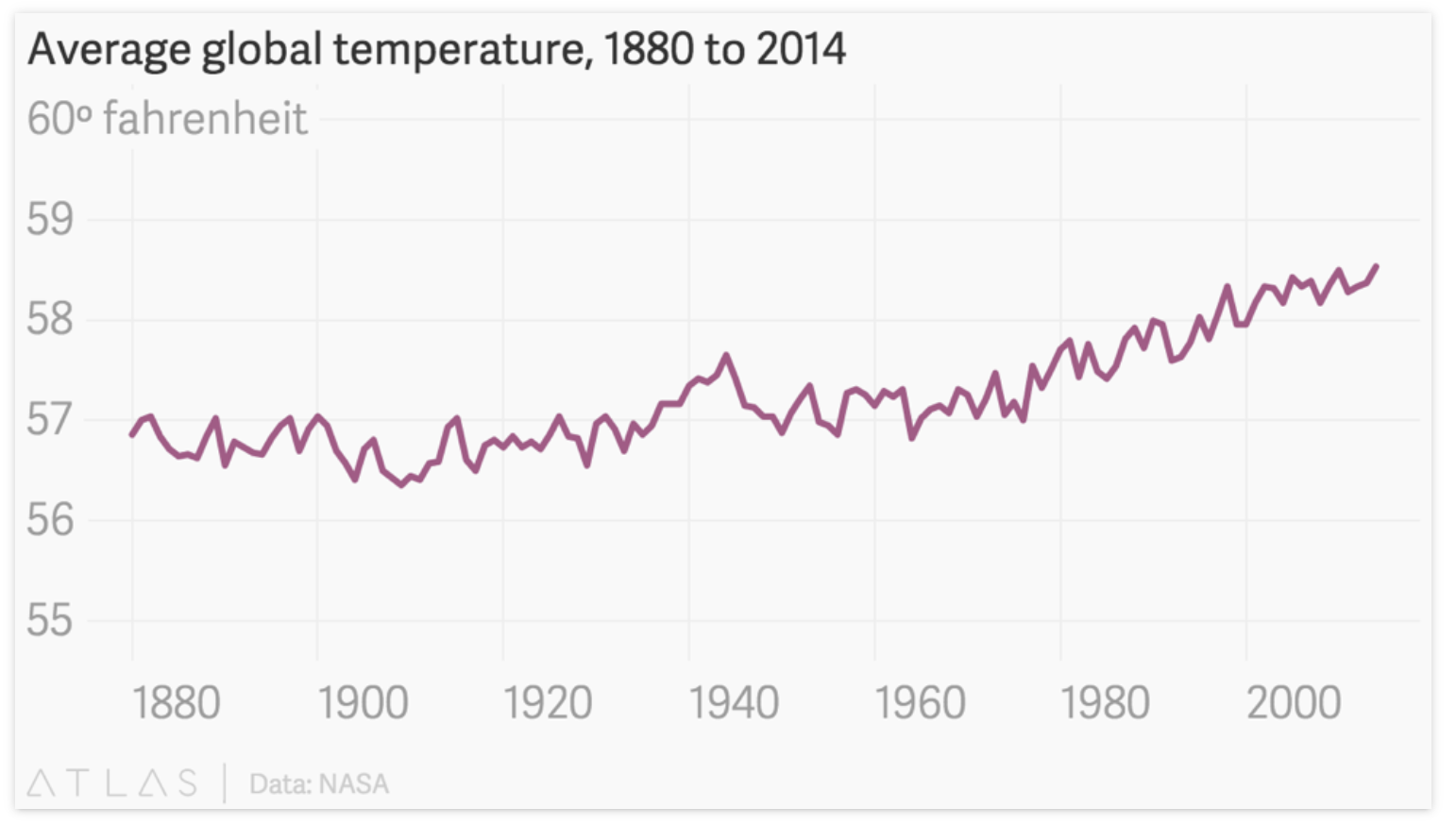
This is not a debate over global warming trends or historical temperature fluctuations. It is a reminder that presented data can lack fidelity and immediately generate an emotional response. We feel shame or inadequacy that we did not know such a central fact when, in reality, the fact is not really what it appears.
How might we remain curious despite the headlines we encounter? How might we read more, ask better questions, and seek other resources before reaching our own conclusions? Other people may have traveled the same route, but their experience does not mean that we have to serve as their proxy.

We might be right about our assumptions with limited data. However, if the data set expands we may discover a different answer. How might we conclude when we have sufficient information to make our best decisions? What would an outsider conclude using the same data? Our goal is not to be certain but rather to remain curious. A better understanding of our world means we can better do the work that matters.

Seth Godin’s post answering the question “how was your bike ride?” amplified a recent meeting experience. All the data presented to the attendees was bench-marked against organizations deemed to be competitors. The group was being asked if the organization we represented looked enough like its peers to be considered competitive but also maintained sufficient signature characteristics to exemplify autonomy. I fear too often data drives strategy. We try to disguise ourselves as a rose when we are a tulip if we feel that roses are trending. Some data is essential. The vitals of the organization must be monitored appropriately but it serves little value to be taking the pulse of a nearby neighbor who has a different history and traits. We need to accentuate our strengths instead of burying them for compliance with the norms. Be brave. Amplify remarkable. Act to embrace your best form.
 What-if-concepts