Impact

Chekhov’s Gun

Chekhov’s Gun is a narrative principle where an element introduced into a story first seems unimportant but will later take on great significance. The principle postulates that any seemingly unimportant element introduced into a story—an object, a character trait, a backstory, an allergy—should later have relevance. https://www.torontofilmschool.ca/blog/chekhovs-gun-definition-examples-and-tips/

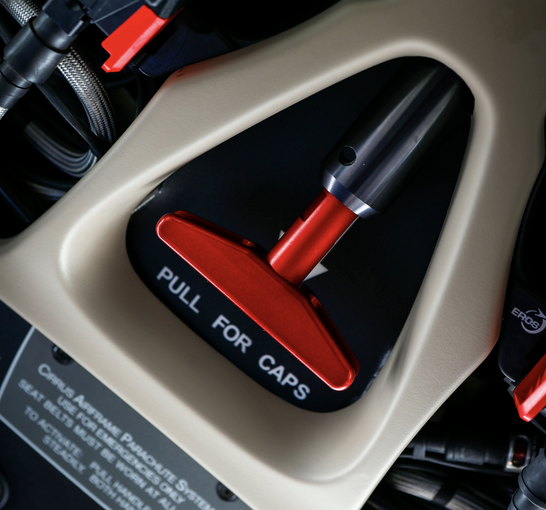
What do you include in your organization’s plan that nods to future activity, and what is identified as a safety device? For example, an organization might title its expansion ‘Phase One’ to reference bigger plans in the future. Circus SR series of planes places a handle to activate a parachute to avoid catastrophic emergencies. Placing a ‘loaded gun’ on the stage can drive the narrative, or it might be a safety measure, with no intention of being deployed.

How might we monitor the intention of the devices highlighted in our plans? Without proper orientation, our team members might be waiting for us to activate the safety mechanism and be disappointed when we launch a future initiative.


Wave for Less Resources

A brick wall built in the shape of a wave (arch) can support itself with a single layer of bricks. A straight wall needs two or more layers of bricks to remain structurally sound. The wave technique was superior for employing fewer bricks to build a wall that connected the same points as a straight-line brick wall.

How might we deploy our resources to maximize our intended impact? A straight line is easy to visualize but may not be our best use of resources.

Smoking on Planes

At what point did aviators decide to adopt radar technology into planes to allow them to avoid terrain and fly in mixed conditions? When did airline companies decide to ban smoking in-flight on most commercial flights? Which happened quicker, the implementation of a new technology or the ceasing of a practice that was known to cause health issues for passengers?

How might we be equally committed to adopting new opportunities while removing those that harm our work?

Daily vs Random

Posting a daily blog is a ritual, but the content is not always of the highest quality. Some days, a personal photo drives the content; other days, the content is the foundational element. The frequency of posting is less certain if I only post when the ideas achieve a higher threshold. I toggle between two approaches, balancing the work that matters with what is observable now.

For some readers of the blog, the reliability of new content is important. Another segment desires ideas and resources that impact their specific work. Some visitors only find the blog through a keyword search. Occasionally, I generate traffic when I present at a conference and put materials on the resource page, allowing attendees to return to the most helpful documents. The metrics of engagement for the blog are inconsistent and rarely correlate to the post of the day. When I look at the totality of impact over the past ten years, there are larger numbers that feel rewarding. When I review the statistics on a slow day, it can feel lonely. But I continue to post because it provides me a bridge to reach out and hopefully set others up for success.

The Thought That Counts

Is it the thought that counts? Is it the intention behind the thought? Is it any action taken to fulfill the thought? Is it the consciousness that generated the thought that counts? We tend to give partial credit to those who attempt to complete a promise or a noble idea. Most Mother’s Day and Father’s Day gifts crafted by young children are partially completed projects that did not fully assume the form of the child artist/gift creator. However, most parents celebrate the handmade creations equally, celebrating the beauty and incomplete portions.

How might we assume good intentions when in doubt? What is the cost of celebrating the thought, despite an incompleted project? There is a tipping point where thoughts fail to reach celebratory status. A NASA scientist cannot reply on exemplary thoughts and intentions to launch a projectile into space, but a friend can convey they considered you a priority and took initial steps to deliver on their promise.

Drip Line

We tend to make an impact when we commit to repeated actions. Take a drip line from an overhang; the constant recurrence of water droplets falling onto cement leaves a dent. It is convenient to believe that we are doing the work that matters, but our actions may be inconsistent or applied to the surface that does not benefit from our emphasis.

How might we ensure our work has the planned results?

The Middle = Results

The take-off and landing of an over-sea flight might get the most attention, but the cruise portion of the journey is where the distance is covered. The middle portion of our journeys is often overlooked, but it can have the biggest impact. A tailwind might push a commercial airliner to exceed 800 mph. A headwind and diversion for weather can create extended delays.

How might we recognize when we are in the middle portion of our journey? This is an opportunity to do the work that matters.

Unsolicited vs. Customized

When we receive unsolicited communications, we expect errors, inaccuracies, and uninteresting proposals. It is similar to driving past billboards on the interstate; only occasionally does it apply to our needs. When we receive customized communication, our expectations increase. We expect our names to be spelled accurately, that personalized details will be embedded, and the pitch for a service will aligned with our general areas of focus. A customized piece can reinforce our relationship with the sender, or it can disrupt that trust. 

How might our communications add value and depth to our relationships?

Illuminating

When you make a place visible, who are you serving? Do they need illumination? Is the light entertaining or creating value? What impact does it have on the adjoining ecosystem? If we direct the spotlight into the eyes of those we intend to support, they may be more discouraged than motivated about continuing their journey but in our minds, we provided a beacon to light the way.

How might we understand if we are randomly creating unchoreographed bursts of light or if we are providing a pathway for those looking to navigate a challenging section of the trail?

Speed vs. Utility

We can talk about how fast we can go and highlight impressive numbers. However, our speed might make our intended impact less. How might we better understand the needs of those we aspire to serve so we can calibrate our effort? A regional passenger train that stops for just three seconds at appointed stations is useless to any potential riders not prepared to board instantaneously. An arts organization that says it serves 1,000 students because it flashed a single image on a screen without context for five seconds during a school district-wide assembly is not doing the work that matters. Finding our cadence is essential, which is why detachable ski lifts have become so successful. We can load and unload at a slow pace. The journey between the bottom and top stations travels at a higher rate of speed, where the reduction in total ride time is more significant.