Innovative Concepts

Taking Profits

When do you take a profit from an appreciated investment, and when do you hold your with a growth strategy. Reading some cryptocurrency forums, there is a robust debate between those who have sold their holdings and those who see a much more enriched future. Several people were underwater a year ago as their purchase price was higher than the crypto currencies’ current value. Many stated they would cash out immediately if they could return to par. Many who held their positions are on the profitable side of the ledger, their mindset revised to maximize returns.

How do we balance real-time evaluation with long-term objectives? When we encounter an open lane of travel and make remarkable progress, it is easy to forget that traffic jams and significant barriers can manifest almost spontaneously. The obstacles may significantly alter our estimated time of arrival. What is your strategy for taking profits and when do you hold in hopes of a long-term appreciation in value?

Do Not Tap the Glass

‘Tapping the glass’ is a poker term for commenting on another player’s play, especially when they feel the tactics are substandard. Players at the table who feel the comments are unnecessary will suggest the vocalizing player ‘not tap the glass.’ The analogy is that tapping the glass makes the fish in the tank aware of your presence and disrupts the environment.

How do you handle ‘glass tappers’ in your enterprise? What if the glass tapper is a donor or member who is commenting on your staff’s performance for excessive reasons? What if it is a peer organization vocalizing their thoughts about your organization’s perceived lack of impact? What are the conditions when tapping the glass is necessary and when it is disruptive to the culture of your cause?

Strategic Planning Declines (in gamers)

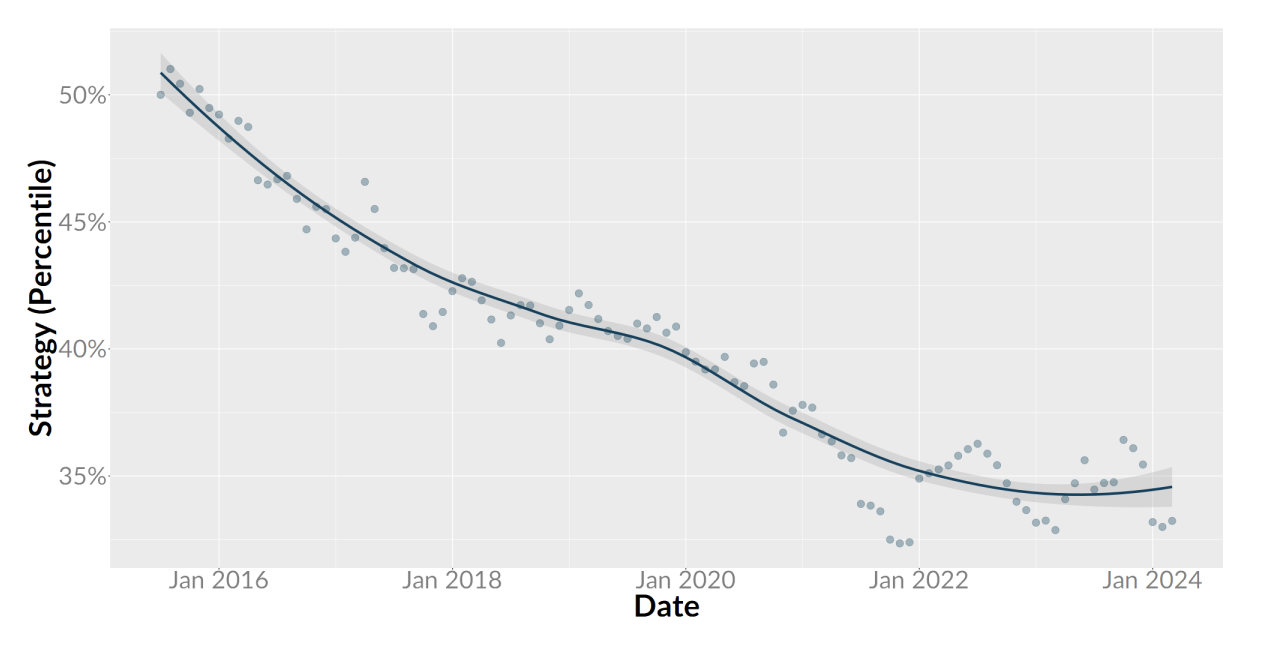
Quantic Foundry released a study that showed a decade-long drop in strategy as a key characteristic of gamers.

In this light, the decline in Strategy is likely not an idiosyncratic phenomenon among digital gamers, but parallels the general reduction in attention spans observed by researchers in different fields.

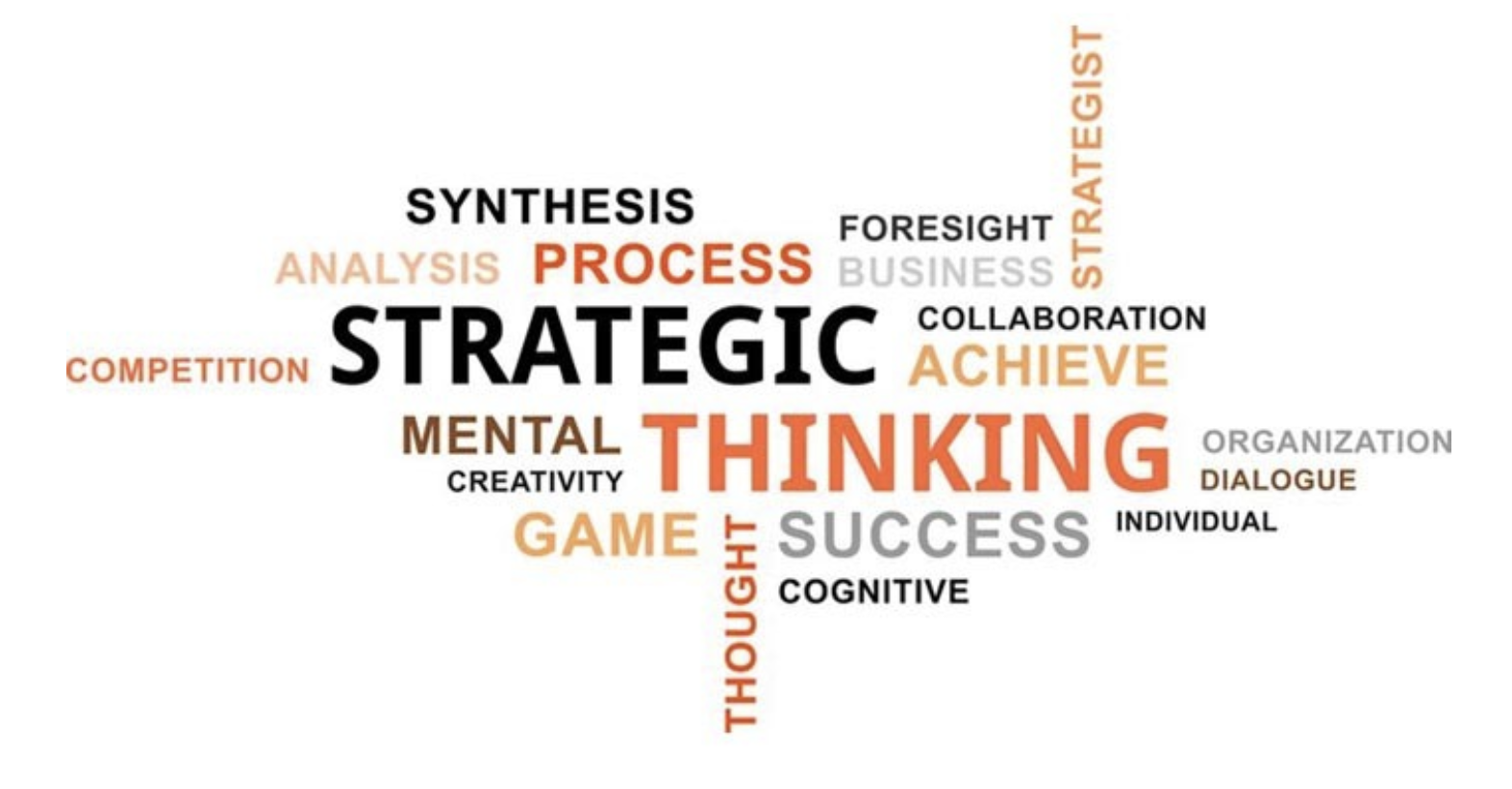
How high of a priority is strategy and strategic thinking within your enterprise? Do you see more or less time and resources dedicated to this mindset? In what direction do you believe strategic thinking is headed? If you anticipate the demise of strategy, what attribute will fill the liminal space between action and dreams?

Smoking on Planes

At what point did aviators decide to adopt radar technology into planes to allow them to avoid terrain and fly in mixed conditions? When did airline companies decide to ban smoking in-flight on most commercial flights? Which happened quicker, the implementation of a new technology or the ceasing of a practice that was known to cause health issues for passengers?

How might we be equally committed to adopting new opportunities while removing those that harm our work?

Local Ordinance

What rules are specific to your team? How were these rules drafted, and what was their intention? Which ones offer clarity and amplify your team’s impact? Which are vestiges of a former era that have not been amended? How do you orient new members to these local ordinances? Are they consistent with your enterprise’s values?

Daily vs Random

Posting a daily blog is a ritual, but the content is not always of the highest quality. Some days, a personal photo drives the content; other days, the content is the foundational element. The frequency of posting is less certain if I only post when the ideas achieve a higher threshold. I toggle between two approaches, balancing the work that matters with what is observable now.

For some readers of the blog, the reliability of new content is important. Another segment desires ideas and resources that impact their specific work. Some visitors only find the blog through a keyword search. Occasionally, I generate traffic when I present at a conference and put materials on the resource page, allowing attendees to return to the most helpful documents. The metrics of engagement for the blog are inconsistent and rarely correlate to the post of the day. When I look at the totality of impact over the past ten years, there are larger numbers that feel rewarding. When I review the statistics on a slow day, it can feel lonely. But I continue to post because it provides me a bridge to reach out and hopefully set others up for success.

The Thought That Counts

Is it the thought that counts? Is it the intention behind the thought? Is it any action taken to fulfill the thought? Is it the consciousness that generated the thought that counts? We tend to give partial credit to those who attempt to complete a promise or a noble idea. Most Mother’s Day and Father’s Day gifts crafted by young children are partially completed projects that did not fully assume the form of the child artist/gift creator. However, most parents celebrate the handmade creations equally, celebrating the beauty and incomplete portions.

How might we assume good intentions when in doubt? What is the cost of celebrating the thought, despite an incompleted project? There is a tipping point where thoughts fail to reach celebratory status. A NASA scientist cannot reply on exemplary thoughts and intentions to launch a projectile into space, but a friend can convey they considered you a priority and took initial steps to deliver on their promise.

Pressure

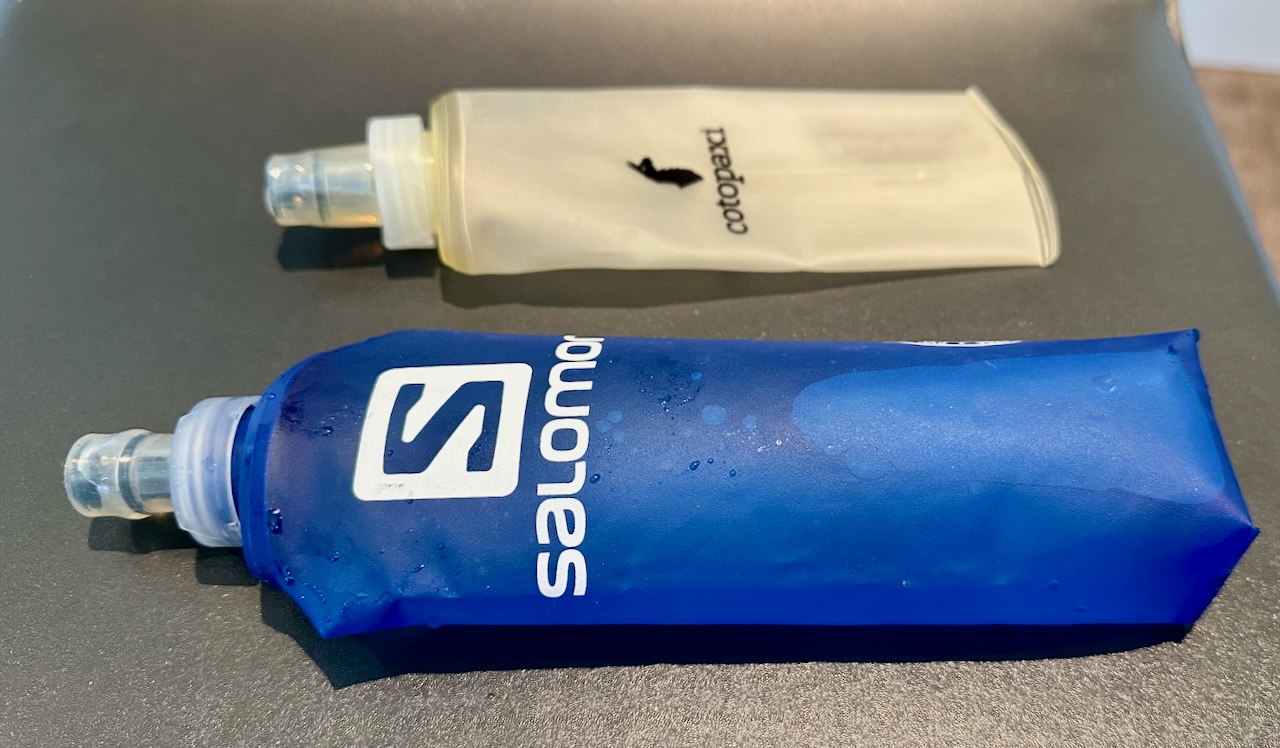
Running with a water flask when full is easy to hold and drink. After a couple of sips, the flask becomes more difficult to secure in my hands and requires either a gravity assist or some external pressure to generate a sip. If I fold up the empty portion of the flask, like rolling up a tube of toothpaste, I can return it to its original form and easily carry and drink from it.

How might we think about the parts of our work best amplified by pressure and those that tend to fail under strain? How might we manufacture force to strengthen our impact, and where might we ease off exertion?

Using Words to Solve a Visual Puzzle

If we only had our words, how would we direct people to the location of the hidden frog in the above image? We rely on shortcuts to set others up for success, but occasionally, those options are unavailable. So, we must rely on an analog solution in a digital world. It is like remembering a phone number or email address when we are without access to a device that contains all that information.

How might we adapt when our mastered routine is interrupted?

Spoiler Below:

***The hidden frog is less than a half-inch off the right-hand edge, about a third of the way up, appears wearing a purple jacket (leaf), and is the same size as the individual leaves in the illustration. If you start at the bottom right-hand corner and work your way up the edge, stop at the first fully illustrated bright green leaf that touches the border. The frog is immediately to the left, with a purple leaf covering its torso.