
We can pursue other questions when we consent to something existing or being in an agreed-upon state. Other questions are challenging to pursue if the premise is still up for debate.
We can pursue other questions when we consent to something existing or being in an agreed-upon state. Other questions are challenging to pursue if the premise is still up for debate.

Navigating relies on our ability to piece together clues and landmarks. A well-placed symbol might set us up for success in a country where the language is unfamiliar.
How might we use language and symbols to help our fans navigate? How might our websites, social media, publications, events, and programs clarify where to find us? When we create unintended barriers to entry, we start encounters with frustration and confusion.

We can achieve optical illusions when we use misalignment to create unique spatial relationships. In the social sector, this can be accomplished by making our cause’s impact appear greater or less. We deploy scales and comparisons showing greater or lesser barriers and success.
How might we spend less time creating illusions and more time engaging those who are committed to our journey? When we assemble the right expedition party, we do not need to reduce or build up the terrain we have chosen to navigate.
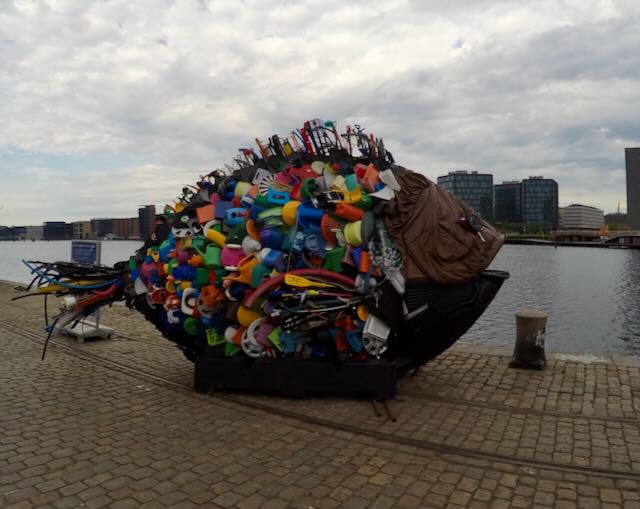
Who is the person in the community that can reliably be found at a specific location (or event)? The community member who is always cleaning up trash from the side of the road while waving to passing traffic. The dog walker who appears at the same time of day. The teacher has been a fixture in the third-grade classroom for generations.
Our local legends are easy to take for granted because they show up reliably and relentlessly. We tend to notice them even more when they are absent. How might we celebrate and engage with them now instead of once a void appears?

Disney changed the color of lifeboats on cruise ships and created the design for marking the difficulty of ski runs. Disney wanted a different color scheme for lifeboats, so they did research and convinced the US Coast Guard to expand the acceptable palette of lifeboat colors. When Disney considered owning and operating a ski resort, there was no universal system for marking the difficulty of ski runs. Disney created a system that was adopted by many ski areas. Ultimately, Disney never launched its ski resort but altered the ski industry.
We are all working to change the system in some way. We are trying to enforce the existing system, expand the system, or break the system. Understanding that we might effect change without being stakeholders is a paradigm shift.
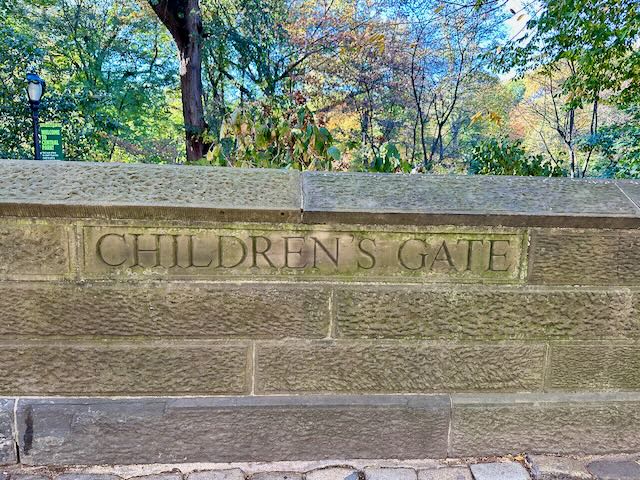
There are many entrances to Central Park in New York City. As a special touch, there are twenty unique gates (entrances) along the six-mile perimeter of the park. Some are self-evident. The Children’s Gate leads to the Central Park Zoo and adjoining playgrounds. The Artist Gate is reflective of the cultural buildings nearby. And other gates (Woodsman, Miners, and Pioneers) are a nod to those critical to the city’s founding.
How might we use customized entrances as a way to welcome, honor, and celebrate those who are critical to our success.

Sometimes, our assignment is to follow a set course and stay within the lines. On other occasions, we are given a blank canvas to unleash our artistic abilities. The wayfinder understands the moment we occupy. Are we connecting dots or discovering new constellations?

We are all on a voyage. Our propulsion systems may differ, but we strive for something beyond our current location.
How do we respond to blended events? Can we assess them for their unique qualities, or do we only see the intertwined pieces? How might we understand the value of both the individual and the system? Like pieces on a chess board, they are unique and complimentary of each other’s aptitudes.

What is the constraint on your system? Where is your point of failure? Do you lack sufficient inputs? Is there not enough time? Are you not fast enough?
Once our system reaches a significant constraint, it fails to grow. We can accept the failure as a ceiling or retool and evaluate options to circumvent the constraint.
How we handle constraints and respond to system failures adds depth and dimension to our work.
 What-if-concepts