mindset

Team Time Trials: An Insight Into Group Dynamics

In select professional road cycling stage races, the itinerary might prescribe a team trial. A squad of cyclists head out on a designated course, racing against the clock. Historically, the finish time was taken on the finish arrival of the fifth rider for each team. Those who fell behind registered their own time. The conventional strategy focused on keeping the team together so the fifth rider crossed the finish line in the same group as the first through fourth cyclists, thus benefiting from the aerodynamic draft provided by teammates. Together, it is faster.

The rules have been amended this season, and each team member receives an individual time at the finish of a team time trial. New strategies are being tested, such as utilizing the power and energy of lower-tier riders earl in the race before launching the top riders closer to the finish. Since the time stops for a rider upon their individual finish, finishing separately is more likely, the strongest riders might sprint ahead and be rewarded in the results.

How does your enterprise dose its efforts. Are you positioned to finish as a team, regardless of the pace or do you prescribe to the tactic of getting any one team member across the line as soon as possible? Do your cause’s core values match your tactics? How do you maintain comradery if some team members are asked to sacrifice their efforts for the benefit of others. Do stronger team members show a willingness to govern their outputs so the group remains together?

Areas needing higher technical skills, perhaps reading profit and loss financial reports, can be an exercise that divides or unites a group. Creating an accessible dashboard (snapshot) of the current budget may allow everyone to assess the organization’s general fiscal health. However, a conference with the auditors might require team members with higher levels of financial literacy, and a select group may need to forerun these conversations to maximize the details and navigate the nomenclature and footnotes.

How might your team decide in advance if the preferred tactic is to prioritize the group or amplify individual achievement?


Pre-Treating

In preparation for a forecasted snowstorm, the local road department might pre-treat the roads with magnesium chloride. The application works best if done in the hours before the first snowflakes fall. Miss the window of opportunity and the effectiveness of the product is marginal. It is the same with relationships. Ask your new neighbor for a 5 AM ride to the airport upon the first introduction; it might not establish a foundation for friendship. Make the same request after you assist the neighbors with moving furniture into their house, invite them to the neighborhood party, and remind them of an anomaly in the HOA rules; the reciprocation might be more favorable. How are you pre-treating your neighborhood (and those you serve) to set them up for success?

Lining Up

Some things are worth lining up for, and others moments are worth taking your own route. A key is knowing what you value. A paid lift ticket for the ski hill on a powder morning might be worth the investment. However, to others, it is a chance to put on climbing skins and ascend under their own power. Knowing your priorities helps you make decisions in real-time.

What Are Your Coordinates?

Pursuing a different mindset to evaluate an opportunity or problem? Assign categories to the X and Y axes. Then, ask your team of decision-makers to plot their individual coordinates. Possible examples deployed as icebreakers:

Y-Axis: Innovate –> Protect X-Axis: Boost –> Undervalue

Y-Axis: Remarkable –> Indespensible X-Axis: Oversight –> UnScripted

Y-Axis: Trust –> Authenticity X-Axis: Passion –> Reliable

Confidence and Perception

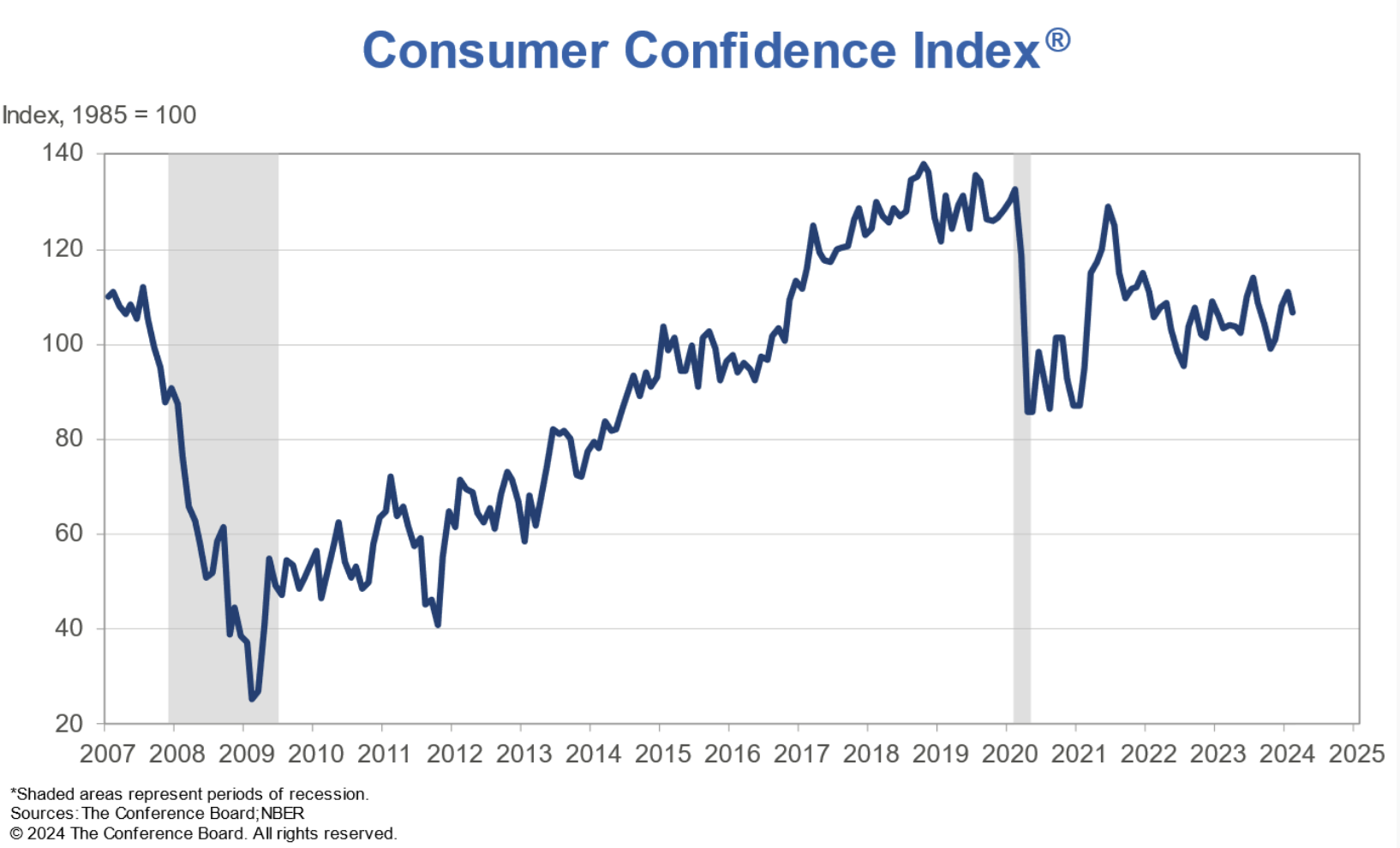
Despite all the economic data accumulated and monitored, the emotional perception of the economy is gathered in a few reports; the Consumer Confidence and Survey of Consumer Perception reports are headline examples. These are reminders that despite economic indicators pointing in one direction, the consumer’s emotional state may be uncoupled from economic trends.

How might we incorporate the perception and confidence of those we serve into our deliberations? Few dashboards capture the human element, instead prioritizing headline numbers. Enrollment might be increasing, but the trust we anticipated we were building is actually eroding the foundation. Our assessment of an enterprise’s progress (or regression) may be forecasted by anecdotal narratives before the data quantifies the disruption or delight we have generated.

The Middle = Results

The take-off and landing of an over-sea flight might get the most attention, but the cruise portion of the journey is where the distance is covered. The middle portion of our journeys is often overlooked, but it can have the biggest impact. A tailwind might push a commercial airliner to exceed 800 mph. A headwind and diversion for weather can create extended delays.

How might we recognize when we are in the middle portion of our journey? This is an opportunity to do the work that matters.

Contrast

Contrast is what makes us stand out. It reveals ideas we might miss the first time we encounter an idea or opportunity. When we play the Where’s Waldo game, Waldo appears simple to find when introduced alone on the book’s cover. However, inside the book, Waldo is camouflaged when embedded in the images.

How might we leverage contrast to add depth or dimension to future deliberations?