As a guide, we can empower clients to assume a decision-making posture. How might we design a dynamic so team members assume ownership of the process? They may not have all the necessary field experience, but the success of their thru-hike is predicated on an ability to navigate, even when the route is unclear. If we always adopt a ‘follow the leader’ formation, we dull the wayfinding mindset. How might we empower those doing the work that matters to be active participants in the route finding?
route selection
What Won’t You Do?
What is the line you will not cross? Is it supported by your values? Is it hypothetical, or has it been tested in real-time? Why won’t you proceed if pushed?
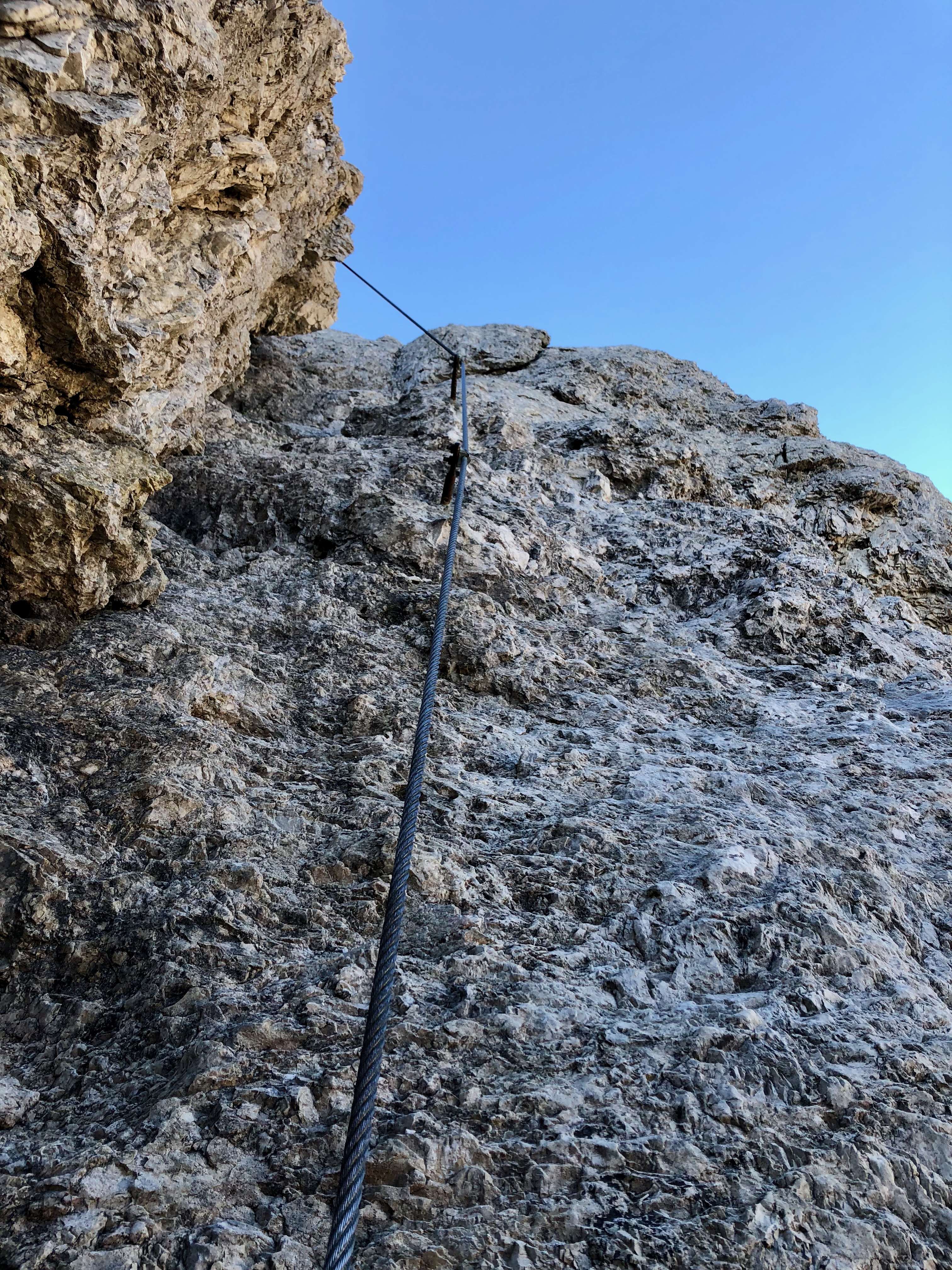
Knowing your boundaries reduces anxiety. If our line includes a fear of heights, it helps us avoid selecting routes to the summit that require ascending via a cable while hanging over 1,500 feet of cliff face.
Results Amplified by the Route
If the result had been two successful basketball shots, that is commonplace. When the result is two successful basketball shots spaced between numerous obstacles, ingenious design, mechanical systems, and a high probability of failure, we stay engaged and hope for a favorable outcome. The route we travel matters. The obstacles we overcome creates a more valuable result.