Sometimes the strategy does not work as planned. Occasionally success if not the outcome. The sure thing is detoured by a small detail. The real test is if the strategy is aligned with purpose. If so, the whole will thrive. If not, the naysayers and doubters divide the enterprise into parts.
Author: whatifconcepts
Why Black Friday Deals Work
The Book, Cheap offers a fascinating exploration of the psychological drivers that guide our consumer habits. A discount actually activates parts of our brain that are responsible for pleasure- no wonder it is hard to pass-up a 60% off sign. I am surprised that the social sector does not leverage more of the discount culture. Instead the focus is usually on maximizing or matching a contribution. Rarely do you see a membership program reduce its dues or a higher donor recognition level offered for a reduced donation. I am not advocating for these changes but I am surprised the social sector’s business planning has not dipped into the sale’s bin.
Where is my watch?

As a kid I enjoyed running races. I ran 5 kilometer events and sometimes 10K races that my Dad would run in also. Of course, you begin to notice the shoes other runners wear or the running kits with the matching shorts and tops that were designed to make the runner look like a sponsored athlete- the ultimate dream of a twelve year-old was to receive free gear. One item that caught my eye and I finally saved enough money to order was a watch specially designed for runners. The best feature was that you could program the watch to sound a ‘beep’ to set your stride cadence which in theory would help you stay on pace to run your planned per mile time. I think the watch even had a calculator to compute all the details of your time after you finished- the second most important part of running was having extraneous information to share with other competitors (especially before you were old enough to enjoy a post-race primitive beverage). So into the envelope went my order form and payment. Days passed, weeks, then months and the watch never arrived. Eventually I think I forgot about it but I was devastated that my progression as an athlete was stalled by a missing piece of equipment.
I told this story to my kids the other night and they wondered what happened. I told them my mistake was that I sent cash and therefore somebody on the receiving end was thirty-seven dollars richer and my order form probably found the trash. My kids wondered why I did not call the credit card company, check the website, put a bad review on the company’s Facebook page. I had to explain the realities of paper forms, hard currency, limited accountability, and an off-line world.
It was a reminder that sometimes people try to invest with passion into our causes and enterprises. We pocket the compliment or appeal for more information without a second thought. What we fail to see is that this individual is ready to commit. Ready to invest in a more meaningful manner. They want the watch, they are ready to run with our logo on their gear. Instead they are left disappointed and disillusioned by our lack of responsiveness. Some will even use social media and word-of-mouth to share their frustration and others will simply pick another cause. It is important to remember that sometimes an order for a watch means a lot more.
Like Oprah

Have you noticed how great experiences seem to be amplified from what you expected? There is an energy or surprise that takes place. Oprah is a great example. It is not enough for her to invite the reclusive artists who rarely gives interviews but Oprah’s staff finds a way to arrange a reunion with another co-start that has not taken place for years. It is not always about going over-the-top but providing the unexpected. Adding value where the audience thought they had seen all they were going see.
Where can your enterprise amplify its conversations and relationships with your fans?
Nine Innings

Baseball is one of the few games that is not predetermined by distance or time. There is no clock to expire while the ball is in play. Their is no final yard to keep a faster finisher with all the momentum from sweeping past a fading competitor. You are guaranteed a final at-bat and if you can mount a rally the game goes on until you have been provided a final chance.
As the social sector sweeps towards its favorite season of solicitation in the form of end-of-the-year giving, it is a reminder that not all decisions about philanthropic engagement need to be driven by a calendar or a deadline. Sometimes the game needs to play out. Sometimes you need to let everyone get a last-at-bat before you can call the final score. A cause’s time line does not mean it needs to be a donor’s countdown to commitment.
Two Powerful Questions

Have you found joy in your life?
Has your life brought joy to others?
The Bucket List
So much of the social sector can be framed around these two questions. Have you found joy and purpose in your cause? Has your cause brought joy and purpose to others? Perhaps this could be an opening question when getting acquainted with new causes.
Social Sector Advent Calendar

Million dollar advent calendar -really, checkout the article! Reading this story makes me wonder what a social sector enterprise wishes for in its advent calendar? Some possible ideas:
- A budget based on conservative revenue expectations and reliable expenses.
- An engaged board with diverse perspectives but united by a common purpose.
- Donors who provided unrestricted funding to support general operations.
- Volunteers who felt appreciated an engaged in their area of expertise.
- Local media that solicited stories from the enterprise on a regular basis.
- A gala event that was fun, focused on mission, raised funds and awareness, and attendees asked for next year’s date.
- Energized staff who thrived on the personal joy and professional benefit of working in the social sector.
- Being touted by Beth Kanter (social media guru) as an example of an organization that used Facebook and Twitter most effectively.
- Having all the board and staff friend/follow the cause.
- An Executive Director who supported the board with well-designed questions/resources and was inspired by their debate and dialogue.
- Paperless Annual Reports, board packets, sustainable/green policies and events.
- Local government or officials who could move mountains when needed.
- A benefactor who encouraged the cause to envision a brighter future and might just seed the funding for the right projects.
- Celebrations that came frequently enough to recharge and shine the spotlight on the entire team.
- More laughter than tears.
- A waiting list of possible nominees for the board, volunteers for the events, and numerous applications for each staff opening.
- A strategic plan that inspires and stretches the organization.
- A reserve fund or endowment that generated reasonable principal.
- An HR consultant.
- A website designer, who actually answered emails and identified issues before the clients.
- A database.
- Being selected by Oprah for her “Favorite Things” episode.
Just a few wishes for the social sector advent calendar. What would you add?
Klout
Interested in the impact of your social media presence? How likely are your online actions going to encourage followers/friends to take measurable action? Klout measures your influence using the Klout Score as defined here. The basic metric runs 1 to 100 with 100 representing the top end of the scale. Some sample Klout Scores:
Dalai Lama- 91
President Obama- 89
New York Times- 87
Twitter- 82
Lance Armstrong- 80
Facebook- 77
Oprah- 73
Southwest Airlines- 73
Congressman Joe Wilson- 58 (down from 79)

Checkout your Klout Score.
The Best Governance Handbook
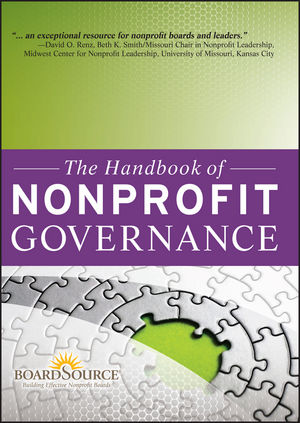
BoardSource released, The Handbook of Nonprofit Governance recently. It covers a wide range of topics from computing available cash to establishing internal controls. Establishing Executive Director compensation to creating a dashboard. This text boook has become my new hands on reference resource. It is one of the definitive resources for getting answers to many of the governance questions that routinely arise in the social sector. If you want the closest thing to the numerous resources that comes with a membership to BoardSource but have not committed to joining then this book would be my recommendation.
Leading Practices

Last week’s BoardSource Leadership Forum presented some updates on nonprofit governance that I found insightful:
- Nomination Committees are no longer recommended as a separate committee of the board. Governance Committees are the preferred model for handling board nominations, self-assessment, board engagement, and training among other responsibilities.
- Board terms that run 1-year, 2-year, and 3-year for a total of six years of service are being recommended in place of the classic two 3-year terms. An initial one-year commitment encourages the candidate to engage quicker and for the organization to empower the board member with meaningful work. A short initial term provides sufficient assessment for both the board candidate and organization.
- Bylaws are recommended to be less restrictive and provide appropriate latitude. Many committee structures and guidelines are being incorporated in Board Policies, thereby freeing the bylaws of potentially cumbersome organizational definitions. An example is to provide an organization with greater range in the number of board members, remove arcane attendance requirements, embrace technology, and reduce the stringent meeting requirements (the third Tuesday of the month at 4 PM).
- Executive Committees are recommended to meet as needed and not on a regular basis. With an always-on and always-connected world there are few circumstances where immediate action is required without being able to assemble or poll the entire board. Executive Committees continue to be a great resource to Executive Directors to provide a safe sounding-board and to float initiatives.
 What-if-concepts