Author: whatifconcepts

Empowering those that inspire so they can excel at the work that matters.

The Human Effect

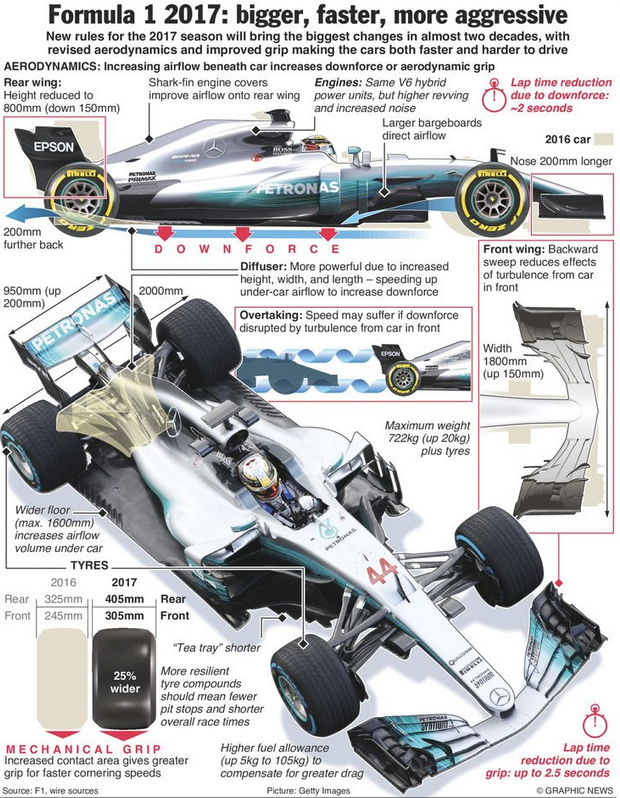
Prioritizing a human-centered approach fundamentally transformed the fan base of F-1. Profiling drivers and their individual journeys provided an access point that previously was not easily accessible. The choice to pivot from the cars and technology to the driver unlocked a new level of engagement and storytelling.

Unsolicited vs. Customized

When we receive unsolicited communications, we expect errors, inaccuracies, and uninteresting proposals. It is similar to driving past billboards on the interstate; only occasionally does it apply to our needs. When we receive customized communication, our expectations increase. We expect our names to be spelled accurately, that personalized details will be embedded, and the pitch for a service will aligned with our general areas of focus. A customized piece can reinforce our relationship with the sender, or it can disrupt that trust. 

How might our communications add value and depth to our relationships?

Investors vs. Investments

In the 1990s, Boeing had a 60% market share among commercial aircraft manufacturers and a decision. Did the company concentrate on pleasing its investors and focus on stock prizes, or did it invest in a next-generation aircraft design? In the book Flying Blind: The 737 Max Tragedy and Fall of Boeing, Peter Robison suggests that the interest of the investors took precedence over the pleas of the engineers to invest in a new aircraft design. Harvesting profits was considered the work that mattered. It was safer, had a quicker reward phase, and was more predictable than investing millions into a next-generation design. Eventually, Boeing launched the 787 program in the early 2000s but continued to use stock price as a core metric. When the 737 aircraft came up for an update, Boeing decided to use the existing platform instead of starting with a fresh sheet of paper and launched the Max series. A quick scan of current events and the top 737 Max new stories are about failures and flaws, even an inability to provide Wall Street with earning guidance for 2024.

To expand on this theme, return to yesterday’s post on competitive advantage; there is a tipping point in all our enterprises. When do we prioritize our investors/donors/members/customers, and when do we prioritize investing in our work/programs? What do our core values suggest? How does our strategic framework align with our decisions? If the social sector is working on problems that cannot easily be solved; otherwise, a corporation would be monetizing the program, then why are we not launching more innovative programs? Should we not be finding the others (Seth Godin’s podcast on Akimbo) who are ready to act and launch our work?

Competitive Advantage

After solving the New York Times Wordle, you can review your results using the WordleBot. The WordleBot breaksdown our guesses versus a large sampling of other players. On most days, a consistent completion rate develops. Typically, ten percent solve the puzzle by their second try. A third are successful by the third attempt. Two-thirds are correct by attempt number four, and ninety-plus percent complete the puzzle on attempts five and six. Occasionally, the wordle aligns with the starting word many players employ, and the success rate is elevated, or the word includes a unique letter, and the results skew towards a lower success rate. 

Competitive advantage in the Wordle world starts when we solve the puzzle by the second guess to be an outlier or the third guess to be in front of the majority. How does this apply to our work? At some interval of time, we will encounter a new technology, trend, or way of thinking. We have a choice, to actively engage the new or passively await the market to sort out the viability of the thing and then adopt when the majority move.Or, be a laggard and await the moment our old platform is no longer supported with updates.

What is the process your team employs to evaluate new opportunities? Who are your organization’s scouts that bring these initiatives to the group for reflection? How does your mindset influence the decisions you make in regard to proceeding, waiting, or ignoring?

*** Tomorrow’s post continues the discussion

A Walk In the Woods

A walk in the woods builds numerous benefits, as the University of Utah reports. Using EEG monitors, the study invested in quantifying data that was less pronounced in previous experiments that relied on self-reports from subjects.

How might we adopt access to nature in our workplace? How might generative thinking expand due to our ability to interact with nature?

Slight Disruption, Major Impact

Ninety-nine percent success feels extraordinary. But if the one percent disturbance is the central communication outlet (see iCloud mail), then dissatisfaction can outweigh the other successes. How might we remember that not all detours create the same experience? How might we be prepared to communicate and fix the detours that are critical? What is the cost of pointing to all the services that performed when our community is focused on the damaged link?

Glorious Strategy vs Inaction

What is it like to review an exceptional strategy statement with promises for a balanced company culture that toggles between engaged work time and generative problem-solving? Is it idyllic? However, the actionable work plan is focused only on production, and all the supporting metrics are output-based. 

Like an athlete, our performance trends towards our practice routine. If we pledge board engagement but proceed for months without sending updates except to prod for more donations, we are not going to build an involved group. We might instill some behaviors worthy of a bank ATM.

How might our behaviors match our strategies and values? The most impactful starting point is in real-time. Do something immediately that connects behavior and the goal. We can write down the most glorious intentions, but how we act is more reflective of where we are heading.

For entertainment value, Chatgpt created the following misaligned example:

Vision Statement: To create a harmonious and prosperous society where every individual thrives in a world of abundance, equity, and sustainable development.

Mission Statement: Empower people and communities through innovative and compassionate solutions, fostering a culture of collaboration, inclusivity, and environmental stewardship.

Goals:

  1. Universal Well-being:
    • Ensure access to quality healthcare, education, and basic necessities for all.
    • Promote mental and emotional well-being through community support systems.
  2. Environmental Sustainability:
    • Achieve net-zero carbon emissions.
    • Promote conservation and sustainable use of natural resources.
  3. Inclusive Economy:
    • Establish an equitable economic system that eliminates poverty and provides equal opportunities for growth.
    • Encourage local, sustainable businesses to thrive.
  4. Global Unity:
    • Foster international collaboration and understanding.
    • Work towards the elimination of borders and the establishment of a unified global community.
  5. Technological Advancement for Humanity:
    • Develop and use technology for the betterment of society, ensuring ethical use and accessibility for all.

Work Plan:

While the strategic plan outlines a utopian vision, the work plan deviates from the idealistic goals.

  1. Production Metrics Focus:
    • Prioritize economic growth over social well-being.
    • Emphasize production metrics without considering environmental impact or resource depletion.
  2. Wealth Concentration:
    • Encourage wealth accumulation among a select few, leading to income inequality.
    • Neglect social safety nets and public services in favor of economic gains.
  3. Nationalistic Policies:
    • Adopt isolationist and nationalistic policies, hindering international collaboration and unity.
    • Promote protectionism, leading to unequal global development.
  4. Technological Disparity:
    • Develop and deploy technology without considering its ethical implications.
    • Allow technological advancements to exacerbate societal divisions rather than fostering inclusivity.
  5. Short-Term Profit Maximization:
    • Prioritize short-term economic gains at the expense of long-term sustainability.
    • Disregard the environmental impact of production processes.

Alignment Adjustment: To realign the work plan with the utopian goals, it is crucial to:

  • Integrate ethical considerations into production metrics.
  • Promote wealth distribution and prioritize social welfare over economic gains.
  • Embrace international collaboration and cooperation for global progress.
  • Ensure technology is developed and used responsibly, considering its impact on society and the environment.
  • Prioritize long-term sustainability and environmental stewardship in all decision-making processes.

Intentions

I am not sure who was responsible for the article posted above, but clearly, there was intention but no follow-thru. These notes might have been AI prompts or a request from an editor. Would it be better if the end of the piece was blank, or are we more intrigued that somebody showed their work?

What is your perspective on intentions? Does it make you feel more empathy if you know what another individual proposed? Does the disappointment of inaction outweigh aspiration?

Disoriented Precision

From a blinding snowstorm to a precision landing. Just because the real-time environment creates uncertainty does not mean the journey should be abandoned. A disappointing event, a missed donation, a strategic uncertainty, a departing staff member, or a change in membership does not mean that a dip is a permanent descent. How might we keep perspective, even when outside influences contribute to feelings of doubt?

Your Version Matters

Your work is special, no matter how similar the route is to those who transited before your voyage. Embrace the nuances, the subtle distinctions, the errant brush strokes, and the highlights that pop a little more than the masterpiece you referenced as a model. It is yours. If we wanted to see the original, it is either visible or gone forever. Your version adds depth and dimension, even if your creation has been attempted thousands of times.