Author: whatifconcepts

Empowering those that inspire so they can excel at the work that matters.

IRS Regulation Considers Donor’s Social Security Number

when-is-it-ok-to-give-out-your-social-security-number.jpg

BoardSource just sent out an action alert.  The IRS is considering regulations to require charitable organizations to collect each donor’s social security number.  There are iterations of the regulation up for debate.  If you feel that this course of action would have an impact on your enterprise’s ability to fund its work then I recommend taking a moment to make add your voice.  The National Council of Nonprofits has a template for creating comments and link to the IRS online feedback form.  The deadline is December 16th.

Partnerships

Screen Shot 2015-11-23 at 7.47.08 AM

The above image is a screenshot from a mesmerizing GIF simulating the outcome of two planets colliding.  The result is more spectacular than what existed prior to impact.  At the moment of impact, the forces are overwhelming but tracking the calibration of all the pieces over time is fascinating.  Rare is the opportunity to ponder the benefits of putting ourselves on a collision course with another uniquely positioned entity.

Partnership is rarely a strategy that receives big headlines.  We are often defined by our individual role and if we do not succeed we hope somebody might rescue us.  Independence is such a highly valued characteristic that it often outweighs the consideration of joining forces.  We continuously challenge the African proverb, ‘If you want to go fast, go alone.  If you want to go far, go together.’  Why not go fast and alone is a modern day response.

In education we frequently force collaboration.  Refrains such as, pair-up with a partner, read with a buddy, assemble in presentation groups, grades will be given for teamwork, are common in schools.  Adulthood tilts on an axis of employing our individual abilities.  We may adore that Harry Potter and his friends overcome unfathomable odds to move from one heroic quest to another, but we are encouraged to return to the mountain man model of centuries prior.  We explore the wilderness alone for long periods before reassembling at periodic rendezvous to share tales.

Consider working the concept of partnerships into the next generative conversation.  Who would be on our dream team?  What are the possible transformative outcomes of a shared journey?  What is the authentic help wanted sign that would make us respond immediately?  What stories would a partnership make possible?  Who might join our tribe if we were doing the work that matters?  What value could we deliver that eludes us now?

The Confluence of Stimulus

Screen Shot 2015-11-21 at 10.23.22 AM

I was riding my road bike on rollers inside our house the other night while watching a replay of a cross-country ski race from the 2015 World Championships.  My workout was without any intensity, just spinning my legs.  A unexpected anomaly became visible when I downloaded the data after the ride.  At the 50-minute mark during my workout there was a spike in my heart rate (red) and a very slight uptick in my power output (purple).  The minimal power increase did not equate to the strain being shown on the respiratory system.  An elevated heart rate occurred in parallel with the last 4-minutes of the race coverage, an epic cardiovascular battle for nordic gladiators.  As a ski racer myself I channeled the sensations, fatigue, and strategy.  My body responded in kind even thought the event was recorded and the results known.  I inserted myself into the scene without forethought.

My experience was an excellent illustration of why providing individuals a personal experience is necessary before a person can connect emotionally with a cause.  If we invite a friend to a fundraising event and expect them to make a transformative contribution and yet they are disconnected to the cause then we may as well be asking a resident of an equatorial region to root fervently for men in lycra sliding on skinny sticks around a patch of frozen precipitation.  Before we can invest our best we must find a point of confluence.  It is not our friends job to channel some semi-related experience and overlay it on the enterprise we are so passionate about.  It is our responsibility to facilitate connections or invite people who have already had a similar experience.  If we are going to leverage our social capital then we must make it personal.

Paris

IMG_0613

Resolve

Boarding a United flight from Chicago to Paris, Charles de Gaulle last Friday evening was a test of resolve.  Passengers intently studied smart phones; United representatives repeatedly turned to the PA; overwhelmed travelers disembarked after boarding uncertain as news of the terrorist attacks ebbed and flowed.  France was closing its borders; our flight would divert to Brussels if sunrise over the European continent denied us permission to land.  My ninth grade daughter and I reviewed our options.  There was no correct decision, just consequences to our choices.  “How flexible do you want to be?” I inquired.  She thought we should commit.  Soon we were jetting into arctic air, away from the frenzy of real-time updates and towards the scene of tragedy.  Committing to an uncertain future required preparation for disruption.

IMG_0514

Perspective

During our first night in Paris, we navigated the desolate streets to a classic vantage point on the River Seine.  The Eiffel Tower stood devoid of the iconic illumination show; the searchlight beacon dimmed as if incapable of penetrating the tragedy.  Closed museums, off-limit playgrounds, gated parks, fortified landmarks, bag and torso checks at the entrance to public buildings were omnipresent.  A couple checking-in to the hotel and being informed of the numerous closures responded, “That is the right thing to do. Of course, everyone needs to be safe.”  Few cafes and restaurants opened. Yet, the hashtag #portouvert trended on twitter offering the displaced housing, food, and safety.  While fortification and security prevailed, the French citizens opened their doors to strangers.

IMG_0811

Forever Changed by Hope

Our third night in Paris was marked by the illumination of monuments.  A chance for a deep breath and a stroll.  A partially opened Eiffel Tower permitted ascent to the second level and the vantage to take in the architecture of shadows as waves of rain washed across the city.  Parks and museums accepted culturally starved visitors.  The spirit of the city raised from catacomb to cafe.  We departed forever changed by Paris.  We had walked among sorrow and witnessed spirits bend in torrential circumstance, only to rebound with hope.

Iteration, Innovation, Disruption

Brian Solis presented on the role of technology and disruption at the Ed Sessions.   His presentation provided a pathway to an audience seeking educational reform.  Brian’s core premise on change was that there are three types of change:

Iteration= Another chapter of what already exists

Innovation= A new method or approach

Disruption= Interruption of existing patterns

Brian used the TV remote control as an example of a piece of technology that desperately needs disruption but instead has only seen iteration.  TV designers have added more buttons, color, and maximized the buttons per inch on existing platforms.  Perhaps only the new Apple TV remote starts that process of disrupting a long line of poorly conceived iterations.

When considering our enterprise’s programs and services it could be valuable to frame our conversations through the lenses of iteration, innovation, and disruption.  As I board a flight this morning I believe that the airline industry is ready for major disruption.  Southwest and Jet Blue innovated a couple years ago but were not able to disrupt.  Uber disrupted getting to and from the airport and is now looking to iterate their platform.  Leading international airports are innovating.  The airports are passenger centric from arrival to security and onto boarding.  The airports themselves have become part of the destination and employ staff members committed to a remarkable experience for the travelers.

What level of change are you working on?  Which one is required to achieve your mission?  Brian challenged us to not miss our Kodak Moment, when we lose sight of what is relevant.  We must take a human approach to change and shift from sympathy to empathy in order to disrupt.  Innovation is deeply personal and the distance between our aspiration and vision is proportional to our ability to shift perspectives.

The journey to disruption may be lonely but fundamental to our ability to serve and add value.

Three Big Observations from the BoardSource Leadership Forum

Screen Shot 2015-11-11 at 10.18.21 AMAdvocacy:  Advocacy has been mentioned in passing as a core responsibility of serving on a nonprofit board, however the concept has received little definition and is rarely promoted with clarity.  A coalition of nonprofit leaders have assembled to elevate and define the role of advocacy.  BoardSource and other national organizations are launching campaigns and trainings including Stand for Your Mission to encourage individuals to stop just ‘sitting’ on boards and start ‘serving’ the mission.  You can get more details at BoardSource and #ADVOCACYNOW.  Examples of advocacy include engagement in the broader social sector, advocating with local and state government officials, being a bridge within the corporate and benefit sectors, and supporting candidates who will help further an organization’s mission.  For too long the Social Sector has looked at advocacy and lobbying as the third rail however it is a sector that represents a significant portion of GDP and their is no formal lobby and little coordinated activity.
Generative Thinking:  Generative thinking first came onto my radar when Richard Chait presented his book, Governance As Leadership.  The ideas were grand but application was challenging.  A few years ago, Cathy Trower authored, Practionier’s Guide to Governance As Leadership.  This resource provided real-world tools as to how to fold the third form of governance into a board’s way of deliberating.  Balancing Fiduciary, Strategic, and Generative forms of governance takes great facilitation from the Executive Director and Board Chair and an aligned board.  Being able to rotate the board’s role from sentinel to strategist to sense-maker based on the current need of the enterprise creates remarkable discussions and meaningful engagement.  In response to the often asked question, why do we need a board, one of the evolving purposes of a board is the ability to be the brain trust for the organization, using their collective intellect to make sense of the organizations’ work and framing how it can best serve.
Better Meetings:  Time and again the sessions on better meetings attracts stand room only capacity.  Either we are all excited to share the excellence of our meetings or more likely our enterprise seeks a renewal when it comes to how we assemble.  Themes that were universal included the use of a consent agendas, meeting less frequently but more productively, homework for board members in advance of meetings, reports emailed in advanced and only discussed if the topic is framed around two or three key questions that require the board’s input.  Additionally, the agenda should reflect the strategic priorities of the organization, employing Roberta’s Rules of Order seems highly preferable to Robert’s Rules, providing an Executive Session with the ED and without, and employing a strategy screen to filter new opportunities.   Nuisances that stood out to me included, putting the organization’s purpose and mission on the back side of name tent cards, placing a name tag over the speakerphone if individuals are attending virtually, circulating a circuit breaker device to stop pointless conversations (one group uses an ELMO doll- Enough already Lets Move On).  Lastly, a few board chairs mentioned that they call a portion of their board members in the days after a board meeting to check-in and get feedback.  Great meetings take care and tremendous facilitation and the results are extraordinary.

Bigger Means Less Remote

IMG_8279I sat next to a pilot from United Airlines on a recent trip.  He was about to upgrade from flying Boeing 767 aircrafts to the 777 model.  The 777 allows for greater range and more passengers.  He was excited as this was a sign of greater seniority and higher pay despite the demand of additional training and time. 

After the flight I was thinking about the consequences of his upgrade.  Larger planes means more passengers.  More passengers means higher population densities.  Typically the bigger the planes and the more passengers the higher the likelihood that it will be routed between major cities.  London, New York, Hong Kong, Tokyo, etc.  Many pilots start on small regional aircrafts, connecting disperse cities that are not economical to serve with a larger plane.  The more an aviator progresses professionally the more they fly higher demand routes.

Becoming larger does not lend itself to the art of exploring edges.  An Airbus A380 (550-800 passengers) is rarely going to find itself anywhere but one of the largest airports in the world.  It is easy to aspire towards a bigger structure, with more people involved, and great recognition.  However, we may be sacrificing the niche we fill so beautifully.  Do not mistake the value of a bush plane networking remote villages with a transoceanic flight delivering yet more people between populations capitals.

Being small, nimble, and remote is tough to duplicate and immediately remarkable.  There are many organizations serving the masses anonymously.

Trust (Why £5 vs £6 Matters)

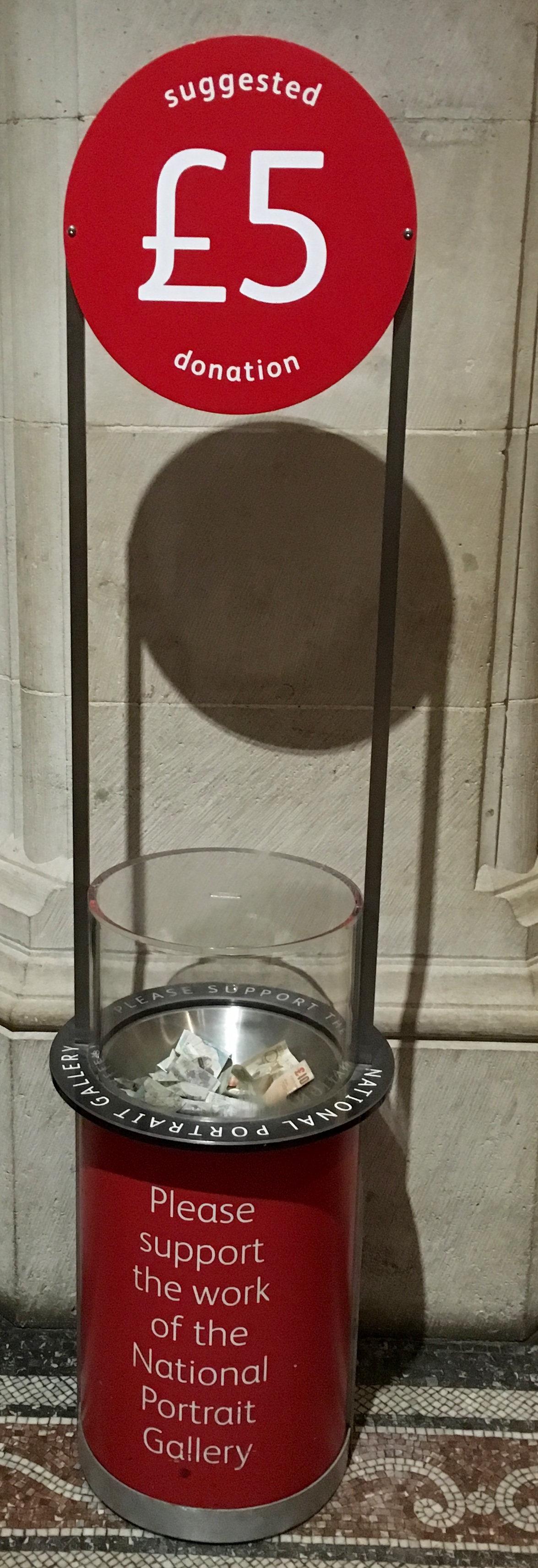
IMG_0200Most of us desire to know up front what hope’s and aspirations an organization holds.  We can then contribute accordingly.  When additional expectations are revealed after we have responded to an initial call to action it creates an environment for us to question trust and transparency. 

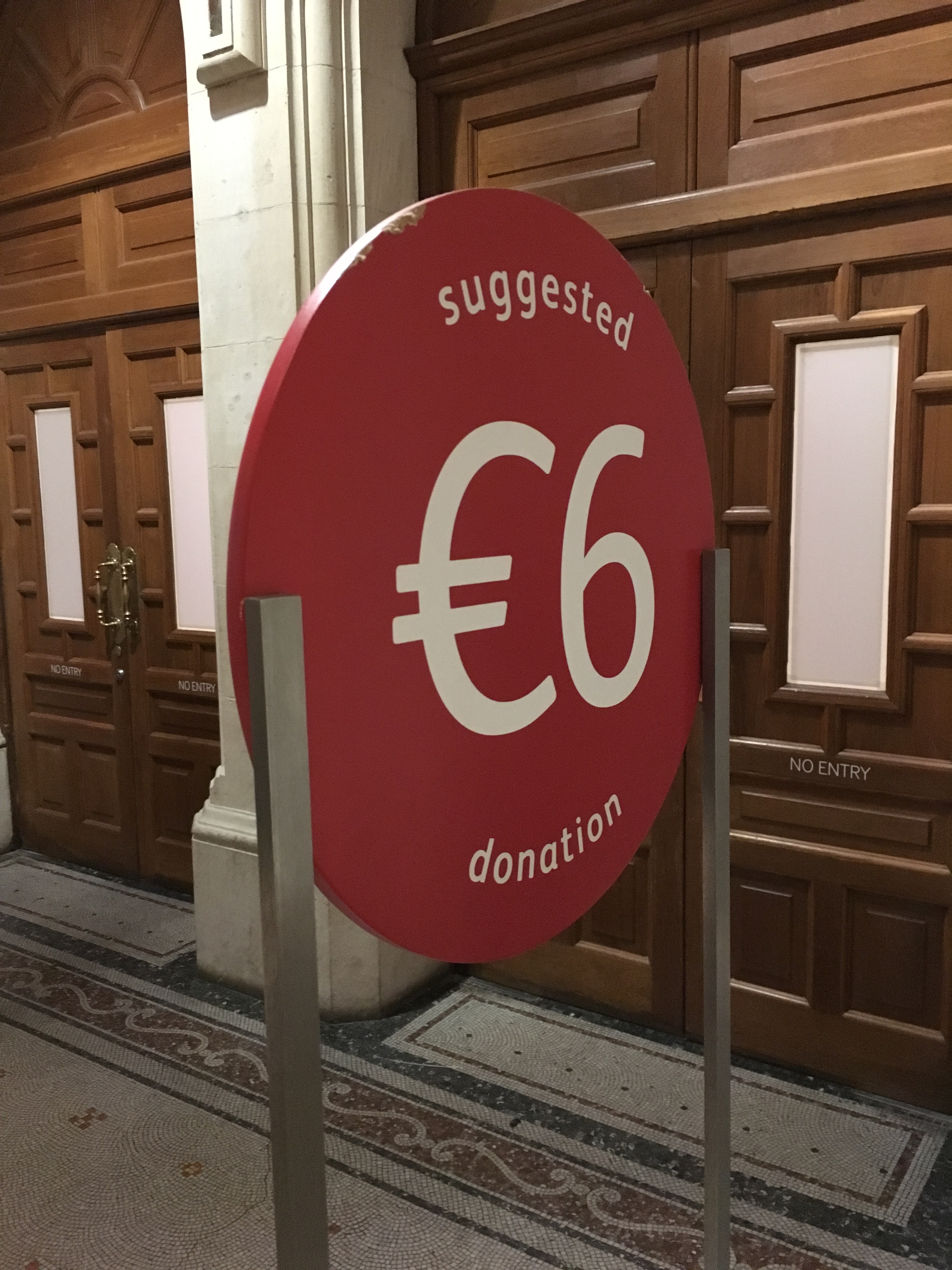
I stumbled across this donation sign at the National Portrait Galley in London, UK.  My son noticed the higher solicitation request on the back side of the sign.  How would we feel if we gave £6* only to find the sign requesting £5 a few moments later?  The difference in this instance is small however there are numerous examples of groups not revealing their true intentions.  How do we recruit board members?  Do we ask for a small investment and paint an unrealistic picture and then tap them ceaselessly for their time, talents, treasure, and touch?  Do we ask permission to communicate with our tribe or do we spam them?  Do we treat our donors like ATMs or cultivate their philanthropic initiatives?  Do we plan strategically only to toss it aside to grab a shiny opportunity that is at odds with our state values?

How to we ensure our integrity by posting an authentic sign with our hopes?  Who has permission to tell us when we have stumbled?

IMG_0202* We intended to take a photo of the sign that had ‘£6’ posted on the back which we had spied earlier however loyal reader Ann pointed out that I posted a picture of ‘€6’.  Thank you Ann!  Perhaps a reminder that I was seeing what I wanted to see and more aligned with what the gallery intended.

For or With?

IMG_0288Would you rather someone was for us are with us?  Often we want what is convenient and that is a person to like us, contribute to us, or advocate for us.  We want individuals to take just enough action that we can say that they are for us.  However, to be with us takes another level of commitment.  Our enterprise might have a thousand fans but only a few work for the cause, serve on the board, and volunteer.  No everyone can be with us all the time but who shows-up consistently?  Those who are with us think about the needs of the tribe more profoundly.  They are anticipating the obstacles and preparing to celebrate our victories.

It is nice to have those who are for us.  We only remarkable because of those who are with us.