Social Sector

If

If your board members were scattered around the world and required hours of flying and significant financial commitment to arrive at your board meetings, would you alter how you met?  Would you prioritized the agenda the same way?  Would the board packet you sent in advance of the meeting contain more or less information?  Would you invite experts or guests to attend the meeting?  What would you need to accomplish for the meeting to be considered a success?



Sometimes we take the time and commitment of our board members and staff for granted.  If the hurdle to gather the board and professional staff required global travel then perhaps it would alter the outcomes of our meetings.  Would it change your enterprise?

What-if

Being prepared for change is never easy.  No matter how much we try to anticipate future events there always seems to be something that comes out of left field.  One of the advantages of developing a strategy screen (a series of filters that allow you to assess real-time opportunities or challenges) is that it provides a checklist and a grounding rod during uncertain times.

In the past week I have spoken to a few social sector organizations who are dealing with unanticipated events.  Some had a checklist in place and others are formulating one before taking action.  A well reasoned strategy screen provides guidance and focus.  It allow us as an organization to put events into context.  It aligns an organization’s thinking and response to the rational.

How has your enterprise dealt with change?  What has worked and what has caused challenges?

The Magic of Asking

A colleague reminded me today that you never get the contribution you hope for if you ask for less than your goal.  How many times has an organization hoped a donor would give $1,000 or even $1,000,000 but been afraid to ask for the full amount?  Often they get a gift more in-line with the amount they request.  If you believe the need is real, the opportunity aligns with the donor’s values, and the capacity of the donor is verified then ask for the full amount.

It sounds like a simple strategy but every meeting needs a person who can make the request.  Do you have an ‘asker’ on your team?  Do they get results and do they enjoy the process?  Consider your enterprise well served if you have a team of talented fundraisers.

Floss Them All

“Floss all the teeth you want to keep.”

A guide with Disney Adventures mentioned this piece of dental wisdom the other day.  I realized the concept probably reached further than just good dental practices.  I have witnessed leading social sector organizations take the same approach with board members, volunteers, donors, and customers.  They reach out and spend some time with each individual.  They make sure there is direct , authentic, meaningful contact with each person.

Would it change your organization if you took the same approach as the ‘flossing’ theory?  What has your enterprise done successfully already in cultivating individuals?  How can you capitalize on your current strengths?

Annual Reports

I wonder about the main purpose of an annual report.  I am beginning to suspect it is as much about a fundraising opportunity as it is a recognition of past donors or celebration of the programs and achievements.  I believe a great annual report can be a bit of both.  Highlight the programs and services.  Provide me with a quick glance of the spectacular impact of your enterprise.  Secondly, put as many names in print as possible.  Everyone likes to know they have been acknowledged- even if it is as anonymous.  Third, make a pitch for future support.  If you engaged and recognized well why not capitalize on the moment.

Be honest with the recipients- the annual reports that most confuse me are ones that try to achieve a fundraising angle without being obvious.  Tell me you have an ongoing need and give me a chance to participate.

Image Credit: http://www.shapco.com

Quick Starts

A visit today to a kid’s science discovery center reminded me of an interesting concepts.  A fast start can lead to an insurmountable lead.

Three balls are released at the same time.  The track furthest from the camera has a steady downhill grade, the middle one has a steeper grade with an uphill finish.  The track closest to the camera drops immediately and then curves upwards towards the finish line.  As you can may be able to discern the ball on the track closest to the camera is clearly in the lead.  It gains so much momentum in the first second that the balls on the other tracks have no chance to recover from their slower starts.


Perhaps the math riddle from grade school is another demonstration.  A bridge is two miles long and if a car travels 60 MPH the driver will reach the far side in two minutes.  The driver and car travel the first mile at 30 MPH.  How fast must the driver and car cover the second mile in order to reach the other side before two minutes expires?


The answer which you immediately recognized is that the car has already taken two minutes to cover the first mile and driving 90 MPH or 120 MPH is not going to overcome the slow start.  

Planning is important but scheduling the right itinerary is critical to success.  How do you ensure your enterprise has assumed the right pace to be successful?  If it is worth engaging into a enterprise.

Presence

Sometimes it appears the best strategy it to develop a large footprint and lots of walls around your cause’s territory.  A large presence seems necessary in order to remain relevant in the sector.  Traveling is a great reminder that all you need is a doorway for entry.  Take for example a hotel in any major European city.  First floor space on most streets is expensive and rents for a premium.  Why put non-vital services on the ground-floor where they take-up extremely desirable space?  A well placed entrance to an enterprise with desirable services will attract the desired customers.

Are you competing to create the grandest entrance or developing the services that your customers desire once they arrive?

Questions You Must Ask Everyday to Improve

There are times during an athletic competition, consulting project, or eventful moment of life that I wonder how much longer I can maintain the pace.  It struck me the other day that it is during these moments that life it revealed at its fullest.  It is in the instant that you launch off the diving board and head for the pool water below.  You are committed and can either execute the dive you planned or perform a painful belly flop.  Put a number on your shirt and enter a running race and there will be a threshold that you reach where you have to decide if you can keep going or need to back-off.  There is no right answer but living in that moment of questioning for just a few seconds or minutes longer seems to reveal more than a lifetime of dreaming.  

The successes I most treasure are rooted in persevering when the questioning became most intense.  “Can I keep this up?  Will it be more painful a mile from now?  Do I have the stamina to sustain this effort?  What if a competitor pushes the pace faster, how will I match their acceleration?”


What are your questions?  How have they inspired you?  What lessons have you learned?

Image Credit: http://cincinnati.com

Off Track

Does your organization’s routine inspire innovation or wears down new ideas before they get a chance to fly?

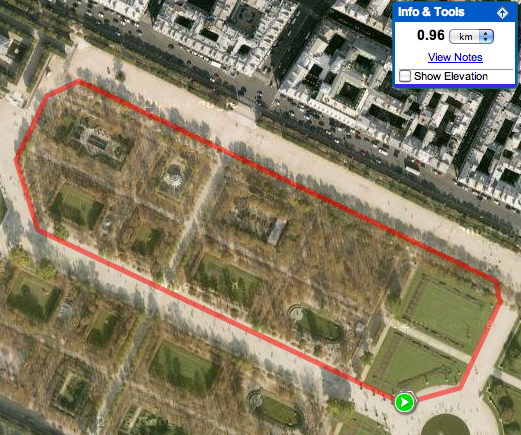
If you have ever run in a new city it is easy to find a loop that works and use it as your main route for the remainder of your stay.  However, some of the greatest discoveries happen when you are willing to use the tried and true as a landmark and begin to explore.

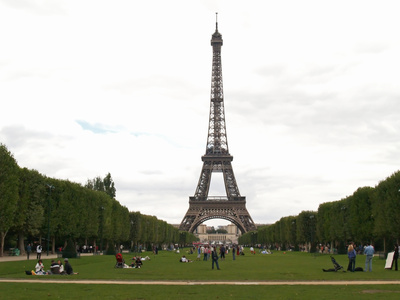
If you stayed to the confines of the Tuileries in Paris you might miss…

How do you ensure that your routine does not keep you running laps on a track while making only left turns?  What steps have you taken to explore new terrain?