Remarkable observations about the realities of fundraising offered in this transcript from a Freakonomics podcast. It is all about you- at least in one important way. These revelations may influence your end of the year giving considerations….
Remarkable observations about the realities of fundraising offered in this transcript from a Freakonomics podcast. It is all about you- at least in one important way. These revelations may influence your end of the year giving considerations….
 “One cannot solve a problem in the same state of consciousness and one created the problem.”
A. Einstein
What is the most remarkable dialogue you are engage in at this moment? Not a decision, evaluation, or a conversation. Rather dialogue where one builds on the ideas of others, asks questions to clarify intent, and willingness to listen without judgement. Patrick Davis lead a remarkable session at the BoardSource Leadership Forum building a case for the power of dialogue.
Has your enterprise spent as much time in dialogue as it spends discussing the budget? Why not? We rarely address transformational issues by making a quick decision or collecting data. Rather, it is in our divergent discourse that we offer ourselves the opportunity to engage with new ideas.
Two individuals who have developed compelling frameworks for centering ourselves around dialogue are Bohm and Bonnie. Their guidelines follow:
Bohm’s Suggestions:
No group decisions (we make fewer decisions than we realize already)
No cross-talk
Suspend judgement and suppress “we have already done that” thinking
Build on ideas with ‘yes, and…’ statements
Be aware of which lens we are using as engage
Bonnie’s Suggestions:
Establish clear intentions
Listening not only what is being said, but why it is being said
Avoid building a case against or for while listening
Promote advocacy and unscripted thought
Engage in inquiry with questions that allow for greater understanding
Ask ‘what am I doing?’ Where the head turns so goes the body
Asking ourselves to tackle the wickedly big questions is a courageous act. Balancing the interplay between hope and the brutal facts is akin to drawing an arrow on a bow. The right amount of tension and extraordinary precision can be achieved. Too little or too much tension and the impact of the arrow declines precipitously.
I am bringing the practice of guided dialogue to my ecosystem and look forward to reporting the results. I wonder which brave organizations will risk a few quiet moments and a little change to reap extraordinary rewards?
 Seth Godin posted on the subject of math. He suggested, ‘we need to get focused and demanding and relentless in getting good at math, at getting our kids good at math and not standing by when someone lets themselves (and thus us) off the hook.’ It took me a long time before I found a math teacher who communicated with clarity to guide my proficiency in math. Once I did find such a coach it transformed my reaction to encountering word problems.
Who are you spending time with and being relentless in adding value to their journey? These are the individuals who will remember you forever. Which teachers from your elementary school years can you name? What made them remarkable?
When we take our expertise (thinking like a scientist) and share them so they are accessible (talking like a truck driver) the pursuit of something greater is possible.
 Seth Godin, Dave Ramsey, and Gary Vaynerchuk co-hosted a one-day event in New York last week, titled Business Gets Personal. These three thought leaders continuously created remarkable content and build loyal tribes. The opportunity to hear the trio deliver keynote addresses and interact with one another was a highlight. Their talks were authentic to the philosophy’s they share through their selected mediums. A few highlights follow.
Seth expanded on his theme that the world has changed from the three television networks and local newspapers. You now have permission to bring something that matters into the world without waiting for gatekeepers. His mantra, ‘people like us do things like this.’ We cannot exist just by demonstrating competence and if we get into a race we will find ourselves doing it cheaper and faster and may just win the dubious title of being the cheapest competent. Seth encourages us to look for people who gravitate towards the edges. If we are just trying to get the word out then we are simply marketing to the masses. If failure is not an option then we have also taken the option of success off the table. The underpinnings of Seth’s recommendation include being generous and being an artist. Do work that matters so much so that you will be missed if you do not show-up one day.
This was my first occasion to see and hear Dave in-person. He centered his time around four elements: 1. People Matter. Dave remarked that vendors, customer, and competition are not units of revenue, production, or supply. 2. Team and Culutre of Excellence. He outlined the importance of unity and discussed the biggest threats to unity, including poor communication, gossip, unresolved disagreements, lack of shared purpose, and sanctioned incompetence. 3. Slow and Steady Matters. Using Aesop’s fable of the Tortist and the Hare to illustrate his belief that slowing down in many aspects of business is vital. To be hired at his company takes 7-10 interviews as he looks for people’ ‘inner donkey’ to appear so he knows what talent he is really hiring 4. High Calling. Be generous in everything you do and recognize that there are no shortcuts.
Gary is well known for going off-script and improvising. He did not disappoint, ditching his keynote for an impromptu question and answer session with the audience. In classic fashion he entrained and informed. The most powerful takeaway for me were his remarks on social media. Gary implored the attendees to act more like a media company and focus less on being a virtual social gathering platform. The delivery of useful and engaging content supersedes the desire of most groups to manipulate users into taking an action. Gary considers the ‘Editor-in-Chief’ of any enterprise the most important individual in the company. When asked to recommend the next social media platform he responded that he only cares about what works today, he can adjust in real time when the next platform gets traction. The cost of entry into a remarkable social media effort is your organization’s content. If the content is useful, informs, and engages then people will rely on your cause as an expert. An actionable step is to visit https://twitter.com/search-home and enter in search terms that are relevant to your cause. The results offer costumer insights at a scale none of us could ever afford to produce on our own.
Being of service to others by producing things that matters may be a simplistic summary but equally profound for me.

The final surprise give-away, a poster reproduction of a custom print commissioned by Dave Ramsey for the session.

A recap of presentations that struck me as remarkable from last week’s Idaho Nonprofit Center’s State Conference.
Vu Le brought great humor and reminded us to get out of the office more often in his talk entitled, “Nonprofit Happy Hour.” Vu took time encouraging us to look for weak tie connections, these weak ties are where most novel ideas and inspiring concepts germinate. He encouraged authentic collaborations to happen instead of forcing them. The power of a cohesive community and its ability to serve many different needs is more effective than reacting to the endless list of needs. Finally, Vu outlined one of the best happy hour drinking games imagined. Find a summary of all these ideas at his website Nonprofit With Balls.
Susan Howlett presented a highly-informed workshop from her book, Boards on Fire that encourage highly effective nonprofit boards and advancement campaigns. An “ah ha” moment for me came in her handout worksheet which dedicated space on the first page for writing down action-steps or paradigm shifts from the workshop. What if our board agendas and handouts contained space on the title page to document actionable steps instead of embedding all our notes inside where they are less visible? Susan was a truth-teller when it came to fundraising resistance, checkout her negative word fundraising sheet for humor and shock.
Rich Dietz turned a marathon of information into a sprint on the topic of Visual Storytelling. My biggest take-away was we can be better storytellers and the preferred platform is video in 90-120 second segments. Need evidence, a video is twelve times more likely to be shared than a photograph on a social media platform. Rich encouraged us to employ our smartphones and some creativity. You can find high quality resources and a better understanding of Facebook’s new metrics at nonprofitrd.com/idaho14 (He also has a great blog!)
The panel discussions were equally vibrant. A couple gems from the local media session included, ‘exclusivity is currency’ when dealing with the media. Answering the question, ‘what lead up to the ribbon cutting’ is a more compelling story than the actual event. And, know the strengths of the media’s medium. The morning radio show may give you only 90-seconds but the newspaper can dedicate a couple paragraphs. Maximize each mediums strengths.
John Oliver’s, Last Week Tonight on HBO produced a piece on the Miss America Pageant and Miss America Foundation that could carry ramifications and opportunities for the social sector. His team investigated and revealed that the actual value of the scholarships awarded compared to the stated ‘provided’ value of the scholarships represent during the pageant’s telecast equate to an eye-opening difference. John stated the pageant “gives out way less than the 45 million dollars in scholarships (he claims less than $4-million) and yet two, whatever the number is one thing does still seem to be troubling true…because even their lowest number is more than any other woman-only scholarship we could find.” Instead shining the spotlight completely on the semantics and mathematical formulas employed by the Miss America Pageant and Miss America Foundation he challenged the audience to consider support woman-only scholarship organizations, such as:
Society of Woman Engineers Patsy Mink Foundation Rankin Foundation
I am not sure of the impact of this news story for the Miss America Pageant and Miss America Foundation. It does not appear to immediately enhance the public’s trust in the social sector. Perhaps the greatest opportunity for growth is that woman-only scholarship funds can use the conversation to share their purpose and offer a call to action. When others break loyalty and trust, there is an opportunity to re-enforce the relationship each of us fosters with our own tribes.
 Buying a slice of pizza is a readily accepted model of the sharing economy. We are hungry enough for a slice but an entire pizza would overwhelm our capacity so a market has been established to offer portions. The pizza maker gets to make an entire pie with the knowledge that customers will purchase pieces from the whole without demanding an original that has been segregated. We repeat the shared model at grocery stores, co-ops, pet stores (one puppy is fine, the entire litter is too many), on Craigslist, and with childcare. The challenge is to move the model into our own enterprises. Not everyone needs a sound system, LCD projector, and projector screen. These items are easily shared. Add the the human element and sharing gets more colorful. Sharing a development officer, volunteers, board members, and customers tests levels of trust and loyalty. We need to remember that another organization’s success is our joy. We benefit personally and organizationally when those around us reach their and surpass their goals. Sharing offers a pathway to success and adds value to many more individuals than we could serve on our own.
What are you sharing? What do you need to consider sharing? What have you been asked to share?
 Do you build fences and walls? What is the purpose of your fence and wall? Who is it for? Does it keep somebody/something in or out? Castles, prisons, farmers, and resort hotels each build walls and fences but they served very different purposes. If you do not know your purpose, you may unintentionally find yourself on the wrong side of the wall you are building.

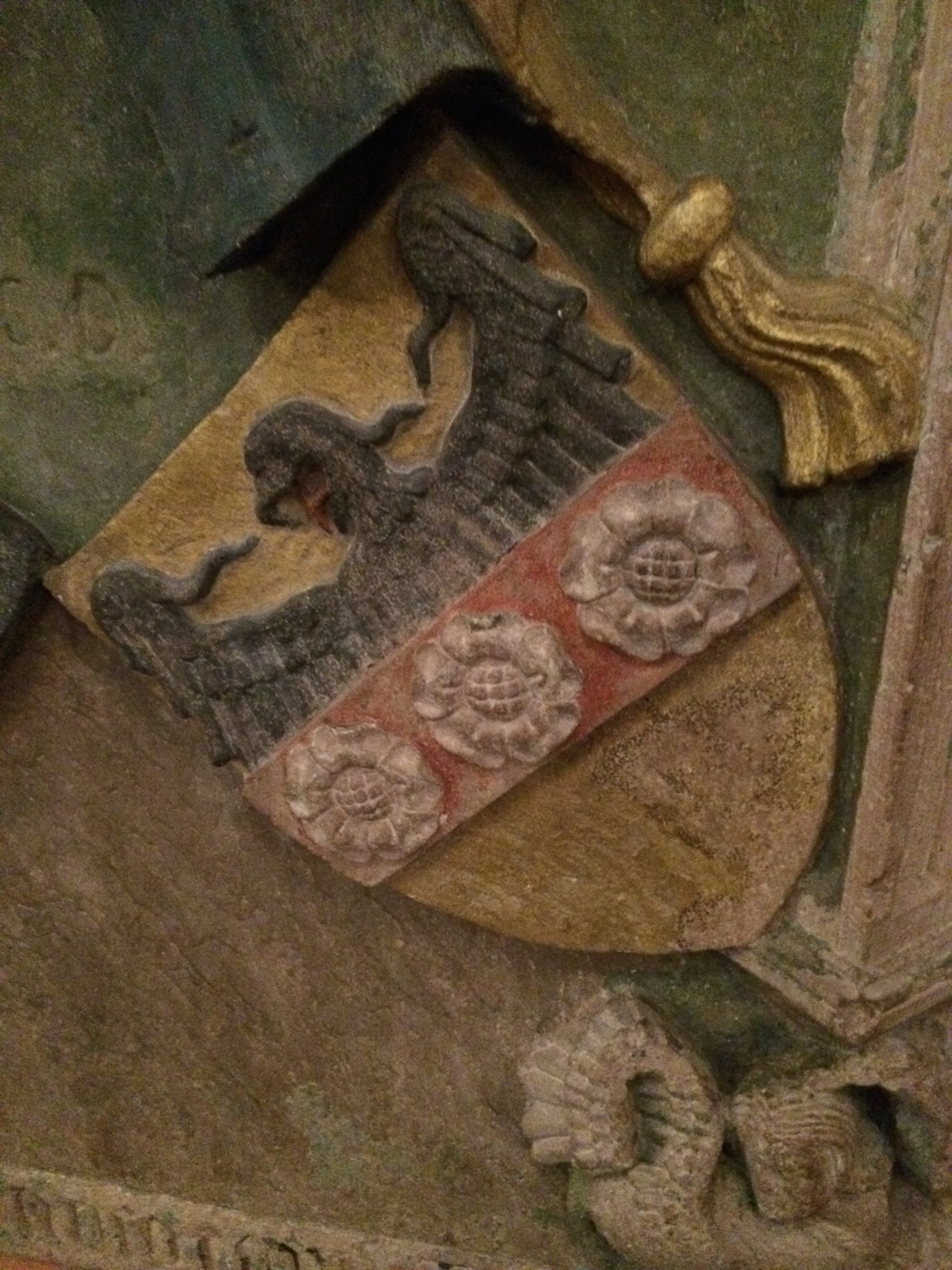

If you were to design a coat of arms for yourself, how would it manifest itself? What symbols would you include? Colors? Accents? What would be the story contained within the shield? What if you were to merge with another kingdom? What symbols would you keep? Which would you be willing to forgo in order to make space to incorporate symbols that were important to your new partner?
 You may have memorized the path but how does an individual who is new to your enterprise navigate their way? Today I was locked in a room that I had entered with a key card. The only way out was to use the interior door and then come around the outside and re-enter with my key card and prop the door open in order to remove my bags. I am sure there was a simple way out but somebody made the assumption that everyone would know how to do it. I needed instructions and nobody was around to help so I improvised. I am guessing I am not the first one who has found the exit confusing.
What assumptions are keeping you from serving those who are seeking you? How can you add value by being more generous in directing them towards you?


