Everyone Has Problems

Image

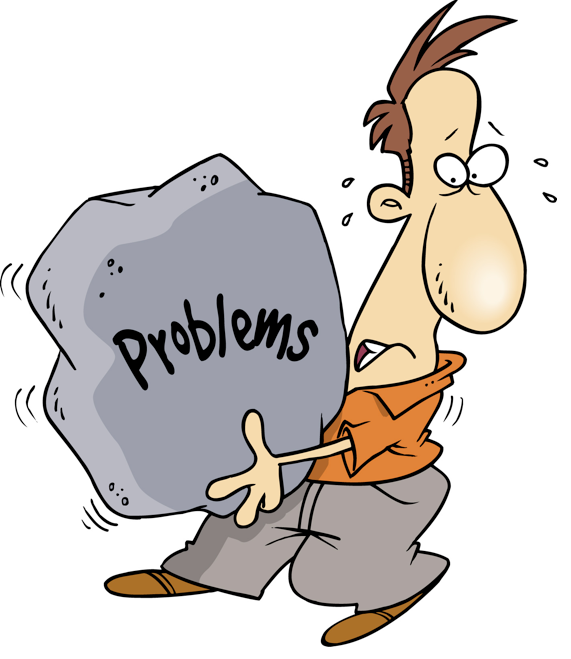
Everyone and every cause has a problem.  If you ask enough questions you can get most individuals to reveal what keeps them up at night.  Problems are easy to discuss because anyone with a sense of empathy can nod their head in agreement or sympathy.  We have all been there and some are there today.  These challenges can actually serve as a tailwind or headwind.  Keen observers will note that skilled storytellers present a selected problem to an audience that is uniquely positioned to address the solution.  Rarely do we see a CEO talking to investors about janitorial scheduling problems.  Nor do we hope to see a member of a cause’s advancement team asking for a donation from a individual who dialed the wrong number.  An enterprise’s problems can be an powerful narrative if they are shared them with the right audience.  If we are just complaining do not expect transformative results besides a few bobbing heads.  If you are seeking assistance then frame the challenge.

Photo

In this season of presidential election there are many individuals who speak about what is wrong with the country, state, county, or town.  Their message is scripted to hit the key talking points and at the end they ask for the audience’s vote as a way to change the future.  Politicians constantly remind voters of the problem, outlining a plan to fix the issue, and share a vision for the future when the obstacle no longer exists.  Regardless of our reaction to this formula, this seems to be template for communicating that many individuals have come to expect.


What is keeping you awake at night?  Who might not only listen but be able to solve your problem before it becomes a nightmare?

Let’s Ride

Idaho Sunset


Your enterprise does not need everyone.  You need and desire those who are deeply passionate about your cause.  Those who want front row seats, to purchase the limited edition, and offer themselves as advocates.  The ones who want the tattoo.  Consider Harley-Davidson.  Loyal owners belong to HOG (Harley Owners Group) one of the most exclusive privileges.  If everyone owned a hog the magic would be gone.  Having one of the most distinctive looking and sounding bikes on the road is the signature of a movement who only wants a few exclusive members. 


Who do you need?

What We Find

Photo

Attending a Middle School Open House the other day a teacher of humanities was sharing research tips he provided to his students.  One piece of advice was to add .edu or .gov to the end of a Google search.  The Google results are sorted with a preference for primary sources that are generated through universities and government archives for example.  The addition of these internet domains removes much of the paid for placement results that often fill the first couple pages.  The difference in the quality of information is transformative.  Nonprofit social media guru Beth Kanter addressed the move to create a .NGO designation in an blog post at the end of last year.  How would that change the way the social sector interacts?  How might it impact your cause?  What search results might be available that have not been easily run before?  Are you ready?

Investor Update

Photo

One of the great rewards that comes with investing in a Kickstarter project is that the updates from the project mangers are frequent, creative, meaningful, and typically deliver clarity about the impact of my investment.  I think this model provides a template for many social sector organizations.  I am often struck that a $50 investment in Kickstarter project provides me with a behind the scenes looks as the projects develops.  It is not always pretty but you see inventors and creators sharing their journey.  Compare this to a $500 contribution to a nonprofit that may get me a form letter recognizing my donation and perhaps mention in the annual report.  Which one do you think a philanthropically minded investor is most likely to recall when it comes time to reinvest?

Clarity About Purpose

Photo

Sometimes you will make a decision that angers a lot of people.  You will not satisfy the majority.  However, if you articulate what you believe and why you believe it you build a foundation of authenticity and trustworthiness, two characteristics that cannot be easily faked.


As an example, Joan Anzelmo who served as Superintendent of the Colorado National Monument turned down a request to hold a 2007 stage of the then named Quizno’s Pro Cycling Challenge.  Numerous politicians in Colorado made appeals to the Secretary of Interior to over-rule her but her decision was upheld.  The promoters and cycling community were shocked but her rationale is compelling and her blief certain.  She believed that, “A mega sporting event is not just compatible with running a national park.”  Agree or not, she was upholding her purpose as a Superintendent, even though she was cycling enthusiasts on the side.


How have your beliefs guided your decisions, even when they are not popular?

Our Board $$$$!

Photo

As annual reports rolled across my desk the past month from causes I supported I was struck by one consistency.  Most social sector organizations’ board members come from the top donor levels.  To be a board member one needs have relative philanthropic capacity, at least that seems to be the theme.  It makes me wonder if the best decision makers are the individuals who have the deepest pockets?  Of course I expect ever board member to reach a little deeper when it comes to contributing to a cause they serve, but that does not mean a $100 donor is going to suddenly reach the $5,000 giving level.  Who on the enterprise’s board represents those who are passionate fans but purchase tickets to programs as their budget allows?  Who sits outside on the lawn with the majority of the attendees and not under the tent with a select few during a symphonic performance?  Who is in-touch with those that come into the gallery after open-night when the tour is free?  Who can advocate for the strategic implications of an initiative not just from the perspective of how it effects the major donors?


I would suggest that some of the best decision-makers and the most remarkable collaborations have come when the board’s background has been varied and its shared experience does not generate from the number of zeros to the left of a decimal point in a bank account.


What does your cause’s annual report say about the board?

When it Comes Down to it

Photo

What is your enterprise signature move?  Now, what does the community associates with your cause?  What would a person on the street say when asked about your organization?  Why not go ask around?  It is not about what you think you are best at but rather what your cause is perceived as being uniquely aligned to deliver.


The biggest challenge for most enterprises lies in the difference between what they think they do exceptionally well and what the community perceives.  How can a cause effectively plan, market, budget, program, invest, align when clarity is lacking?


Perhaps asking a simple ‘what do you know about …..’ may be the most important question to ask this year.

More than the Uniform

Photo

Occasionally an individual is clear about what they believe.  It is the core of all their actions and they are authentic.  If you follow the NFL even remotely you probably have seen the interest around Tim Tebow, the second year quarterback for the Denver Broncos.  His religious faith has been debated as much as his skills as a quarterback.  He has even been the focus of a Saturday Night Live feature.
  
The power of Tim Tebow is that he consistently wears his belief on his sleeve, even when he does not have his uniform.  His belief separates individuals into those that share his belief and those who are repelled by it.  There are not a lot of people left in the middle.  He is controversial simply because he has articulated his purpose.  Not everyone is going to join his tribe but those that do feel a powerful connection.


What would it take for your enterprise to develop the same level of intensity with your fans?

You Go Where Your Eyes Focus

For those who have descended a mountain on a road bike, you have most likely experienced thrill or fear.  A cyclist who has a feel for their bike can sweep in and out of tight corners at a high rate of speed while remaining in control.  For those who find their fear rising as the bike accelerates, a hairpin corner appear as daunting as dropping over a waterfall in a barrel.  One of the tips that accomplished cyclists, race car drivers, and downhill ski racers talk about is their constant search to see as far down the track as possible.  Their bodies have more time to adjust to the route in the distance that their eyes have scouted.  One cannot react quick enough to what is directly in front of them unless the speed is sufficiently slow.


If you want your enterprise to be able to carry its momentum you may need to start looking further ahead.