Decision-making

Smoking on Planes

At what point did aviators decide to adopt radar technology into planes to allow them to avoid terrain and fly in mixed conditions? When did airline companies decide to ban smoking in-flight on most commercial flights? Which happened quicker, the implementation of a new technology or the ceasing of a practice that was known to cause health issues for passengers?

How might we be equally committed to adopting new opportunities while removing those that harm our work?

Navigation

If we rely on visual aids to operate our enterprise, we are restricted from functioning in challenging environments. If we have invested in more sophisticated guidance systems, we can launch our programs even when we cannot see the horizon.

What navigational aids does your cause utilize to remain oriented during tumultuous conditions? What has worked, and what has failed your team?

Emergency service agencies require routine equipment checks to ensure the vital gear for a response remains operational and accessible. If we leave our Emergency Operating Plan in a binder on a shelf and wait for the emergency, we may learn there are unintentional gaps. Facilitated scenario training may be the wisest investment your cause can make to practice and learn in a controlled setting.

Real-Time Decisions

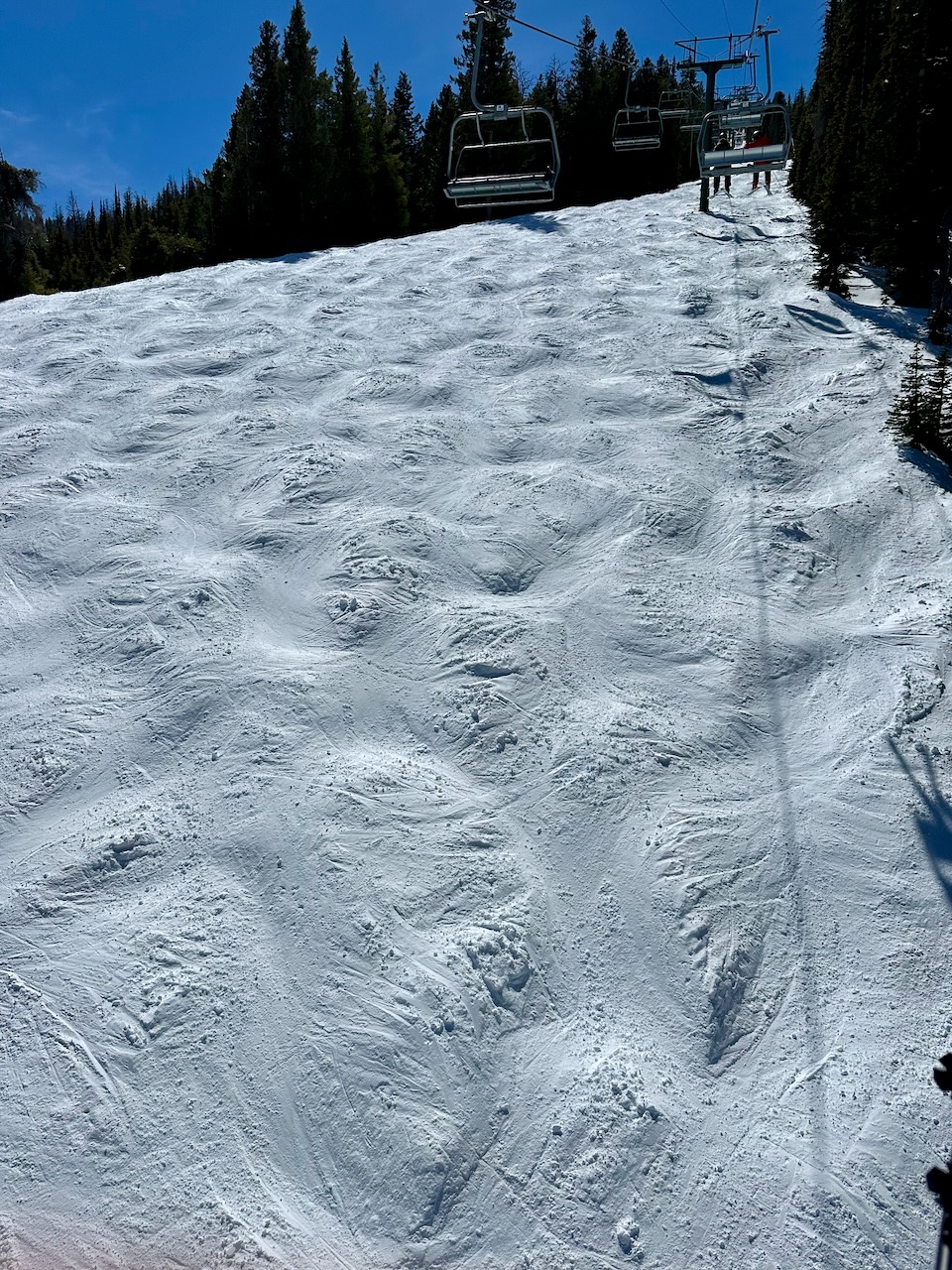
If we make real-time decisions, be aware of our mindset and the moment we decide. No skiers were riding the chairs in front of me, there was no snow on the south slopes, and nobody was skiing the mogul run below the chairlift. A good observation in real time might be that it is time to shift the ski area’s operations to a minimal viable status. The snapshot does not capture that both photos were taken in the last minutes of the ski day for this part of the mountain; everyone had departed or was exiting via other runs.

How might we balance the long view with the immediate facts? How might we remain more holistic when there is a variance in the budget, a blip in enrollment, a change to a donor’s giving habits, a shift in how board members attend meetings or a disruption experienced by a peer organization? How might we prioritize a culture of curiosity over the desire to fix the immediate issue?

Baggage Claim

When you build infrastructure and offices to deal with misplaced items, there is an understanding that the system has cracks. Commercial airlines staff baggage claim desks where one can report lost or damaged items. It is an assumption that checking a bag with an airline does not guarantee it will arrive at its final destination or drop onto the carousel in the same condition as it started the journey. The aviation industry has prepared us for acceptable loss.

What disruptions and loss have we built into our enterprises? What disappointments are our customers trained to endure?

Under the Lights

Adventures under the lights change the experience. Backpack with a headlamp, soccer in the park with flood lights, running among street lights through a new town, or ice climbing aided by spotlights. Some elements move faster, a few details are more pronounced, and our peripheral vision might diminish. The sensations around the activity are altered. It transforms our mindset.

What alterations might we make to group activities to facilitate a new experience? A summer camp I served scheduled camp programs for the board to participate in, aiding our ability to assume a camp mindset. A horse pack trip, backpack, or trying camp activities brought out the joy of camp and an appreciation for the resources dedicated to these programs.

How are you incorporating mission moments and activities into your team’s engagement? How might changing just the time of day, meeting room, lighting, agenda, or guest speakers alter your team’s mindset?

Team Time Trials: An Insight Into Group Dynamics

In select professional road cycling stage races, the itinerary might prescribe a team trial. A squad of cyclists head out on a designated course, racing against the clock. Historically, the finish time was taken on the finish arrival of the fifth rider for each team. Those who fell behind registered their own time. The conventional strategy focused on keeping the team together so the fifth rider crossed the finish line in the same group as the first through fourth cyclists, thus benefiting from the aerodynamic draft provided by teammates. Together, it is faster.

The rules have been amended this season, and each team member receives an individual time at the finish of a team time trial. New strategies are being tested, such as utilizing the power and energy of lower-tier riders earl in the race before launching the top riders closer to the finish. Since the time stops for a rider upon their individual finish, finishing separately is more likely, the strongest riders might sprint ahead and be rewarded in the results.

How does your enterprise dose its efforts. Are you positioned to finish as a team, regardless of the pace or do you prescribe to the tactic of getting any one team member across the line as soon as possible? Do your cause’s core values match your tactics? How do you maintain comradery if some team members are asked to sacrifice their efforts for the benefit of others. Do stronger team members show a willingness to govern their outputs so the group remains together?

Areas needing higher technical skills, perhaps reading profit and loss financial reports, can be an exercise that divides or unites a group. Creating an accessible dashboard (snapshot) of the current budget may allow everyone to assess the organization’s general fiscal health. However, a conference with the auditors might require team members with higher levels of financial literacy, and a select group may need to forerun these conversations to maximize the details and navigate the nomenclature and footnotes.

How might your team decide in advance if the preferred tactic is to prioritize the group or amplify individual achievement?


Lining Up

Some things are worth lining up for, and others moments are worth taking your own route. A key is knowing what you value. A paid lift ticket for the ski hill on a powder morning might be worth the investment. However, to others, it is a chance to put on climbing skins and ascend under their own power. Knowing your priorities helps you make decisions in real-time.

Cheer for Us!

If professional athletes aspire to have an inspired fan base attend their events and cheer for them during a competition, is their reciprocity that they offer an interchange when encountering recreational athletes during training sessions? Said more directly, if amateur cyclists wish teams of professional cyclists greetings as they pass on the road, are multiple blank stares back from the pro squad a promising way to engage with fans? Might they lift a finger in recognition or utter ‘hi’?

How might we not overlook simple exchanges all due to our focus on assembling the greatest audience to cheer for us at our signature events? How might we remember that the most casual interactions might be the cement that creates a bond? Some of the most pleasing memories are formed in the unscripted moments orchestrated by serendipity.

Refresh

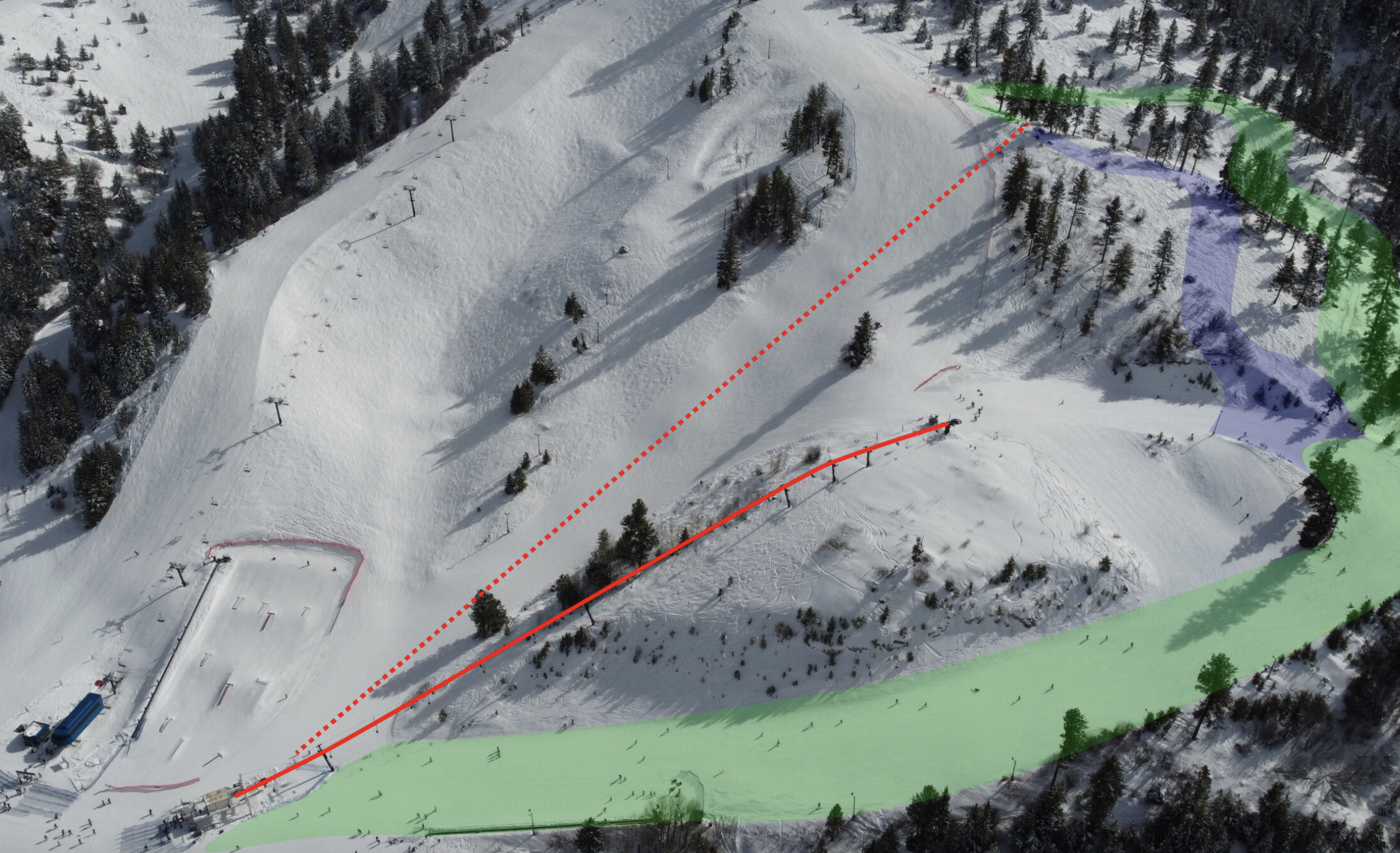
Bogus Basin Ski Area- Proposed new lift dotted line. The existing lift represented as solid line

When rebuilding a ski lift, placing the lift towers in the same locations as the original version may not be necessary. Reconstruction is a chance to reimagine how the ski lift functions and even alter the impact of the ski lift. The first ski lift was constructed in the low point (valley) of pioneering ski runs. The thinking was skiers would gravitate to the ridges to make their turns. Skiers, acted on by gravity, naturally returned to the canyon portion of the ski run and inevitably dodged lift towers that occupied the preferred fall line. So, the ski lift was reconstructed on the ridge lines, reversing the original paradigm.

How might we utilize reconstruction to update our alignment? What if we are expanding the size of the board? Do we seek weak ties to broaden representation on the board, or do we double down on the skill sets and attributes currently serving the board? What if a key partnership changes? Do we find the next best organization to fill the vacuum, or do we review the program and assess future needs before moving forward? How do we remain curious, even when we have invested in a functional platform?