Generative

What Baggage Carousels Teach Us About Planning

Airport baggage carousels are interesting devices. A lot of infrastructure and space is dedicated to the luggage retrieval process. When many flights arrive simultaneously, each carousel operates at high capacity. Visit the baggage area between busy periods, and the design appears dated. If a courier delivers packages directly to my doorstep, why can an airline not reunite baggage and passengers in a more personalized manner?

When operations are at full capacity, questioning utilization and design is more demanding. Visit the same site during a slow period, and the respite provides more opportunities for reflection.

How might we embrace generative inquiry during our more relaxed moments and assess if we are trying to solve problems when full or empty?

What Would You Order?

If you were given a chance to make a wish list order on behalf of a cause you support, what would you order?

Now, look at the organization’s strategic plan. Is there an overlap, or do your dream orders and the organization’s strategic priorities travel opposite directions?

This is a memorable icebreaker at the start of a board and staff meeting. It quickly assesses whether the strategic framework is a living document or a list of ungrounded ideas that float like a dirigible, circling the air space above without delivering the cargo.

Payout or Annuity

Do you take the payout or defer it for another day? Do you elect the over-scheduled board member or wait until they can focus on your cause? Do you ask the donor for a campaign gift even when they suggest they can do something more significant in a few years? Do you launch the new program with numerous gaps or continue assembling a more complete team before activating? Do you grab headlines with a sensational claim or send a press release after you have completed a remarkable level of service?

Each scenario above is too vague to answer definitively but represents generative questions. They are worth pondering; each serves as a proxy for the real-time decisions we need to make. Trying out a new tactic during a training session offers immediate feedback and is more effective than waiting for a competition. If we delay until the race to deploy a new strategy, our results are often hampered by our lack of preparation. Train today so our capabilities are evident, and we are prepared when the spotlight focuses on our enterprise.

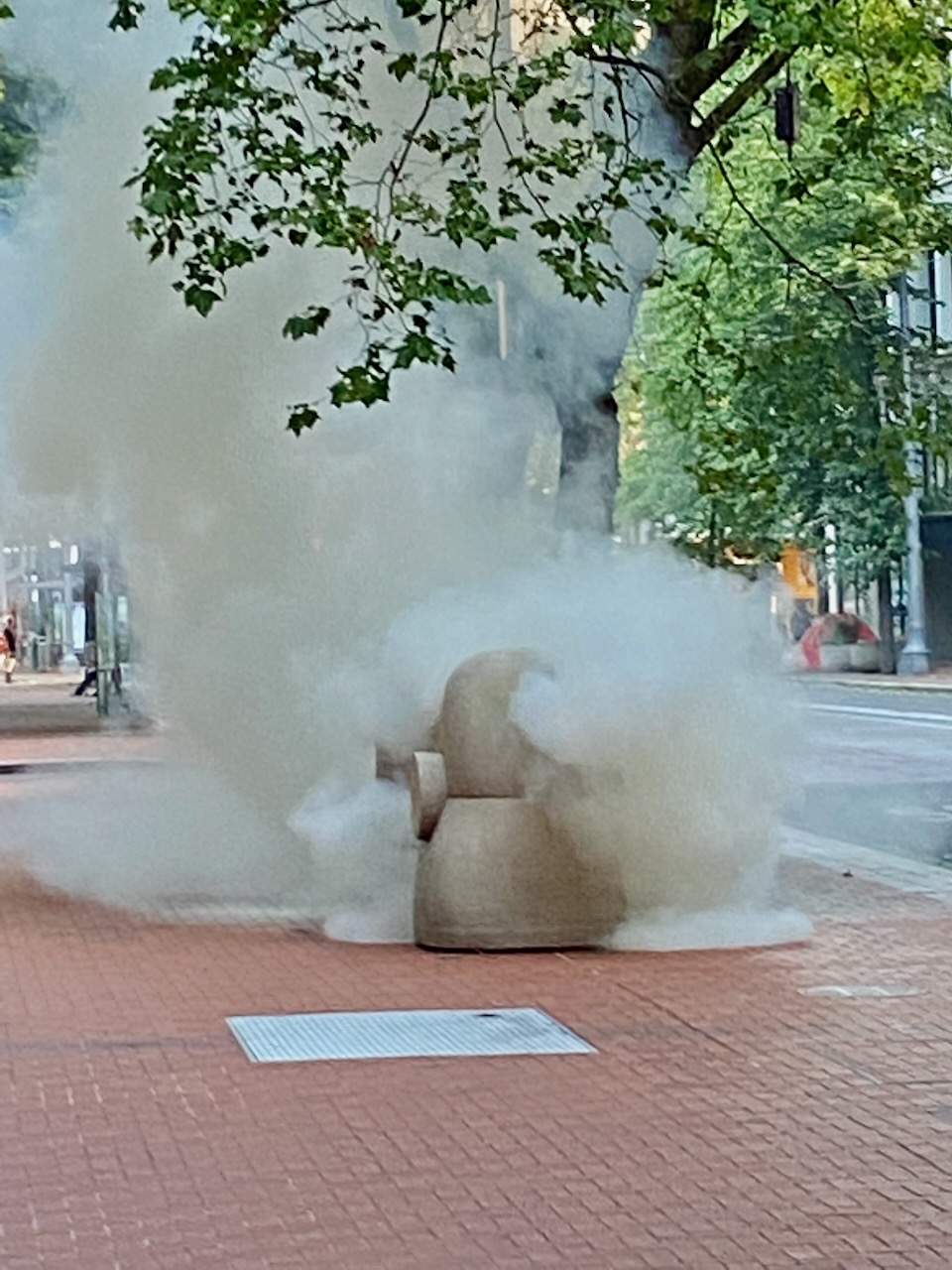
Where there is smoke…

What advice would you give your younger self? If you could go back in time, say half of your current lifespan, what wisdom would you share with your less traveled self?

Chris Guillebeau shared a mind-shifting answer this weekend at World Domination Summit. He stated that he would ask his younger self how to nurture the key characteristics and mindsets that aging might erode. He flipped the script. He did not see the question as linear but rather generative. He reversed the flow and asked for guidance instead of funneling suspect wisdom to youth.

What questions and opportunities in your ecosystem are prime for a mind shift? How might we tell less and ask more for guidance? 

I am more connected to the causes who asked for my insights over the ones who told me their results and impact at the first point of contact. My ideas are treasured investments in these enterprises, and I intend to monitor their germination.

Ask a question before we tell; perhaps it becomes the fire that never natures into smoke.

Question of the Day

What if we start each day or meeting with a framing question? Something that provides insights and intention. Not a rhetorical question about how we can be more awesome but more on the generative side.

Yesterday, my question of the day was, ‘how might I find adventure while being in a mixed mindset that is trending towards adversity?’ An hour into my road bike ride and I was rolling on my rear rim at 12 mph, a victim of a second flat tire in a ten minute span. I limped towards a bike shop I found on Google Maps which was my last oasis before making the dreaded call for a ride home. Ben’s Bikes quickly outfitted me with two new tubes and air cartridges, plus the good karma of a bulldog who was clearly in-charge of all front door greeting operations.

Back on course, I was relieved to be riding and not headed home in a sag wagon. Quickly, I encountered another cyclist who was riding the same direction and we spent the next two hours sharing a great adventure. I able to guide through the less obvious sections of the bike path (my new cycling companion was on his first lap of The Loop in Tucson) and he provided great conversation and enthusiasm for being out for a ride.

Employing a framing question provided context for the day. I unexpectedly experienced both adversity and adventure. With a bit of focus, I was prepared to head a few more chapters into the journey when the plot took an unexpected turn.

How might questions created a more remarkable experiences?

A Lesson from One Club

IMG_5903Golfer Bubba Watson recently played a round using one golf club, foregoing the 13 other clubs allowed in his bag during competition. He said the experience helped him develop his skills and also changed the routine.  What are ways to break-up the routine of meetings within organization.  Here are some ideas:

  • Off-site meetings (new location, travel related, even a different room)
  • Invite guest speaker
  • Meet with another board (partnering organization, similar size different sector, mentoring organization)
  • Active experience (river rafting, hike, bowling, scavenger hunt)
  • Attend conference
  • Hire facilitator
  • Webinar or online class
  • Group read- read the same book/article/packet in advance
  • Generative thinking agenda
  • Scenarios from a hat (hat tip to Whose Line is it Anyway)- select random scenarios for brainstorming sessions
  • Listening tour
  • Online poll (for board, membership, community)
  • Show and Tell- bring one idea from another enterprise that may benefit organization/operations
  • Speed Networking- one-on-one sessions for board and staff members to get to know each other
  • Change seating arrangement (new layout, standing only, bean bags, etc)
  • Invite past board members back for update and advice
  • Start meeting with a mini-TED Talk from one board/staff member
  • Spark- reflect on how organizations best ideas were generated
  • Graphic facilitation- illustrate the organization’s current status and future potential graphically