Innovative Concepts

Ascending (the Wrong Peak)

What mountain have you identified to summit? What if you find out you are climbing a different peak than selected? Do you stop your ascent and downclimb? Do you continue upwards, using this climb to enhance your performance for the next expedition? Do you abandon the entire project?

If our passion is climbing, we will likely continue, despite being on a different route than intended. If our goal is a specific summit, we will likely reroute to the planned ascent. If our hope was to curate an amazing narrative, we might use this detour to enhance our story. Being specific when we identify our intentions makes decision-making easier when we reach an inflection point.


Way Too Early

A favored way sports leagues retain attention immediately after a championship event is to post a pre-season ranking for the coming season. Often titled ‘A Way Too Early Ranking,’ it attempts to retain engagement with fans. By giving hope to all those fans seeking a reset after disappointment or delighting those building on their success, the poll encourages people to start dreaming and planning for next season.

How might we find a balance between engagement and a reset? When do we allow our fans to recalibrate? When do we need to amplify their connection with our cause?

Upgrades

Note the in-flight magazines, a mainstay of domestic flights 10-years ago

When traveling as a group, how do you treat the opportunity to upgrade? It may be a bus seat with more legroom, a cafe table by the window, or an aircraft class of service upgrade. Do you take the upgrade, give the upgrade to somebody in your party who may not have experienced the opportunity, or decline the opportunity unless the entire group can advance together? What does your group suggest if one person is provided a better way of traveling? Does the quality of the upgrade matter to your group’s decision-making process?

When upgrades are offered, they are a good test of our values and priorities. There is no right or wrong, but it represents a chance for actions and beliefs to align or bifurcate.

What have been your experiences in real-time?

After the Hard Part

After you complete the hard part, then what? Do you stop and rest, or do you continue forward at a recovery pace? Can you accelerate on easier terrain, or is your journey finished? Tour de France riders do not call it a season after three weeks of bicycle stage racing. They move on to the next round of events (World Championships, Olympic Games, Vuelta Espana, etc.).

A way to distinguish ourselves is not by completing the hard section but by our actions after cresting the headwall. A social sector organization that completes a capital campaign and then goes silent is remarkable for not being able to double-click on its campaign’s impact. An enterprise that goes viral for a compelling story and continues to make that event its sole highlight reel for successive years is the equivalent of riding off into the sunset.

How might we plan for the crux move and the terrain that follows?

In Media Res

One of Gary Larson’s superpowers was the ability to illustrate THE FAR SIDE from the perspective of ‘in media res’ (in the middle of things). Why The FAR SIDE is a masterclass in storytelling, provides a thoughtful YouTube example. He captures the actions that proceeded in his cartoon panel and suggests the ending.

Try this icebreaker exercise: provide a sheet of paper with three blank cartoon panels and ask team members from your organization to illustrate the enterprise’s strategic plan (or a big project, future expansion, major goal, etc.). When our space for storytelling is truncated, we tend to ground ourselves in the essential plot points. The results of this activity might assist us in telling better stories in the future when we paint a vision of where we want to go.

Being of Service

Leaving the barn for a horseback ride, dirt and debris from one horse collects in the aisle. So, I could sweep just outside my horse stall. Or, I could sweep the entire aisle. The entire job might take a few additional minutes, and it leaves the barn cleaner for those who come after.

Are we serving ourselves, or are we being of service to others? We cannot always do more than needed but when we do, we amplify the work of those around us.

One More Interval?

If you have energy for one more interval (high intensity, shorter duration effort) during endurance training, should you do the interval, or is it more beneficial to finish the workout before reaching empty? Sports physiologists suggest that the body is like an iPhone battery. It performs best between 80-20% of charge. Draining the battery (body) too much causes the battery to lose functionality, and maintaining a constant 100% charge decreases total battery life. We can take steps to expand our functionality in that sweet spot, but ultimately, there is a threshold for return on investment.

How might we understand that the attributes of ‘grit,’ ‘fortitude,’ and ‘never say quit’ are noble but potentially misguided if not utilized in the right circumstances? Leaving one more interval (effort) in our capacity may be more impactful than finishing the workout (project) in total exhaustion. What is your ideal performance bandwidth if you selected a percentage of effective output (like a mobile phone battery)?

Chekhov’s Gun

Chekhov’s Gun is a narrative principle where an element introduced into a story first seems unimportant but will later take on great significance. The principle postulates that any seemingly unimportant element introduced into a story—an object, a character trait, a backstory, an allergy—should later have relevance. https://www.torontofilmschool.ca/blog/chekhovs-gun-definition-examples-and-tips/

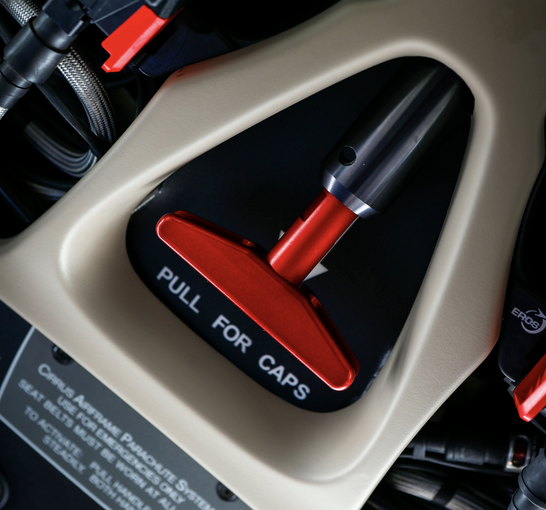
What do you include in your organization’s plan that nods to future activity, and what is identified as a safety device? For example, an organization might title its expansion ‘Phase One’ to reference bigger plans in the future. Circus SR series of planes places a handle to activate a parachute to avoid catastrophic emergencies. Placing a ‘loaded gun’ on the stage can drive the narrative, or it might be a safety measure, with no intention of being deployed.

How might we monitor the intention of the devices highlighted in our plans? Without proper orientation, our team members might be waiting for us to activate the safety mechanism and be disappointed when we launch a future initiative.

Wave for Less Resources

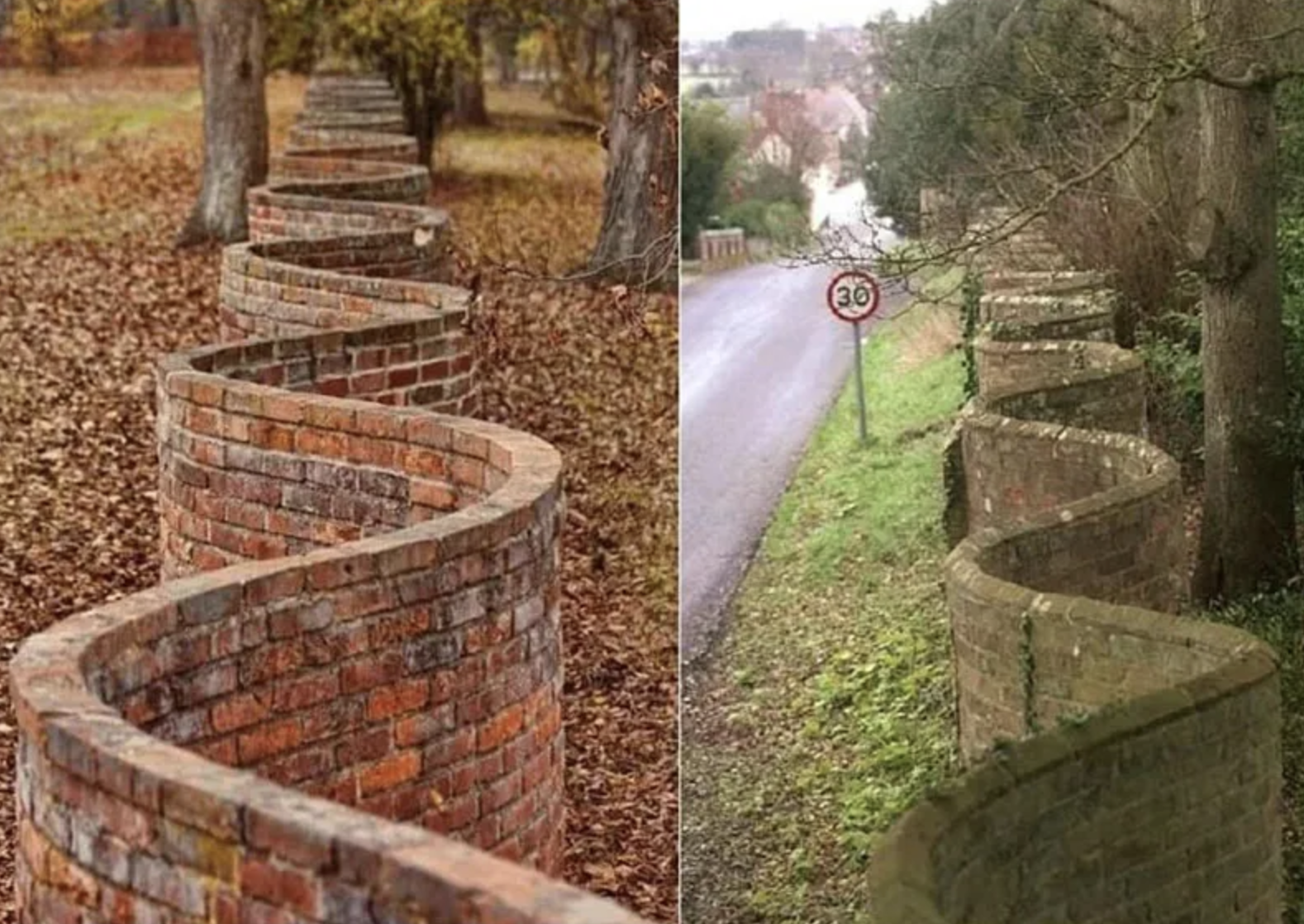
A brick wall built in the shape of a wave (arch) can support itself with a single layer of bricks. A straight wall needs two or more layers of bricks to remain structurally sound. The wave technique was superior for employing fewer bricks to build a wall that connected the same points as a straight-line brick wall.

How might we deploy our resources to maximize our intended impact? A straight line is easy to visualize but may not be our best use of resources.

Rebuild vs New Build

When do you rebuild, and when do you build new? If you are Scenic Hudson, committed to making a transformative investment in Poughkeepsie, NY, you rehabilitate an old Standard Gauge factory into your new headquarters. Building new would have been less expensive, but this project is the most significant undertaking beyond the expansion of a prison complex next door. The location is uniquely positioned at the junction of old railway lines and on the eastern terminus of the Walkway over the Hudson. The site is under construction and led by local contractors and the Mass Design Group.

How might we invest in our mission even when it costs us more resources in the initial phase? How might the long-term impact of our work resonate for our enterprise and the community while preserving a part of the community’s history?