Values

Payout vs. Ideas

Want to test your organization or individual values? Consider the lottery test. If you win the jackpot payout, would you remain true to your core values, or would you “exchange” or “upgrade” your guiding principles to something perceived as in alignment with your new financial stature?

We build trust and loyalty by stating what we believe and then acting consistently with those beliefs. Loyalty and authenticity cannot be purchased; they are earned.

Choices

I consistently rely on Simon Sinek’s work to add depth and dimension to conversations in many settings. Seat mates on airplanes to professional consulting engagements receive some mention of Simon’s frameworks.

Two assessment points come to mind when evaluating intentions. First, does the enterprise embed its core values into its work without fail? Second, are the choices made consistent with the story it is telling?

Watching and listening to the things that matter can tell us a lot about a cause’s status.

Original Cast

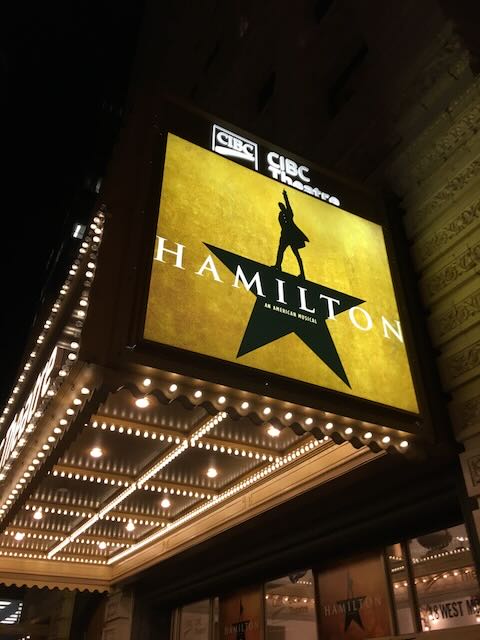
If you are a member of the traveling cast in the Broadway mega-hit Hamilton, how do you benefit from the DNA embedded by the original cast? With multiple productions worldwide, there are some links back to the original cast members who developed the characters and added depth and dimension to the songs. If you play King George III in a current production, you can trace nuisances to Jonathan Groff, the original performer portraying the Broadway King George. Your performance is calibrated in some measure based on the first iteration.

How might we recognize that when we join a cause, we have some connection to the original cast who started the enterprise? How might we benefit from their insights and add our own perspective as we build the best version of the cause? What transitive properties from the founders have cascaded to your work?

What, Then Where

If we get precise about what we are doing, it will clarify where we position ourselves. Companies prioritizing returning their employees to the office are reversing this conversation. They are focused on filling their offices with employees that the ‘where’ is proceeding the ‘what.’ Southwest Airlines allows customer support team members to work from home. As an airline, there are vital roles that require presence at an airport or base of operations, but there are roles that allow for a ‘work from anywhere’ approach.

If our journey has the strategic impact we planned, we need to know what road signs to look for. Otherwise, we might confuse motion for progress. If we are living our stated organizational values, it should be evident in the team’s behaviors. Otherwise, we just connect the closest dot without appreciating the whole picture.

Change of Leadership

Winston Churchill was voted out of office in 1945 after serving for five years as Prime Minister during World War Two. The war’s conclusion allowed citizens to focus on other priorities, but the Conservative Party did not anticipate the growing calls for social reform and was routed at the polls. Harry S. Truman managed an unexpected victory in the United States to keep the Democratic Party in control during the first post-World War Two election.

Representative leadership exists on a delicate margin and is subject to the whim of the people. One might argue that Churchill led Britain with resounding fortitude, sufficient to claim another term, if for no other reason than gratitude that the Allies had prevailed. Truman succeeded Franklin D. Roosevelt, who died in April of 1945, making decisions that concluded the war but lacked as robust of a World War Two resume (he served in World War One and was a reservist until 1953).

Leadership is temporary, and a change always looms. How might we use our time in leadership by setting others up for success? How might we focus on our core values and execute the work that matters, regardless of our title? How might we recognize that we are leading, with or without the title of leader?

Scale

Flying model airplanes is a passion for hobbyists. It is done on a scale that allows for smaller aircraft, and shorter runways and requires less restricted airspace. But it requires some of the regulations and precautions of a real airport.

Which parts of our work are performed on a smaller scale but still require attention to details that may not be obvious? How do we embed our values into each portion of our work, regardless if it is a mainstage or a pop-up performance?