wayfinding

How Do We Know Where We Rank?

Without awards, how would we know where we rank? How do you measure progress? Do you wait for the annual award show to allow for recognition or disappointment? What if you only have your personal results to use as a measurement? What if you only get a data report once a year? How long does an award sustain your efforts? Are you still talking about an elementary school spelling bee victory, a middle school track and field win, a high school team victory, a college academic achievement, a workplace honor from an accrediting agency, or the nod of appreciation from a co-worker? Awards have a shelf-life unless they are extremely rare (Noble Prize, Olympic Gold medal, World Championship). Awards might be waypoints to acknowledge and re-energize our efforts, but they cannot nourish or sustain us unless high school is the highlight of our lives.

Refresh

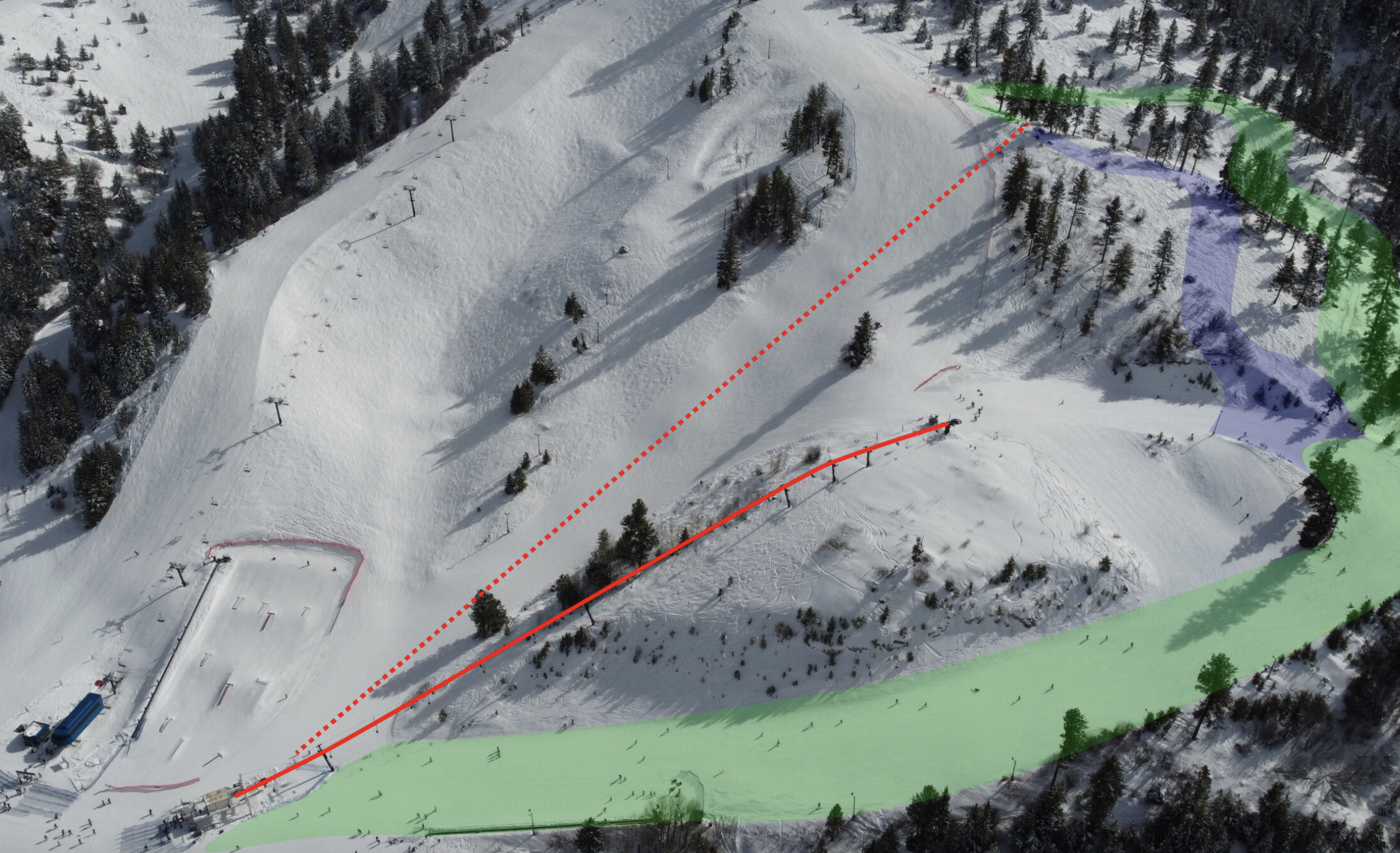
Bogus Basin Ski Area- Proposed new lift dotted line. The existing lift represented as solid line

When rebuilding a ski lift, placing the lift towers in the same locations as the original version may not be necessary. Reconstruction is a chance to reimagine how the ski lift functions and even alter the impact of the ski lift. The first ski lift was constructed in the low point (valley) of pioneering ski runs. The thinking was skiers would gravitate to the ridges to make their turns. Skiers, acted on by gravity, naturally returned to the canyon portion of the ski run and inevitably dodged lift towers that occupied the preferred fall line. So, the ski lift was reconstructed on the ridge lines, reversing the original paradigm.

How might we utilize reconstruction to update our alignment? What if we are expanding the size of the board? Do we seek weak ties to broaden representation on the board, or do we double down on the skill sets and attributes currently serving the board? What if a key partnership changes? Do we find the next best organization to fill the vacuum, or do we review the program and assess future needs before moving forward? How do we remain curious, even when we have invested in a functional platform?

Alternate

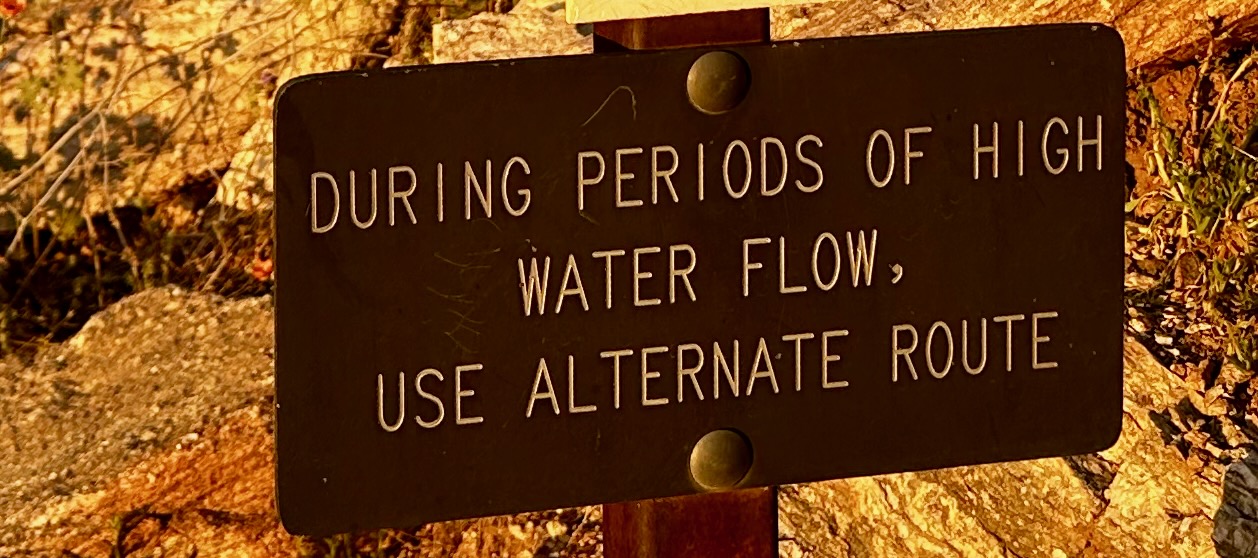
Alternate routes, alternate team members, and alternate itineraries are not for everyone. It is the road less traveled, a side track that reinforces the primary route and, by name, implies it is less significant. However, it gets us further down the trail if required. Consider all the Olympic and World Championship events where an alternate team member is sitting on the bench, at home, or competing at a secondary event. These remarkable individuals were one place away from making the team. They were tantalizing close to being in the game. Due to their consistent presence, insights and support, they are a catalyst for the selected athletes.

Who are your organization’s alternates? The individuals not on the staff or the board but who can jump in when necessary. The substitute teacher that fills in for any absent teacher. The volunteer who can jump in at the last minute to engage with donors or run a checkout station during the big gala. The former staff member who knows how to coax a report from an aging software system. Having highly competent reserves ensures your enterprise continues its journey even when an alternate travel route is required.

Wayfinding the Letter Search

Wayfinding parallels solving the New York Times Letter Boxed game. There is no perfect solution; sometimes, we rely on patterns we encounter in other parts of our journey. We are endeavoring to stay in the game, relying on what we can achieve now, even if it is a three-letter word, to reach the next attempt. Solve the puzzle in one remarkable turn; you are a genius. Complete the game in five guesses, and you are a player. If it takes six or more turns, you are still in the game and acquired knowledge that will serve you well in the next chapter. Even when we backtrack and undo a previous guess, we still navigate toward a waypoint that moves us closer to delivering the work that matters.

Fragments from the Road

Unless a person joins you on the trail, it is tough to recreate all we experience en route. We cannot easily replicate the moments of doubt, the dirt and grimness pressing into our skin, the awe of an unexpected vista, the frustration of missing a trail junction, and the exuberance of a tailwind and friendly grade. Our photos, videos, and narratives might capture a snapshot but do not augment reality. The most compelling way we gain a comprehension of the terrain is if we join the expedition. Thru-hikers embed themselves and accumulate experiences that add exponential depth and dimension.

The highest likelihood of supporting somebody’s understanding of the work that matters is to join the adventure and walk a section of the trail.

Any Stick or That Stick?

Are you seeking any stick on the trail or a specific stick? Sometimes, any stick will do. Trying to start a campfire, kindling and branches of different sizes are welcome. If you need a walking stick, the optimal length and width narrow the potential inventory. Looking for something long enough to rescue a friend who has fallen through the ice, we might try anything we can grab. For an artistic door handle to serve as the finishing piece on a custom-made door, the criteria increase exponentially.

When any stick will do, there is a limited need for evaluation (snake or stick?). When higher-order decision-making is desired, consider drafting a strategy screen (a key step in David La Piana’s The Nonprofit Strategy Revolution framework). Developing filtering statements that guide future decision-making is best done in advance instead of under the pressure of a deadline. If we replace sticks for initiatives, what follows is a potential start to a strategy screen (customization of this template is encouraged):

  1. Is the initiative aligned with our Magnetic North (Purpose, Vision, Mission, and Values)?
  2. Is the opportunity consistent with the strategies outlined in our strategic plan?
  3. Does the initiative benefit our customers? Does it help us be of greater service?
  4. Does the opportunity leverage the trust we built with our supporters and community?
  5. Is our cause committed to doing the work that matters to launch the project?
  6. Does the opportunity enhance our connection to the community we serve?
  7. Are we replicating or duplicating a similar initiative curated by one of our partners?
  8. Do we have the resources to manage the opportunity (staff, fiscal, facility, expertise, etc.)?
  9. What is the evaluation of the risk management exposure?
  10. What is the length of the commitment?
  11. What is the geographic service area the initiative covers?
  12. If the initiative launches successfully, can we sustain the project?
  13. How might we unwind the endeavor if necessary?

A side benefit of the strategy screen is that if you represent an organization that is on the receiving end of frequent requests to launch and partner new programs, share the strategy screen with the individual proposing the project. Explain that these are the criteria that the decision-makers (staff, board, membership, etc.) will use to make an initial evaluation of the initiative. It makes the decision-making process more transparent, and the advocate may have insights on answering specific strategy screen questions. 

Lastly, I recommend using the strategy screen like a street light, applying green, yellow, and red coding as you answer the screening questions. All green does not mean proceed, nor does a single red light mean the initiative fails. The screen represents a guide to support your cause’s best decision-making and enrich a culture of curiosity.

Shuffle

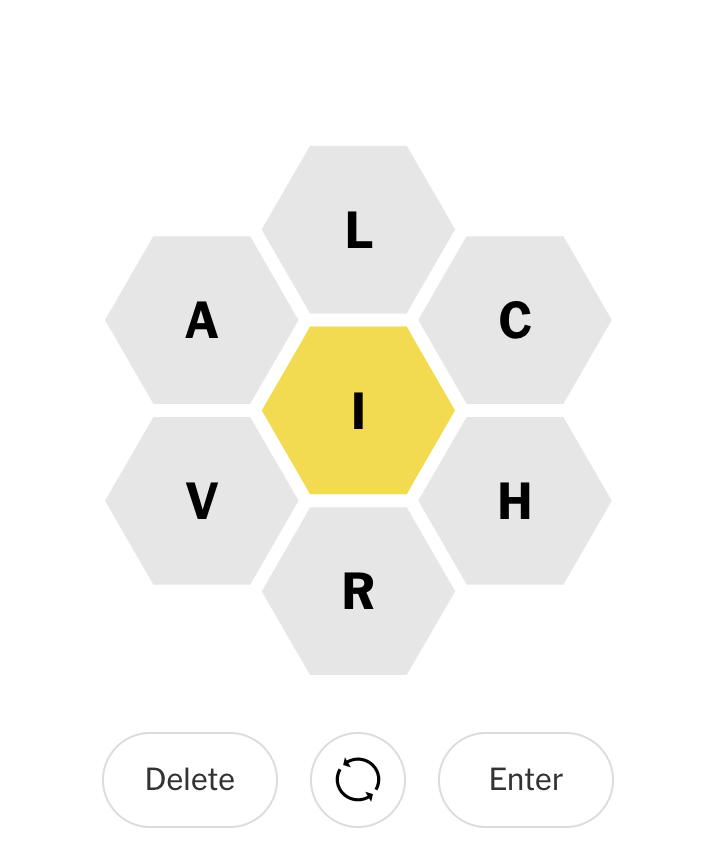
The shuffle button is the most influential option when playing the New York Times Spelling Bee game online. Click on the shuffle button, and the letters rearrange themselves, potentially presenting patterns that lead to solutions that a player missed in the previous configuration. A few shuffles during the game and new word choices pop up.

When we engage in high-level decision-making, what is our shuffle button? How do we rearrange the inputs so we do not choose the first solution that appears viable? A few options:

Edward de Bono Six Thinking Hats

Yes, And

Golden Triangle, Balancing Triangle, Cognitive Triangle, Double Diamond, The Future Triangle

OOC/EMR

CARVER

How Using the Phrase:’ _(#)_ out of 100,’ Might Update Our Beliefs

How might we employ Bayes’ Therom, tested and written about by Kahneman and Tversky, to provide more reliable goals and outcomes when planning? Simply deploying the visual representation of the theory might quickly confirm or recant our hypothesis and assumptions.

Actual social sector scenarios I encountered where this deliberation framework might resonate:

A performing arts group evaluates how much of the community seeks opera and, of that subset, how many are drawn to celebrated performances versus those seeking unknown operas.

A land conservation group trying to draw attention to its efforts to preserve and manage riparian ecosystems in a region. How many community members are influenced by the river, and of that group, how many are willing to risk their social capital to act on behalf of river preservation?

An education institution launching a new foreign language program trending at other peer schools. How many students are interested in any foreign language and are ready to commit (or start) to a new foreign language program? How many students commit three years of study to their foreign language studies?

Projection vs. Reality

What content we project to our audience versus what we experience behind the scenes are often strikingly distinct realities. Some of us focus on the dip between the two existences. Others see the possibility to invest in creating the magic that makes our stories richer and more robust.

Which mindset is your default? How does it impact your approach?

Investors vs. Investments

In the 1990s, Boeing had a 60% market share among commercial aircraft manufacturers and a decision. Did the company concentrate on pleasing its investors and focus on stock prizes, or did it invest in a next-generation aircraft design? In the book Flying Blind: The 737 Max Tragedy and Fall of Boeing, Peter Robison suggests that the interest of the investors took precedence over the pleas of the engineers to invest in a new aircraft design. Harvesting profits was considered the work that mattered. It was safer, had a quicker reward phase, and was more predictable than investing millions into a next-generation design. Eventually, Boeing launched the 787 program in the early 2000s but continued to use stock price as a core metric. When the 737 aircraft came up for an update, Boeing decided to use the existing platform instead of starting with a fresh sheet of paper and launched the Max series. A quick scan of current events and the top 737 Max new stories are about failures and flaws, even an inability to provide Wall Street with earning guidance for 2024.

To expand on this theme, return to yesterday’s post on competitive advantage; there is a tipping point in all our enterprises. When do we prioritize our investors/donors/members/customers, and when do we prioritize investing in our work/programs? What do our core values suggest? How does our strategic framework align with our decisions? If the social sector is working on problems that cannot easily be solved; otherwise, a corporation would be monetizing the program, then why are we not launching more innovative programs? Should we not be finding the others (Seth Godin’s podcast on Akimbo) who are ready to act and launch our work?