wayfinding

Feedback Folly

When it comes to obtaining customer input, executives often think a multiple-choice survey will be the most cost-effective option. They have their place, of course, such as if you want to know the percentage of people who liked or disliked something. But these instruments are shallow and derivative at best, and at their worst they can be annoying and counterproductive. So don’t let them become an excuse for not talking to the customer.

Graham Kenny is CEO of Strategic Factors and author of the book Strategy Discovery.

Net Promoter surveys, pre-retreat questionnaires, automated phone calls, and ring the bell if you received good service; each is a tactical way of generating feedback. On balance, they hinder strategic insights from conversations with clients (those receiving your services). A fundamental case for performing focus group sessions or design-thinking workshops is the ability of one real-time participant to build on the idea of another attendee. This process of idea generation does not translate to the opening list of feedback tools. If you run a single proprietor business and the store is only open when you are present, then you have the chance to engage every customer in some type of generative question about why they chose to do business with you. As the number of team members interacting with customers expands, these conversations are harder to generate, and the ideas are rarely collected in a single repository and reviewed. Therefore, it is convenient (for the business) to send out surveys and seek quantitative feedback. This is the detour from human-centered design. If you were asked to select the ‘type of person,’ you are based on one of six choices that applied to all humanity; how accurate of a representation would the data reveal.

What if we prioritized gathering feedback that focused on genuine interactions with our clients? Where possible, gather a cross-section and create an opportunity for generative feedback (free pizza and beverages are well received). This is a key activity that highlights an organization that embraces a culture of curiosity and invests in a remarkable strategic planning process.

How might we select genuine input that does not populate into a dashboard report? How might we gain more clarity about our super fans and why they trust the work that we have deemed essential?

Expansion

Thinking of expanding your services and area of impact? How might you clarify your superpower in advance of growing? For the Vikings, an ability to navigate waterways more adeptly than other cultures was critical to their expansion efforts throughout Europe.

It is easy to see opportunities but harder to assess which ones are right for your cause. A critical part of the evaluation process is determining what you add to the equation. Where does your superpower’s exponential multiplier get applied? If you want to expand your literary support group, but your customers rely primarily on the public transportation system, it is best to study the bus routes; otherwise, the nicest facility with the best teachers does not maximize its potential. Being located in the community library next to the transportation hub may provide more accessibility, even if there are better facilities located offline throughout the town.

How might we increase the odds of our success by applying our talent in the right location and environment?

Areas of Focus in 2024

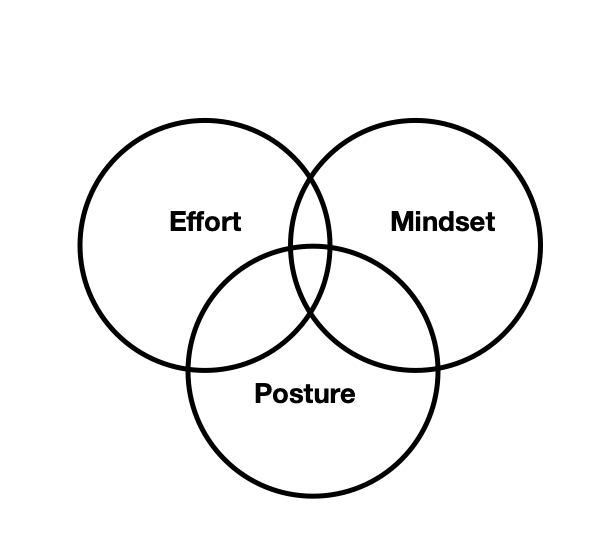
There are three outputs I intend to personally focus on daily. The amount of effort I put into a moment, the mindset in which I encounter the moment, and the posture I assume at any given moment. It is not a complex toolbox but contains areas of focus that impact how I embrace or collide with real-time events. To provide a bit more depth and dimension, I am defining these concepts as follows:

Effort = exertion, energy, action, attention, focus, force

Mindset = attitude, mood, philosophy, belief, perspective, approach

Posture = pose, presence, stature, position, geography, phase

I have not developed a metric to track each concept yet, but considering creative methods to capture the flow of each output.

What guiding areas of focus support your efforts to create the best rendition of your work?

Dashboards

What information do we need to be tracking? How much data do we need, and at what frequency? How do we balance doing the work with being reflective of the metrics? Do we need a snapshot or a deep dive into the numbers? 

Quarterly reports, guidebooks, heads-up displays, and forecasts are helpful if we know how to apply them to the terrain we encounter. Otherwise, it is easy to steer the enterprise onto an abandoned dead-end road. Many of us have made ‘great time’ during our travels while headed in the wrong direction.

Amaze vs. Contribute

Some things amaze me. I might be impressed by scrolling social media, navigating a city, or walking in nature. Not all of these moments of wonder add value to my journey. Some are worth a glance, but few are worth double-clicking on to explore further. How might we assess if our primary motivation is to amaze our audience or contribute to their odyssey? Are we curating moments for Klout or customizing a benefit that serves those who follow?

Static Things that Change

How can an ancient archeological site that appears static embody change? With research, we might find black-and-white photographs of the locality from a century ago. Despite weathering, it looms untouched. What alters is our interpretation of the relic. Upon ‘discovery,’ it might have been viewed as the height of ancient civilization and the leading manifestation of an architectural style. Then, the narrative is amended. Perhaps another archaeological site was discovered underneath, complicating the story of who settled here and why one culture built over the remains of another. The legacy associated with the scene fractures and the lived history of different peoples are considered. Scholars present papers on the progress and regression associated with the people who constructed and lived on site. Historical interpretation signs are altered to reflect the language of the current times. The structure remains static, but the narrative evolves.

What organizational decisions and landmarks require reinterpretation in your enterprise? What have you inherited that may appear static but is layered with the need for further conversations. What have we assumed was settled only to be resurfaced?

Prioritizing Urgent, Important, Unimportant, and Not Urgent

Dividing workflow into the quadrants of urgent, not urgent, important, and unimportant trends this time of year. Assuming this approach, the central question is, how might I focus most of my work on important projects? 

For me, this mindset does not embrace the human dimension. When we travel, we might select an itinerary that includes transportation, lodging, restaurant reservations, meetings, cultural visits, and free time. Not much of it will feel urgent if appropriately scheduled. Some moments will be important, and some will be unimportant or not urgent. But one missed transportation connection or meeting, and instantaneously, the urgent task of getting back on schedule dominates. The itinerary that avoided urgent defaults to that mindset after a disruption.

What we are likely to encounter is serendipity. A chance encounter with an individual who offers an opportunity to engage in a future project. An epiphany when engaging with a work of art or geographic location that reshapes the dimensions of our internal map. An unforecasted weather pattern that has us stepping off a plane wearing a parka in tropical heat or a t-shirt during an arctic blast. Suddenly, the unscripted moments become areas of focus. These unanticipated events shift our internal question: how might I get back on schedule and closer to my planned reality?

If we start by asking our essential question, then force ranking our time allocation into quadrants is less relevant. For example, if I commence an engagement by asking, how might I deliver remarkable service and insights to inspire those doing the work that matters? This mindset widens the scope of what is relevant to my work. During ‘unimportant’ times, I might encounter a way of presenting an idea that improves how I serve the client. I might reread a blog post that reframes a discussion during ‘not urgent’ time. And when the itinerary is shifted, requiring travel in the opposite direction to get back on track, it supports the essential question, allowing me to model retesting an idea before it is ready to launch.

What is/are your essential question(s) that might break quadrant-dependent scheduling?

Does Imagining Happen?

When do you and your team spend time imagining? Is it scheduled or happen organically? What is the mindset when it takes place? Is there a location where it seems most productive?


An organization with a headquarters building containing an open lounge with extraordinary mountain views overlooking an iconic river insisted we meet in the conference room, sequestered in the interior of the building. When I inquired about the location of the blue sky thinking session, the response was that all meetings take place in the conference room. The venue selection hindered the opportunity for generative thinking before the gathering commenced.


How might we embrace a culture of sense-making without starting from a place of tradition and hierarchy?