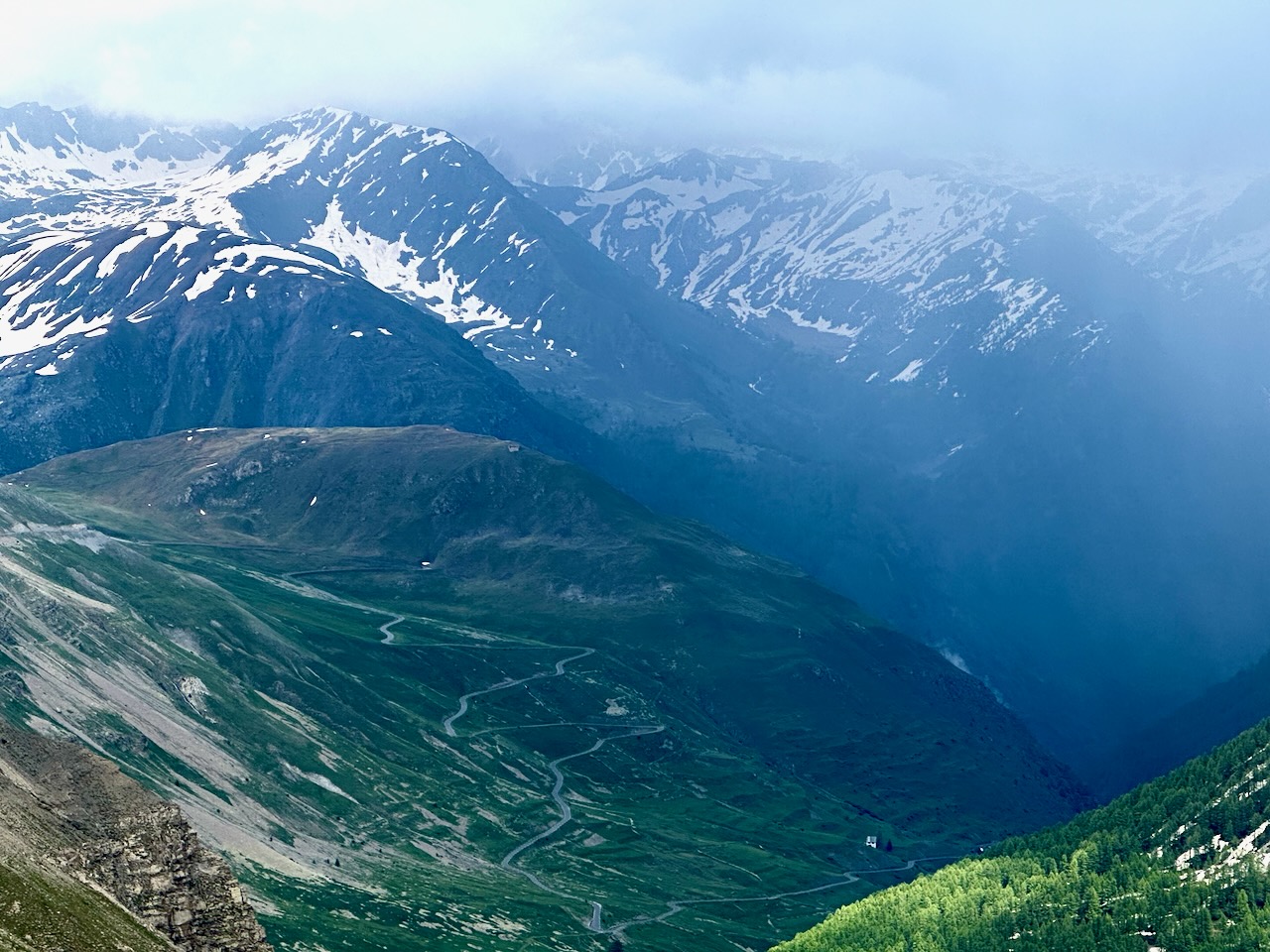
There are circumstances in which a local expert delivers an invaluable service and possesses the required resources to ensure we arrive safely. How might we invest in local experts when the conditions (and risk assessment) benefit our work and allow us to traverse the high-exposure terrain?
wayfinding
Vision vs Visionary

When the conditions are right, I can see the horizon line from the right viewpoint, and if someone designs a functional orientation point, I can align myself. However, imagining the future we are trying to create is harder when obstacles appear.
How might we provide the proper orientation for those we serve? How might we set people up for success? How might we provide a sense of the work that matters for those seeking to fuel our journey? One requires end-user empathy. The other relies on wayfinding attributes.
Fuel for Your Journey
A water fountain requires little maintenance but provides essential fuel (hydration) for those who pass. A thirsty hiker, cyclist, runner, hot canine, and many others benefit from a good water source’s self-service, always-on nature.
What services do you provide that are easy to use, simply designed, and require little labor to monitor?
The Road Ahead
Future Resume- Do you have one?
How do you respond if somebody asks you to share your ‘future resume’? Do you have a mindset that spends as much time crafting a future resume as you spend on a resume that captures past achievements? This is the approach employed by the Savannah Bananas baseball team when they hire new team members.
What if you try this activity with your team. Take a few minutes to draft a future resume; it may be enlightening.
Ascending (the Wrong Peak)
What mountain have you identified to summit? What if you find out you are climbing a different peak than selected? Do you stop your ascent and downclimb? Do you continue upwards, using this climb to enhance your performance for the next expedition? Do you abandon the entire project?
If our passion is climbing, we will likely continue, despite being on a different route than intended. If our goal is a specific summit, we will likely reroute to the planned ascent. If our hope was to curate an amazing narrative, we might use this detour to enhance our story. Being specific when we identify our intentions makes decision-making easier when we reach an inflection point.
Being of Service
Leaving the barn for a horseback ride, dirt and debris from one horse collects in the aisle. So, I could sweep just outside my horse stall. Or, I could sweep the entire aisle. The entire job might take a few additional minutes, and it leaves the barn cleaner for those who come after.
Are we serving ourselves, or are we being of service to others? We cannot always do more than needed but when we do, we amplify the work of those around us.
One More Interval?
If you have energy for one more interval (high intensity, shorter duration effort) during endurance training, should you do the interval, or is it more beneficial to finish the workout before reaching empty? Sports physiologists suggest that the body is like an iPhone battery. It performs best between 80-20% of charge. Draining the battery (body) too much causes the battery to lose functionality, and maintaining a constant 100% charge decreases total battery life. We can take steps to expand our functionality in that sweet spot, but ultimately, there is a threshold for return on investment.
How might we understand that the attributes of ‘grit,’ ‘fortitude,’ and ‘never say quit’ are noble but potentially misguided if not utilized in the right circumstances? Leaving one more interval (effort) in our capacity may be more impactful than finishing the workout (project) in total exhaustion. What is your ideal performance bandwidth if you selected a percentage of effective output (like a mobile phone battery)?
Wave for Less Resources
A brick wall built in the shape of a wave (arch) can support itself with a single layer of bricks. A straight wall needs two or more layers of bricks to remain structurally sound. The wave technique was superior for employing fewer bricks to build a wall that connected the same points as a straight-line brick wall.
How might we deploy our resources to maximize our intended impact? A straight line is easy to visualize but may not be our best use of resources.
Rebuild vs New Build

When do you rebuild, and when do you build new? If you are Scenic Hudson, committed to making a transformative investment in Poughkeepsie, NY, you rehabilitate an old Standard Gauge factory into your new headquarters. Building new would have been less expensive, but this project is the most significant undertaking beyond the expansion of a prison complex next door. The location is uniquely positioned at the junction of old railway lines and on the eastern terminus of the Walkway over the Hudson. The site is under construction and led by local contractors and the Mass Design Group.
How might we invest in our mission even when it costs us more resources in the initial phase? How might the long-term impact of our work resonate for our enterprise and the community while preserving a part of the community’s history?