Work that Matters

Work That Matters

If somebody went before us and could not sustain their effort, it might inform our attempt, but it should not discourage us from exploring options. Many first ascents of mountain summits result from mountaineers returning repeatedly to attempt new routes, bringing additional gear, or being armed with knowledge about overcoming obstacles that once thwarted their efforts. We may encounter historical records of their presence, equipment left in place, names attached to geographic and geologic features, and tales about wading into the unknown.

How might we benefit from the lessons learned but not adopt the mindset of inevitability when approaching a barrier yet to be unlocked? How might we honor the efforts of those who proceeded without setting a course to repeat their actions? How might we bring our own approach to the puzzle? How might we step back at least one magnitude before diving into the work?


Start At Speed

The ski area at St. Moritz, Switzerland has one of the steepest starts for a World Cup Downhill race. See a world cup racer in action here.

A fast start is a sensational experience, but we best be ready for what comes next. If we wander out of the start gate haphazardly, we will likely crash or go off course before we reach the first technical element. If we want to be fast at launch, we better do the work that matters in advance and have the right mindset. Otherwise, a more serene start might serve us better or we should consider delaying the commencement of our efforts.

Archeology

If we participate in archeology, gaining a spotlight for our work is formidable. We are as remarkable as the people/objects/history that preceded us and occupied the space where we excavate. If we find something never cataloged before, we can draw much attention. However, our site and work can diminish in significance when an older or more preserved version of our find is discovered elsewhere.

If we are committed to doing the work that matters, we may need to be comfortable making meaningful contributions rather than generating headlines. If we are in it for the glory, then we must be willing to sacrifice long-term gains for short-term attention.

Change of Leadership

Winston Churchill was voted out of office in 1945 after serving for five years as Prime Minister during World War Two. The war’s conclusion allowed citizens to focus on other priorities, but the Conservative Party did not anticipate the growing calls for social reform and was routed at the polls. Harry S. Truman managed an unexpected victory in the United States to keep the Democratic Party in control during the first post-World War Two election.

Representative leadership exists on a delicate margin and is subject to the whim of the people. One might argue that Churchill led Britain with resounding fortitude, sufficient to claim another term, if for no other reason than gratitude that the Allies had prevailed. Truman succeeded Franklin D. Roosevelt, who died in April of 1945, making decisions that concluded the war but lacked as robust of a World War Two resume (he served in World War One and was a reservist until 1953).

Leadership is temporary, and a change always looms. How might we use our time in leadership by setting others up for success? How might we focus on our core values and execute the work that matters, regardless of our title? How might we recognize that we are leading, with or without the title of leader?

A Stated Metric

In 2018, the New York University School of Medicine announced free tuition for enrolling students. A stated metric was the growth in attracting more diverse candidates and greater placement of primary care physicians in underserved areas. MarketPlace aired an update on the program’s progress. A quick glance at the stated metric suggests this effort has not yielded the anticipated results.

The hypothesis was that tuition was a significant barrier to entry, and due to the likelihood of student loan debt, medical students would select specialties that paid the highest salaries over primary care or other lower-compensation medical fields. ‘Free’ is complex and has not vacated all the anticipated barriers. The growth of diverse and challenged socio-economic students has not been as expected.

Leading with a metric can mask the more significant investment we seek to actualize. NYU’s School of Medicine has additional levers and strategies to launch to address the national shortage of medical professionals. The metric might get the headline, but the work that matters may be buried in the heart of the story.

Forced Perspective

We can achieve optical illusions when we use misalignment to create unique spatial relationships. In the social sector, this can be accomplished by making our cause’s impact appear greater or less. We deploy scales and comparisons showing greater or lesser barriers and success.

How might we spend less time creating illusions and more time engaging those who are committed to our journey? When we assemble the right expedition party, we do not need to reduce or build up the terrain we have chosen to navigate.

A Moment in Neutral

Remaining in ‘drive’ is the favored gear of business articles. They recommend how to stay out of neutral.

Neutral is a good gear at the right moment. Encounter an intersection, an unexpected detour, an unanticipated event. Shifting to neutral to assess the possibilities or consider alternatives provides a moment of reflection. Too often, the commandment of ‘just drive’ allows for progress but misses the decision points that add depth and dimension to the journey.

How might we intentionally add ‘neutral’ as a viable gear to our enterprise’s workflow? How might we define it as one of the most powerful moments in an organization’s existence?

Streak vs Continuity

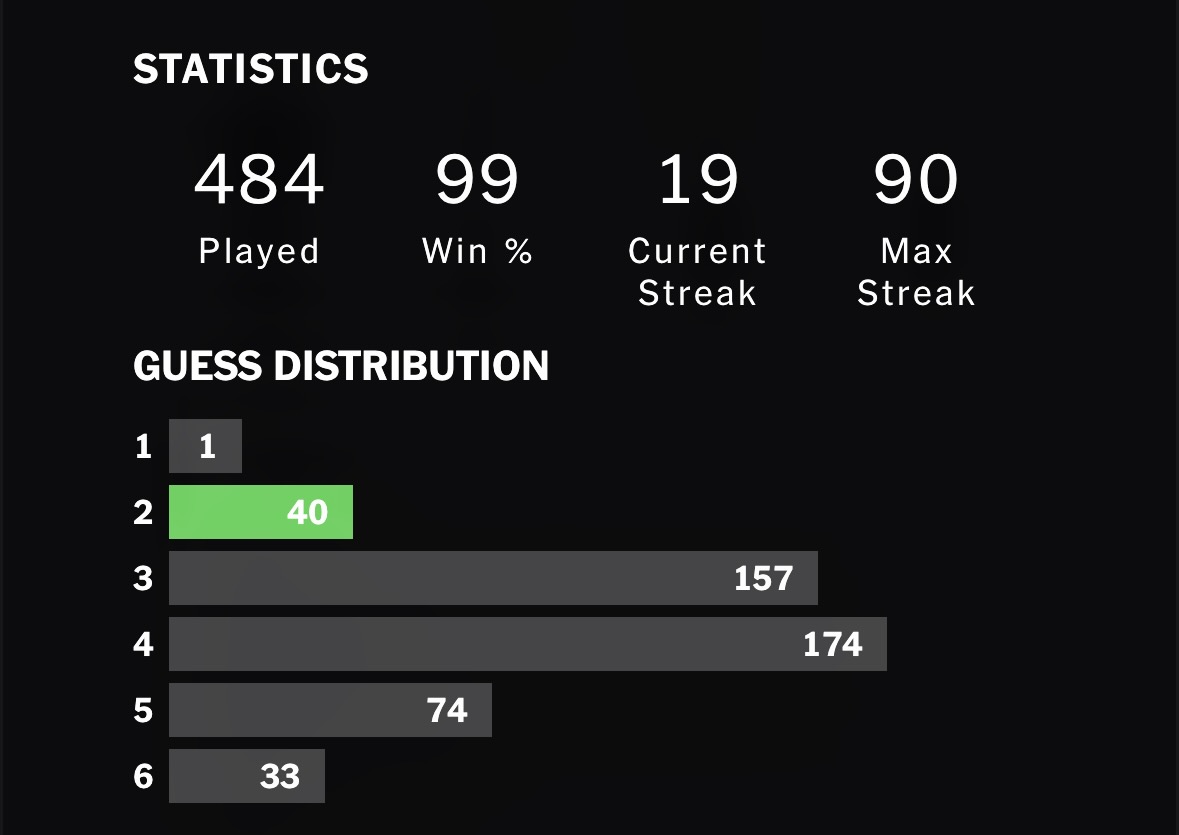
How does a streak impact our mindset? If we show up, post, attend, appear, engage, and lead consistently, are we nurturing the streak or fulfilling our commitment to performing the work that matters? When does a streak start to elevate over continuity? What if we break the streak? Is all our momentum lost? Do we disengage from our area of focus? Reflecting on a streak might be an excellent way to test assumptions and motivations. If your streak is additive (safety, life-saving, essential), persist with all vigilance. If it is capricious and primarily for internal satisfaction, consider if enabling the streak is diverting resources and limiting creativity.