Author: whatifconcepts

Empowering those that inspire so they can excel at the work that matters.

Making Recommendations and Decisions

I can make recommendations, but you make decisions. I can mark a route, but you need to decide if it is worth following. I can share a resource, but you need to act on it to create value.

So the question becomes, is making recommendations worth the effort if there is no guarantee that it will serve a purpose? Why not wait for a request to come our way and then respond? It is more comfortable to sit at the top of the mountain, playing the role of a wise individual, and let those seeking inspiration journey to us. However, the individual who most needs our support may be stuck on the first step of the quest. Also, we might learn a lot more and have a more significant influence if we engage them at the start of the trip.

If you are seeking to hike the Appalachian Trail, Continental Divide Trail, or even the Pacific Crest Trail, numerous online forums recommend everything from gear to the best camping sites. Some veterans show-up at the starting point the week most northbound Pacific Crest hikers start and provide a one-on-one evaluation of their equipment and strategy. The value of this time together is significantly more valuable than if the veteran waits to swap trail stories at the Canadian border.

What are you recommending, and who is using your insights to decide? Where are you standing, at the start, a crucial intersection, a common point of doubt, or at the finish line?
Average

IMG_1219

The average person falls asleep in 7 minutes.

The average person laughs 10 times a day.

The average person walks the equivalent of twice around the world during their lifetime.

The average person has over 1,460 dreams a year.

The average shower temperature is 101 degrees.

Source: did-you-know.com

Average creates comparison.  How do I rank?  Am I above or below average?  What if we asked ourselves about the work that falls far from average?  What is it we are going that lands on the far end of the scale?  Perhaps we should be doing more.  There are plenty of people who fall within a few percentage points of average, but many remarkable individuals doing something different.

Having a Moment

IMG_2917

We know not when we are going to ‘have a moment.’ An unexpected encounter. A surge in demand for our services. Being in the spotlight, facing an exponentially larger audience. The tailwind of a lifetime to push us towards a personal record.

If we are uncertain of where we stand and our desired destination, we will not adapt quickly enough to meet the moment. The forces will outrun us, and we will be swept by the current of the audiences’ intention.

However, if we state what we believe, remain authentic, then we are assured of developing connections built on trust and a shared vision. The moment of first contact starts with a sustainable foundation.


Supply and Demand

IMG_2902Disruptions, delays, and dislocation create demand. Supply and demand may not be the leading evaluation frames for the social sector. There is numerous points of overlap in the visions and missions of many causes. However, groups find ultimately find a niche or fail to sustain their efforts. Occasionally, the delivery of services is so disrupted that the demand far exceeds supply. The challenge is to understand when it is a short-term reaction and when it represents a systemic change.

A Little Help

IMG_2874

Sometimes we do not recognize when another person has invested in creating a better experience for us. The amount of time, effort, and resources committed to fabricating a shortcut is easy to underestimate. When you consider the total impact of these advantages, the results are remarkable. In 2019, Netflix saved subscribers 9.1 days on average by removing commercials from streamed shows.

What are we doing to make the work and life of our community better? What shortcuts and time savers have we created so others succeed?


The Spirit of Zugunruhe (Migratory Restlessness)

Screen Shot 2020-04-13 at 9.13.39 AM

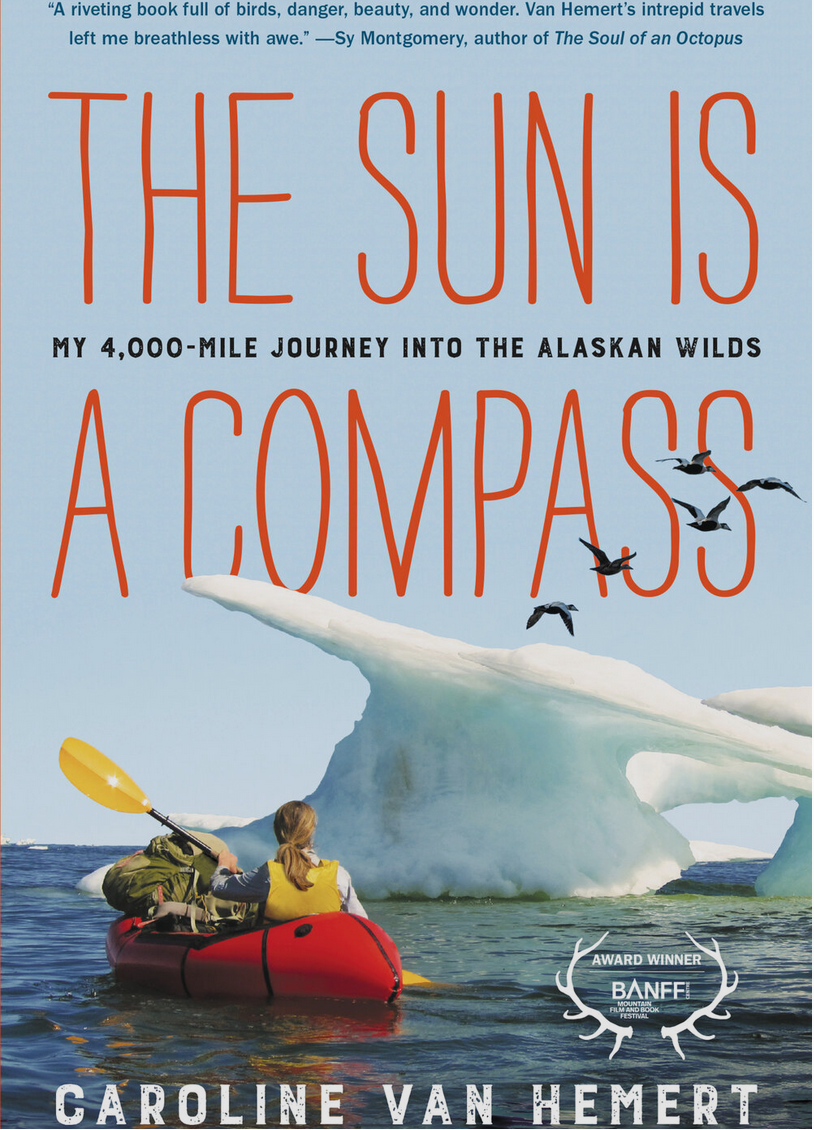
I enjoy stories about wayfinding.  Individuals oriented towards a vision that will forever change their worldview, regardless of success or failure.  I read an excerpt from The Sun is a Compass in the New York Times and immediately downloaded the book.  I found myself engrossed in a remarkable journey.  As an adventurous couple prepare for a 4,000 mile journey across Alaska and Canada, they navigate the perils of planning and encountering the unknown.  Caroline and Pat, embody something of a modern Lewis and Clark mixed with the spirit of Klondike Gold Rush, and channeling the naturalist John Muir.  The story follows their epic adventure, one which I cannot easily fathom.

They capture the essence of wayfinding throughout the quest.

Pat has never regarded a to-do list as a worthy endeavor.  Perhaps it’s how he maintains his optimism, working as hard and as fast as he can, dreaming only of the outcome, not the possibility of failure.

Imagine dreaming so big that the scale cannot be represented without being distorted.

I create a giant timetable of what needs to go where and on which date.  Pat tapes dozens of topographic maps to the wall and trace our intended routes on each of them.  When the maps begin to tilt crookedly, I snap at Pat to be more careful before he calmly informs me that it’s not his sloppy taping job, but the curvature of the earth that’s responsible.  The scale is that big.

They embrace disruption constantly.

In order to stay on schedule, we have to follow the ocean’s clock, not our own…at the edge of a volatile and unforgiving ocean, waiting is our safety margin.

And, they recognize the importance of adapting to the real world, despite what the map suggests.

Now I realize a line on a map is only that.  We’ve planned our route around elevation contours and river bends, but we have no idea what we will find really.  Everything can change in a day. In an instant.

What are you working on that is so big that it cannot be fully visualized?  What feels monumental?  What is holding us back from striking out into wild territories, knowing that the journey will transform us and those we seek to inspire?

Keep Hope Alive

IMG_1398Banksy

The most underrated but essential task of a leader in a moment of disruption might be to maintain optimism and create a vision for the future. As a former Firefighter/EMT, it was so easy to get caught up in the incident. Flames draw focus. Damaged vehicles venting coolants after an off-set head-on collision brings a swarm of activity. On the scene, everything is trained on the incident. A leader is thinking about managing the crisis and also the care and well-being of the rest of the community. Therefore, the department does not dispatch all the rigs to the call. A few firefighters are left on standby at the station, prepared to respond to the next call, ready with the gear, and focus on being present to another set of needs.

In our work today, it has to be more than just a response to the Coronavirus pandemic. There is also an anxiety pandemic, economic recession, shelter and food crisis, unemployment, and many other casualties. What we are seeking is individuals who can assist with the immediate needs while providing hope that the future (even if it is different) will be worth the journey we are navigating.


Cheering for Everyone

IMG_2347

Attend a sporting event in a pre-COVID world, and when the home team takes the ice/field/pitch/floor, the fans cheer. Next, the opponent enters, and the boos and embellished chants commence. It is the way of professional sports and entertainment, or so it has been modeled.

What if the same were true for our workplaces or community activities? What if we were cheered when we volunteered for one organization, but the same group individuals cast aspersions upon us when we took action for another cause? What if we were shunned when we turned down the offer to contribute to one enterprise because we invest deeply in another organization? What if we conspired to derail outside vendors we hired to make ourselves more significant? 

What is the cost of cheering for everyone as the foundational cornerstone of new interactions? Years ago, E.O. Wilson visited our community as a guest lecturer. He spent time in the local high school, giving a brief lecture and then questions and answers. No matter how poorly formed the question posed by a high school student, he directed the first sentences of his response praising the student and predicting they would achieve remarkable heights employing their curiosity in a future trade. The world-renowned entomologist wanted everyone in the room to succeed, and he cheered for them in every interaction.

What if we cheered for everyone?