![]() |
| Seth Godin |
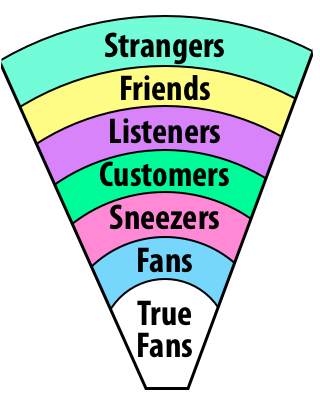
Fans
How do your fans gather? What do they share and learn when you get them around the ‘campfire’?
Patron
Had it not been for Eusebi Güell, famed architect Antoni Gaudi’s genius may have never been recognized. Gaudi’s philosophy of merging design and nature may have never made it from sketch to structure. If Gaudi had run around trying to build a tribe of followers he may have stopped designing. Instead he found a funders who was intrigued with his initial work (a lamp post). Guell was a true patron who sponsored many of Gaudi’s most daring projects. He was willing and capable of providing Gaudi with the resources he needed to bring his vision to a reality. It is a reminder that one key individual can do more for your journey than an entire crowd. Followers are powerful but patrons are willing to take action and invest because they share your purpose.
Are you seeking followers or patrons? It is important to understand the difference.
Strangers
I appreciate the post by Seth Godin today who discusses the dangers of relying on strangers to fuel your enterprise. It reminds me of social sector organizations that are willing to invest significant organizational time and resources chasing grants from foundations and federal enterprises which they have no connection instead of speaking to their committed fans. It is far easier to pin ones hopes to the unknown since the personal risk is minimal but the greatest reward comes from asking the most committed to increase their contribution. Typically those who deeply support your cause are willing to think about transformational gifts versus an entity that does not run on emotion but rather measures it progress based on criteria and a mandate. Where are you spending your time?
$1 Coupon
My father-in-law will not shop at a local market because they would not honor a coupon that he brought in a couple years ago. He tells everyone about his experience and recommends they shop elsewhere. I am certain the market has not idea of my father-in-law’s name and has experienced no real discernible loss of revenue but how much marketing must the market create to overcome one former customer who had a bad experience? If you shop online and read customer reviews, how many low scores do you need to see before you move on to another product or website? I find that it is the really dissatified customer reviews that I read to see if it the problem is the product or the experience.
How do you handle those who will not recommend your cause? Do you know their names? Have you ever called them up and asked them to tell their stories? What do you have to lose if you invest some time in people who were once fans?
25 Reasons
Your Recommendation
Fans vs. Donors
- Pay money to attend their team’s games and events.
- Central focus is on the game on the field.
- Purchase and wear clothing with the team’s logo.
- Follow their team on any availible media (cable television, internet, talk radio).
- Frequent chat rooms.
- Wake-up at midnight to welcome home their newly crowned champions at the airport.
- Hold season tickets. Often passing the tickets down to younger generations.
- Take their friends, business associates and kids to the game.
- Fans can almost always find somebody to give away their tickets.
- Pay to sponsor the team- want to have their business associated with the team’s brand.
Donors
- Pay money to attend events- may receive a reduced price as a donor or member.
- Wear clothing with your organization’s logo in appreciation for a donation.
- Nonprofits use social media more effectively than any other sector- the question is anyone listening, are donors following?
- Bring family and friends to events from time-to-time.
- Donors are typically passive.
- Frequent social events that may also highlight an organization’s programs.
- Donor Recognition ranges from wanting prominent naming opportunities to complete anonymity.
Nonprofit organizations spend so much time cultivating donors but we do not always think of making them fans of our organizations. What would change if your donors were fans first and donors second?
If You Did Not Know
What would it look like if you were an Executive Director, Director of Development, or Board Member and did not know how much each donor had contributed to your organization? If you simply received the names of all the donors with no filters, how would you treat each one? Would it be different than how you steward them today? Who would you select to spend time with and who to communicate with? How many donors would tell you directly how much they gave? If you have one thousand donors for your enterprise, what would be important to making them feel all appreciated for their contributions?
I think many of us are seeing 80-90% of the stewardship being concentrated on the top 5-10% of donors. It is an understandable strategy since the top tier of donors usually give the vast majority of the money, some organizations getting 85-90% of their funding from the a small group of leadership donors. In many ways some versions of nonprofit philanthropy reminds me of the legacy airline business model. First Class and Business Class fares pay for the majority of the cost to operate a flight. First Class gets the most space, the lie-flat suite, finest food, and best ration of flight attendants to passengers. When you disembark from an international flight you have arrived at the same destination as everyone else on the aircraft, regardless of the class you traveled. For some the celebration is in the arrival. Others remember the in-flight. If you have had the joy of sitting in the middle seat of coach for an international red-eye and your final memory of the journey is walking past all the luxury suites it may leave you with a a different impression than the former occupants of those seats.
Would you consider your organization’s stewardship efforts to be inclusive? Do all your donors feel their contribution was put towards important priorities? Does your organization have fans who donate with passion or do you have members who donate out of obligation?